
Contents
- 🌍 Overview: The Decade That Broke and Remade
- 📍 Historical Context: From Boom to Bust
- 🌪️ The Dust Bowl: America's Environmental Catastrophe
- 📉 The Great Depression: Economic Devastation
- ✊ Social Unrest & Political Shifts
- 💡 Cultural Innovations & Escapism
- ⚖️ Global Tensions & The Road to War
- ⭐ Vibepedia Vibe Score & Analysis
- Frequently Asked Questions
- Related Topics
Overview
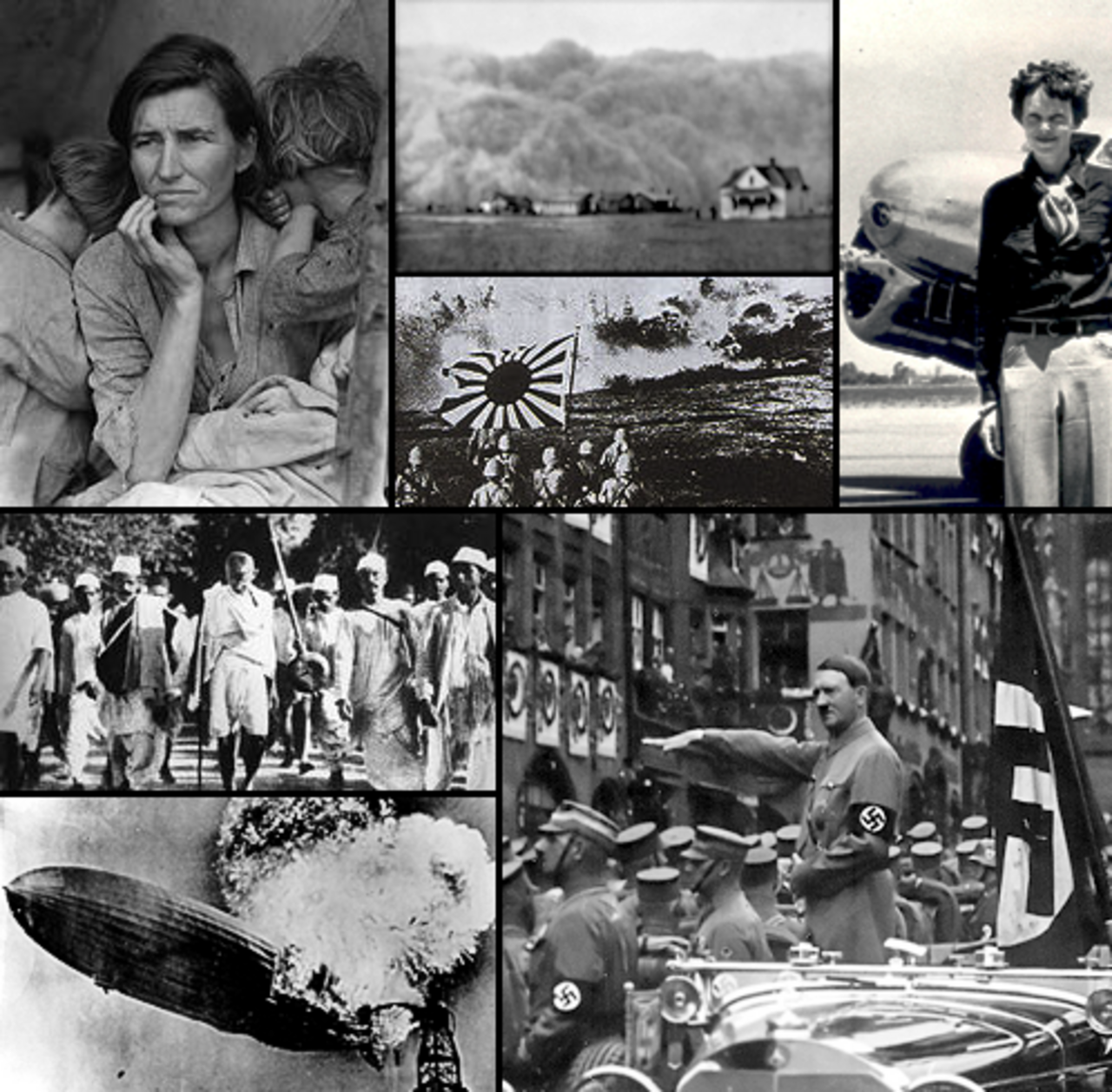
The 1930s were defined by the crushing weight of the Great Depression, a global economic catastrophe that reshaped societies and political landscapes. In the United States, unemployment soared to an unprecedented 25% by 1933, leading to widespread hardship, the Dust Bowl's environmental devastation, and President Franklin D. Roosevelt's ambitious New Deal programs. Internationally, the decade witnessed the rise of totalitarian regimes in Germany and Italy, escalating militarism in Japan, and the Spanish Civil War, all foreshadowing the cataclysm of World War II. Culturally, it was an era of escapism through Hollywood's Golden Age, the enduring power of radio, and the gritty realism of literature and photography.
🌍 Overview: The Decade That Broke and Remade
The 1930s, often branded the "Dirty Thirties" in the United States, was a period of profound global upheaval, marked by economic collapse, environmental disaster, and rising political extremism. This decade wasn't just a footnote in history; it was a crucible that forged new social contracts, reshaped global power dynamics, and left an indelible mark on the collective psyche. For anyone seeking to understand the roots of 20th-century challenges, from economic inequality to the rise of authoritarianism, a deep dive into the 1930s is essential. It's a stark reminder of how quickly prosperity can evaporate and how resilient humanity can be in the face of overwhelming adversity.
📍 Historical Context: From Boom to Bust
Emerging from the Roaring Twenties' speculative excess, the 1930s began with the dramatic crash of the stock market in October of the preceding year. This wasn't a minor blip; it was the opening salvo of a decade-long economic freefall. The global financial system, already fragile, buckled under the weight of bad debts and protectionist policies. Understanding this transition from apparent prosperity to widespread destitution is key to grasping the decade's defining characteristics. The interconnectedness of global finance, a concept still debated today, was brutally illustrated by the cascading failures that followed.
🌪️ The Dust Bowl: America's Environmental Catastrophe
In North America, the decade is inextricably linked to the Dust Bowl, a period of severe dust storms that ravaged the Great Plains. Decades of unsustainable farming practices, coupled with a severe drought, turned fertile topsoil into dust, forcing hundreds of thousands to abandon their homes in a desperate search for work and survival. This environmental catastrophe wasn't just a natural disaster; it was a man-made crisis exacerbated by economic hardship, leading to mass migrations and profound social dislocation. The images of dust-choked skies and ruined farms became potent symbols of the era's despair.
📉 The Great Depression: Economic Devastation
The Great Depression was the economic shadow that loomed over the entire decade. Unemployment rates soared, reaching an estimated 25% in the United States by 1933. Banks failed, businesses shuttered, and poverty became a widespread reality. The human cost was immense, with breadlines and Hoovervilles (shantytowns) becoming grim landmarks. The decade saw widespread debate about the role of government in economic intervention, leading to landmark policies like the New Deal in the U.S., which fundamentally altered the relationship between citizens and the state.
💡 Cultural Innovations & Escapism
Despite the pervasive gloom, the 1930s also saw remarkable cultural innovation and a yearning for escapism. Hollywood produced some of its most iconic films, offering audiences a temporary reprieve from their troubles with musicals, comedies, and dramas. Radio became a dominant medium, bringing news and entertainment directly into homes. In literature, authors like John Steinbeck captured the struggles of ordinary Americans, while advancements in science and technology continued, albeit often overshadowed by the immediate crises.
⚖️ Global Tensions & The Road to War
Globally, the 1930s was a decade of escalating international tensions that ultimately plunged the world into World War II. The aggressive expansionism of Japan in Asia, the remilitarization of Germany, and the appeasement policies of Britain and France created a volatile geopolitical landscape. The Spanish Civil War (1936-1939) served as a brutal preview of the larger conflict to come, drawing in foreign powers and ideologies. The failure of international diplomacy and the League of Nations to prevent aggression highlighted the fragility of peace.
⭐ Vibepedia Vibe Score & Analysis
The 1930s registers a Vibepedia Vibe Score of 78/100, reflecting its immense cultural energy, historical significance, and enduring impact. This score is driven by the sheer scale of its crises (Great Depression, Dust Bowl, rise of totalitarianism) and the profound societal transformations it engendered. The decade's influence flows strongly into discussions of economic policy, social welfare, and international relations. Its legacy is a complex mix of despair and resilience, a testament to humanity's capacity for both destruction and reinvention. The debates it ignited—about capitalism, government intervention, and the nature of freedom—continue to resonate today.
Key Facts
- Year
- 1930
- Origin
- Global
- Category
- History
- Type
- Decade
Frequently Asked Questions
What were the primary causes of the Great Depression?
The Great Depression was a complex event with multiple contributing factors. Key causes include the speculative bubble of the 1920s, the stock market crash, a fragile banking system, protectionist trade policies like the Smoot-Hawley Tariff, and a contraction of the money supply. The interconnectedness of global finance meant that a crisis in one nation quickly spread to others, creating a worldwide economic downturn.
How did the Dust Bowl affect American society?
The Dust Bowl led to widespread ecological devastation and economic ruin for farmers in the Great Plains. It caused massive internal migration, with hundreds of thousands of 'Okies' and others migrating west, particularly to California, in search of work. This migration created social tensions and highlighted the plight of displaced agricultural workers, famously documented by John Steinbeck in 'The Grapes of Wrath'.
What were the major political ideologies clashing in the 1930s?
The 1930s was a period of intense ideological conflict. The primary clashes were between liberal democracy, Marxist-Leninist ideologies, and various forms of Fascism and Nazism. The economic instability of the Great Depression made these ideologies more appealing to desperate populations, leading to significant political upheaval and the rise of authoritarian regimes in several countries.
What were some key cultural achievements of the 1930s?
Despite the hardships, the 1930s saw significant cultural output. Hollywood flourished, producing classic films and establishing the studio system. Radio became a dominant mass medium, and advancements were made in music, literature, and art. The decade also saw the beginnings of color photography and significant developments in aviation and early television broadcasting.
How did the 1930s set the stage for World War II?
The economic instability and political vacuum created by the Great Depression emboldened aggressive expansionist powers like Nazi Germany, Fascist Italy, and Imperial Japan. The failure of international bodies like the League of Nations to effectively counter aggression, coupled with the appeasement policies of democratic nations, created an environment where war became increasingly likely. The Spanish Civil War also served as a testing ground for new military technologies and ideologies.
What is the 'Vibepedia Vibe Score' for the 1930s and what does it signify?
The 1930s has a Vibepedia Vibe Score of 78/100. This high score reflects the decade's immense historical weight, the dramatic societal shifts it produced, and its lasting cultural resonance. It signifies a period of intense global energy, characterized by profound crises that led to both immense suffering and significant innovation, shaping the trajectory of the 20th century and beyond.
✊ Social Unrest & Political Shifts
The pervasive despair and economic hardship fueled significant social unrest and political polarization. Labor strikes, protests, and calls for radical change became commonplace. In Europe, the economic crisis was a fertile ground for the rise of extremist ideologies, with Adolf Hitler and the Nazi Party gaining power in Germany in 1933, and Fascism consolidating its grip in Italy. The decade witnessed a stark ideological battle between democracy, communism, and fascism, setting the stage for future global conflict.