
Contents
Overview
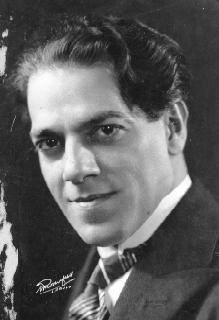
Born in Rio de Janeiro on March 5, 1887, Heitor Villa-Lobos emerged from a family steeped in intellectual and artistic pursuits, though not necessarily musical ones. His father, Raul Villa-Lobos, was a scholar and musician who initially steered Heitor towards a career in medicine. However, the vibrant soundscape of Brazil, particularly the music of street musicians and the indigenous cultures of the Amazon, proved a far stronger siren call. Villa-Lobos began his musical journey in earnest, learning the cello and absorbing the folk melodies that would become the bedrock of his unique style. His early travels through Brazil, often undertaken with ethnographic intent, exposed him to a vast array of regional music, from the choro of urban Rio to the ancient chants of indigenous tribes. This immersive experience, coupled with his formal training in composition at the Conservatório Brasileiro de Música, laid the foundation for a compositional voice that was both deeply nationalistic and universally appealing. By 1923, he had already begun to gain international recognition, performing and conducting his own works in Paris, a city that would become a crucial hub for his career.
⚙️ How It Works
Villa-Lobos's compositional method was a deliberate act of musical syncretism, a deliberate weaving of disparate sonic threads into a cohesive whole. He didn't merely quote folk melodies; he internalized their essence, their rhythmic vitality and melodic contours, and then re-contextualized them within sophisticated harmonic and contrapuntal frameworks. His Bachianas Brasileiras series, for instance, is a profound dialogue with Johann Sebastian Bach, reimagining Baroque forms through a distinctly Brazilian lens. The iconic Bachianas Brasileiras No. 5, with its hauntingly beautiful 'Aria' for soprano and cello ensemble, exemplifies this, blending a lyrical, almost folk-like melody with the rich textures of a cello orchestra. His Chôros series, on the other hand, is a sprawling exploration of Brazilian popular music and indigenous sounds, each installment offering a unique sonic portrait of the country's diverse musical landscape. This approach required not just technical mastery but a deep understanding of both European compositional techniques and the organic structures of Brazilian folk music, a feat few composers have achieved with such success.
📊 Key Facts & Numbers
Villa-Lobos's creative output is staggering: over 2,000 compositions. His Bachianas Brasileiras series comprises nine distinct works, each a substantial undertaking. The 12 Études for classical guitar, composed between 1924 and 1929, are now considered essential repertoire, with each study exploring specific technical challenges and musical ideas, totaling hundreds of pages of challenging material. His 5 Preludes for guitar, written in 1940, further expanded the instrument's expressive capabilities. By the time of his death in 1959, his music had been performed in over 50 countries, reaching an estimated audience of millions. His prolificacy meant that an average of 10 new works were published annually throughout his career, a testament to his relentless creative energy.
👥 Key People & Organizations
The life and work of Heitor Villa-Lobos were shaped by a constellation of influential figures and institutions. His father, Raul Villa-Lobos, provided early musical encouragement. His second wife, Arminda Neves d'Almeida, known as 'Mindinha', was a constant muse and collaborator, to whom he dedicated his 5 Preludes. Internationally, his work was championed by virtuosos like Andrés Segovia, the dedicatee of his 12 Études, and Arthur Rubinstein, who premiered several of his piano works. In Brazil, figures like the composer Francisco Mignone and the conductor Eleazar de Carvalho were instrumental in promoting his music. Institutions such as the Conservatório Brasileiro de Música provided his formal training, while his international engagements in Paris, particularly during the 1920s, placed him within the vibrant artistic milieu of the era, interacting with composers like Darius Milhaud and Edgar Varèse. The Brazilian government also played a role, appointing him as the Director of Public Instruction of Music and Fine Arts in 1932, a position he used to foster national musical education.
🌍 Cultural Impact & Influence
Villa-Lobos's influence on Brazilian music is immeasurable, effectively defining its 20th-century trajectory. He elevated Brazilian folk idioms to the concert hall, demonstrating that the music of the people possessed the depth and complexity to stand alongside European classical traditions. His Bachianas Brasileiras became a national symbol, a musical embodiment of Brazil's cultural identity. Beyond Brazil, his music introduced a new, exotic sound to the international classical scene, captivating audiences with its rhythmic vitality and lush harmonies. His works for classical guitar, in particular, are foundational, having inspired generations of guitarists and composers. The establishment of the Villa-Lobos Museum in Rio de Janeiro in 1960 further solidified his legacy, preserving his manuscripts and promoting his music. His impact extends to film scores and popular music, with his melodies and harmonic language echoing in countless works that followed.
⚡ Current State & Latest Developments
While Villa-Lobos passed away in 1959, his music continues to resonate and evolve. Performances of his symphonies, operas, and chamber works are regular occurrences in major concert halls worldwide. The classical guitar repertoire remains heavily indebted to his Études and Preludes, which are standard pedagogical and performance pieces. Contemporary Brazilian composers continue to draw inspiration from his innovative fusion of folk and classical elements, exploring new avenues for national musical expression. Furthermore, his music is increasingly being re-examined through the lens of ethnomusicology and post-colonial studies, offering fresh perspectives on his engagement with indigenous and folk traditions. The ongoing digitization of his vast catalog and the availability of high-quality recordings ensure his continued accessibility to new audiences and scholars.
🤔 Controversies & Debates
The primary controversy surrounding Villa-Lobos centers on his relationship with Brazilian indigenous and folk music. Critics have debated the authenticity and appropriation of his use of these elements, questioning whether his 'Brazilian' sound was a genuine reflection or a romanticized, Europeanized interpretation. Some scholars argue that his compositions, while popular, may have inadvertently overshadowed the work of other equally significant Brazilian composers who did not achieve his international fame. His tenure as Director of Public Instruction also drew scrutiny, with debates over his educational reforms and their long-term impact on music education in Brazil. Furthermore, the sheer volume of his output has led to discussions about quality control and the relative merit of some of his less frequently performed works compared to his undisputed masterpieces like the Bachianas Brasileiras.
🔮 Future Outlook & Predictions
The future of Villa-Lobos's music lies in continued exploration and reinterpretation. As global musical tastes diversify, his unique blend of the exotic and the familiar offers fertile ground for new collaborations and cross-cultural projects. We can anticipate further scholarly research delving into the nuances of his engagement with indigenous Brazilian cultures, potentially uncovering new insights into his compositional process and the ethical dimensions of his work. The operatic and symphonic realms of his output, which are less frequently performed than his guitar works or Bachianas Brasileiras, hold significant potential for rediscovery and revival. Moreover, as digital technologies advance, immersive experiences and interactive analyses of his music may emerge, offering novel ways for audiences to engage with his complex sonic worlds. The ongoing debate about his legacy will likely continue, pushing scholars and performers to critically examine his contributions.
💡 Practical Applications
Villa-Lobos's compositions have found practical application across numerous domains. His 12 Études and 5 Preludes are indispensable tools for classical guitarists worldwide, serving as both technical exercises and concert repertoire. The Bachianas Brasileiras No. 5, particularly its 'Aria', has been adapted for countless ensembles and even used in film soundtracks,
Key Facts
- Category
- culture
- Type
- topic