
Contents
Overview
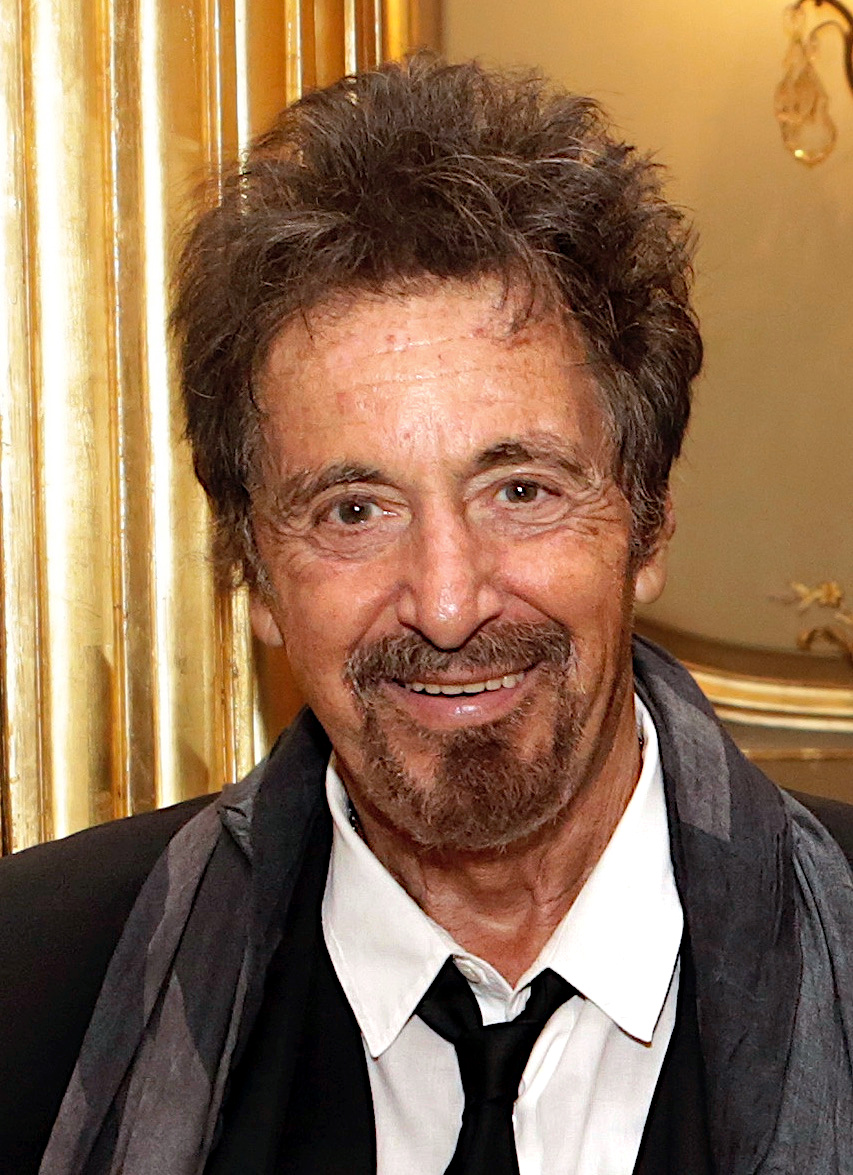
Alfredo James "Al" Pacino (born April 25, 1940) is an American actor whose career, spanning over six decades, has cemented his status as one of the most influential and revered performers in film and theater history. Renowned for his electrifying stage presence and deeply internalized character work, Pacino has delivered iconic performances across a vast spectrum of roles, from volatile gangsters and tormented detectives to legendary historical figures. His dedication to the craft, honed at institutions like the Actors Studio, has earned him a Triple Crown of Acting, including an Academy Award, two Tony Awards, and two Primetime Emmy Awards. With a filmography that has grossed over $3 billion worldwide, Pacino's impact on American cinema is immeasurable, shaping the very definition of dramatic intensity and character immersion.
🎵 Origins & History
Born Alfredo James Pacino on April 25, 1940, in Manhattan, New York City, his early life was marked by a passion for performance that blossomed amidst the vibrant, often gritty, cultural milieu of the city. He honed his acting chops at the Actors Studio, a crucible for method acting, under the tutelage of legendary figures like Lee Strasberg and Charles Laughton. His formative years were also shaped by his education at the Fiorello H. LaGuardia High School of Music & Art and Performing Arts and later, HB Studio. Pacino's theatrical beginnings were far from the spotlight, with early roles in off-Broadway productions and regional theater, laying the groundwork for a stage presence that would soon electrify Broadway and, subsequently, Hollywood.
⚙️ The Craft of Pacino
Pacino's acting methodology is deeply rooted in the Method Acting tradition, emphasizing psychological realism and intense emotional immersion. He is known for his meticulous preparation, often spending months inhabiting a character's psyche before stepping onto set. This approach is evident in his distinctive vocal delivery – a range from hushed intensity to explosive outbursts – and his piercing, often unsettling, gaze. His ability to shift from quiet contemplation to volcanic rage within a single scene, a hallmark of his performances in films like The Godfather and Scarface, has set a benchmark for dramatic acting. He famously eschews a singular approach, adapting his technique to the demands of each role, whether it's the nuanced portrayal of a blind war veteran in Scent of a Woman or the complex moral ambiguity of a corrupt detective in Serpico.
📊 Key Facts & Numbers
Al Pacino's career has spanned over six decades, with his films collectively grossing more than $3 billion worldwide. He has appeared in over 50 films, earning him a place among Hollywood's elite. His accolades include one Academy Award for Best Actor (for Scent of a Woman in 1993), two Tony Awards (for Does a Mouse Eat an Elephant? in 1969 and The Basic Training of Pavl Shvejk in 1977), and two Primetime Emmy Awards (for Angels in America in 2004 and You Don't Know Jack in 2011). He has received four Golden Globe Awards and a BAFTA Award. Pacino has been honored with prestigious lifetime achievement awards, including the AFI Life Achievement Award in 2007 and the Kennedy Center Honors in 2016, underscoring his enduring legacy.
👥 The Players in Pacino's Orbit
Pacino's professional life has been intertwined with a constellation of influential figures in the arts. His early mentor at the Actors Studio was Lee Strasberg, whose teachings profoundly shaped his approach to acting. He has frequently collaborated with director Martin Scorsese, most recently in The Irishman (2019), following earlier iconic pairings in Heat (1995) and The Pope of Greenwich Village (1984). His early career was significantly boosted by director Sidney Lumet, who cast him in Serpico (1973) and Dog Day Afternoon (1975). Pacino's daughter, Julie Pacino, is also involved in the film industry as a director and producer. He has also been linked romantically to figures like Dianne Wiest and Béatrice Dalle in the past.
🌍 Cultural Impact & Influence
Al Pacino's influence on acting and cinema is profound, extending far beyond his own performances. His portrayal of Michael Corleone in The Godfather trilogy redefined the anti-hero archetype, influencing countless subsequent characters in crime dramas and beyond. The raw intensity he brought to films like Dog Day Afternoon and Scarface became a benchmark for onscreen charisma and psychological depth. His distinctive vocal cadences and mannerisms have been widely imitated, becoming cultural touchstones. Beyond film, Pacino's commitment to theater, including his Tony-winning performances, has inspired generations of stage actors. His presence has elevated the status of the actor's craft, demonstrating the power of internalized performance in an era often dominated by spectacle.
⚡ Current State & Latest Developments
As of 2024, Al Pacino remains an active and vital force in the entertainment industry. He continues to take on challenging roles, most recently starring as the titular character in the 2023 film Sniffing the Air. His recent work with Martin Scorsese in The Irishman (2019) and Killers of the Flower Moon (2023) demonstrates his continued relevance and ability to deliver powerful performances alongside younger generations of actors. Pacino is also reportedly developing new projects, hinting at a continued commitment to exploring complex characters and narratives on screen and potentially on stage, ensuring his legacy continues to evolve.
🤔 Controversies & Debates
Pacino's intense acting style has occasionally drawn criticism, with some labeling it as "over-the-top" or "manic." This perception is particularly prevalent in discussions surrounding his performances in films like Scarface and S1m0ne. However, many critics and audiences argue that this intensity is precisely what makes his performances so compelling and unique, reflecting the heightened realities of the characters he portrays. Another point of discussion revolves around his career choices, with some debates centering on whether certain later-career roles have lived up to the groundbreaking standards set by his earlier work. The controversy spectrum for Pacino's performances generally sits in the mid-range, with most acknowledging his talent while debating the specific execution of certain roles.
🔮 Future Outlook & Predictions
The future for Al Pacino appears to be one of continued artistic exploration, albeit at a pace reflective of his age. While major directorial projects might be less frequent, his continued presence in significant acting roles, particularly in collaborations with esteemed directors like Martin Scorsese, suggests a sustained impact. There's speculation about potential return to the stage, a medium where his raw power can be most directly felt. Furthermore, his influence on younger actors, many of whom cite him as a primary inspiration, ensures his legacy will continue to shape the future of dramatic performance. The key question remains: what new facets of the human condition will Pacino choose to illuminate next?
💡 Practical Applications
Pacino's performances have served as masterclasses in character development and emotional expression, influencing acting pedagogy and practice across the globe. His iconic roles in films like The Godfather, Serpico, and Dog Day Afternoon are frequently studied in film schools and acting workshops as prime examples of method acting and intense dramatic delivery. The techniques he employs—vocal modulation, intense physicality, and deep psychological immersion—are practical tools for aspiring actors seeking to understand character depth. Beyond acting, his work has inspired screenwriters and directors to craft more complex, morally ambiguous characters, pushing the boundaries of narrative storytelling in cinema.
Key Facts
- Category
- culture
- Type
- topic