
Contents
Overview
Analytical chemistry is the scientific discipline dedicated to the development and application of methods for determining the chemical composition of materials. It answers two fundamental questions: 'What is it?' (qualitative analysis) and 'How much of it is there?' (quantitative analysis). This field bridges the gap between fundamental chemical principles and practical applications, utilizing both time-tested classical techniques like titration and gravimetric analysis, alongside sophisticated modern instrumental methods such as spectroscopy, chromatography, and mass spectrometry. Its reach extends across virtually every scientific and industrial sector, from ensuring the safety of our food and water to diagnosing diseases and developing new materials. Modern analytical chemistry is increasingly reliant on advanced data processing, automation, and miniaturization, pushing the boundaries of what can be measured and understood about the world around us.
🎵 Origins & History
The roots of analytical chemistry stretch back to antiquity, with early alchemists employing rudimentary methods to identify and purify substances, laying the groundwork for systematic chemical investigation. The formalization of quantitative analysis began in the 18th century. The 19th century saw the development of foundational techniques like gravimetric analysis and titration, establishing chemistry as a rigorous, quantitative science. The early 20th century witnessed the dawn of instrumental analysis with the advent of spectroscopic methods and electrochemical techniques, dramatically expanding the scope and sensitivity of chemical measurements.
⚙️ How It Works
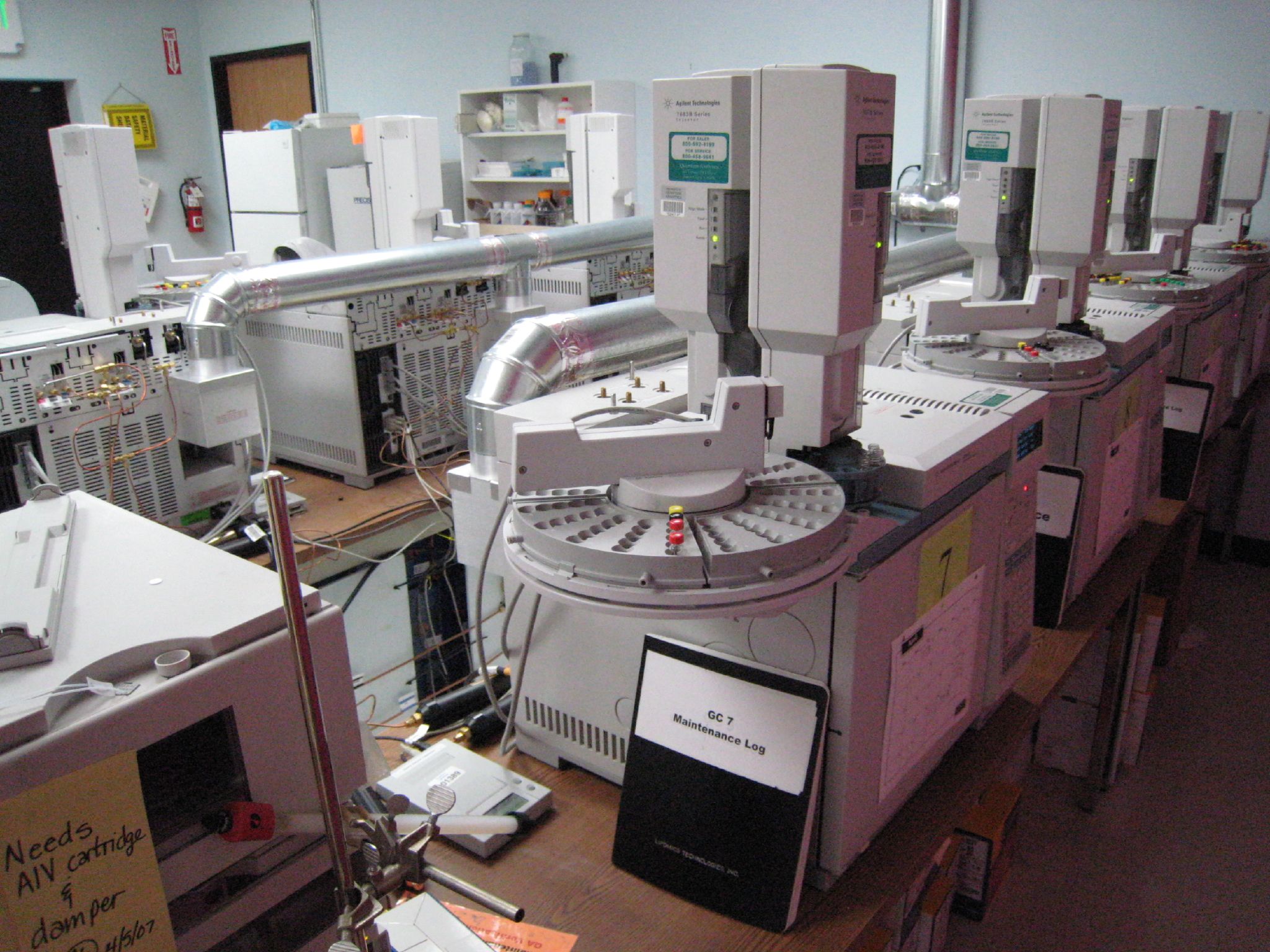
At its core, analytical chemistry employs a systematic approach to chemical measurement. Qualitative analysis seeks to identify the components of a sample, often through characteristic reactions or spectral fingerprints, while quantitative analysis determines the amount of each identified component. This is achieved through a diverse array of techniques. Spectroscopic methods, like UV-Vis and IR, measure the interaction of light with matter, providing information about molecular structure and concentration. Chromatographic techniques, including GC and HPLC, separate mixtures into individual components based on their differential partitioning between a stationary and mobile phase. Mass spectrometry (MS) identifies and quantifies substances by measuring their mass-to-charge ratio, often coupled with chromatography for unparalleled specificity. Electrochemical methods, such as potentiometry and voltammetry, measure electrical properties related to chemical reactions.
📊 Key Facts & Numbers
The demand for advanced analytical instruments, such as mass spectrometers, is particularly robust. The pharmaceutical industry accounts for a significant portion of analytical chemistry services, driven by stringent regulatory requirements for drug discovery and quality control.
👥 Key People & Organizations
Numerous individuals and organizations have shaped analytical chemistry. The American Chemical Society (ACS) plays a pivotal role through its publications and its numerous divisions and conferences that foster research and collaboration. Companies like Thermo Fisher Scientific, Agilent Technologies, and Waters Corporation are titans in developing and manufacturing the sophisticated instrumentation that drives modern analytical laboratories worldwide.
🌍 Cultural Impact & Influence
Analytical chemistry's influence permeates nearly every facet of modern life and scientific endeavor. It is the silent guardian of public health, ensuring the safety of pharmaceuticals, food, and water. In environmental science, it monitors air and water quality, tracking pollutants like heavy metals and pesticides, as well as assessing the impact of climate change. The field is indispensable in forensic science, where trace evidence analysis can link suspects to crime scenes. Furthermore, it fuels innovation in materials science, enabling the development of new alloys, polymers, and semiconductors with precisely controlled properties. The advent of portable and miniaturized analytical devices, such as those used in point-of-care diagnostics, has brought sophisticated chemical analysis out of the lab and into the field.
⚡ Current State & Latest Developments
The landscape of analytical chemistry is currently being reshaped by several key developments. The integration of Artificial Intelligence and Machine Learning is transforming data analysis, enabling faster interpretation of complex datasets and predictive modeling. Automation and robotics are increasingly employed to increase throughput, improve reproducibility, and reduce human error in high-volume testing environments. Miniaturization, exemplified by lab-on-a-chip devices and portable sensors, is enabling real-time, in-situ measurements with minimal sample consumption. Furthermore, there's a growing emphasis on 'green analytical chemistry,' focusing on developing methods that minimize waste and use less hazardous solvents, aligning with broader sustainability initiatives. The development of novel nanomaterials for sensing applications is also a rapidly advancing frontier.
🤔 Controversies & Debates
Despite its successes, analytical chemistry faces ongoing debates and challenges. One persistent tension lies between the pursuit of ever-greater sensitivity and selectivity versus the cost and complexity of advanced instrumentation; achieving trace-level detection of multiple analytes simultaneously remains a significant hurdle. The interpretation of complex, high-dimensional data generated by modern instruments, particularly in fields like metabolomics and proteomics, raises questions about reproducibility and the potential for spurious correlations, fueling discussions around chemometrics and robust statistical validation. Ethical considerations also arise, particularly in forensic and clinical applications, concerning the potential for misinterpretation of results and the implications for legal or medical decisions. The drive towards greener analytical methods, while laudable, sometimes clashes with the need for established, validated protocols that may be less environmentally benign.
🔮 Future Outlook & Predictions
The future of analytical chemistry promises even greater integration with other scientific disciplines and technological advancements. We can anticipate a surge in 'smart' sensors capable of continuous, real-time monitoring of environmental conditions, biological processes, and industrial operations, potentially communicating data wirelessly. The application of AI and machine learning will likely move beyond data analysis to guide experimental design and instrument control, creating self-optimizing analytical systems. The development of 'omnichannel' analytical platforms, capable of performing multiple types of analysis on a single sample, will become more prevalent, streamlining research and diagnostics. Furthermore, the push for greater sustainability will drive innovation in solvent-free techniques, renewable reagents, and energy-efficient instrumentation, making chemical analysis more environmentally responsible and accessible.
💡 Practical Applications
Analytical chemistry's practical applications are vast and indispensable. In the pharmaceutical industry, it's crucial for drug discovery, ensuring the purity and potency of active pharmaceutical ingredients (APIs) and finished drug products through techniques like LC-MS and HPLC. Environmen
Key Facts
- Category
- science
- Type
- topic