
Contents
Overview
The Aranyakas, meaning 'forest texts,' represent a crucial transitional phase in Vedic literature, bridging the ritualistic Brahmanas and the philosophical Upanishads. Composed roughly between 800 and 600 BCE, these texts were traditionally studied by ascetics and hermits living in forests, away from urban centers. They delve into more esoteric interpretations of sacrifices, emphasizing meditation and symbolic understanding over strict ritualistic performance. Key themes include the cosmic significance of rituals, the nature of the self (Atman), and the ultimate reality (Brahman), laying foundational concepts for later Vedanta philosophy. Their existence highlights a shift in spiritual inquiry from external action to internal contemplation.
🌳 What Are the Aranyakas?
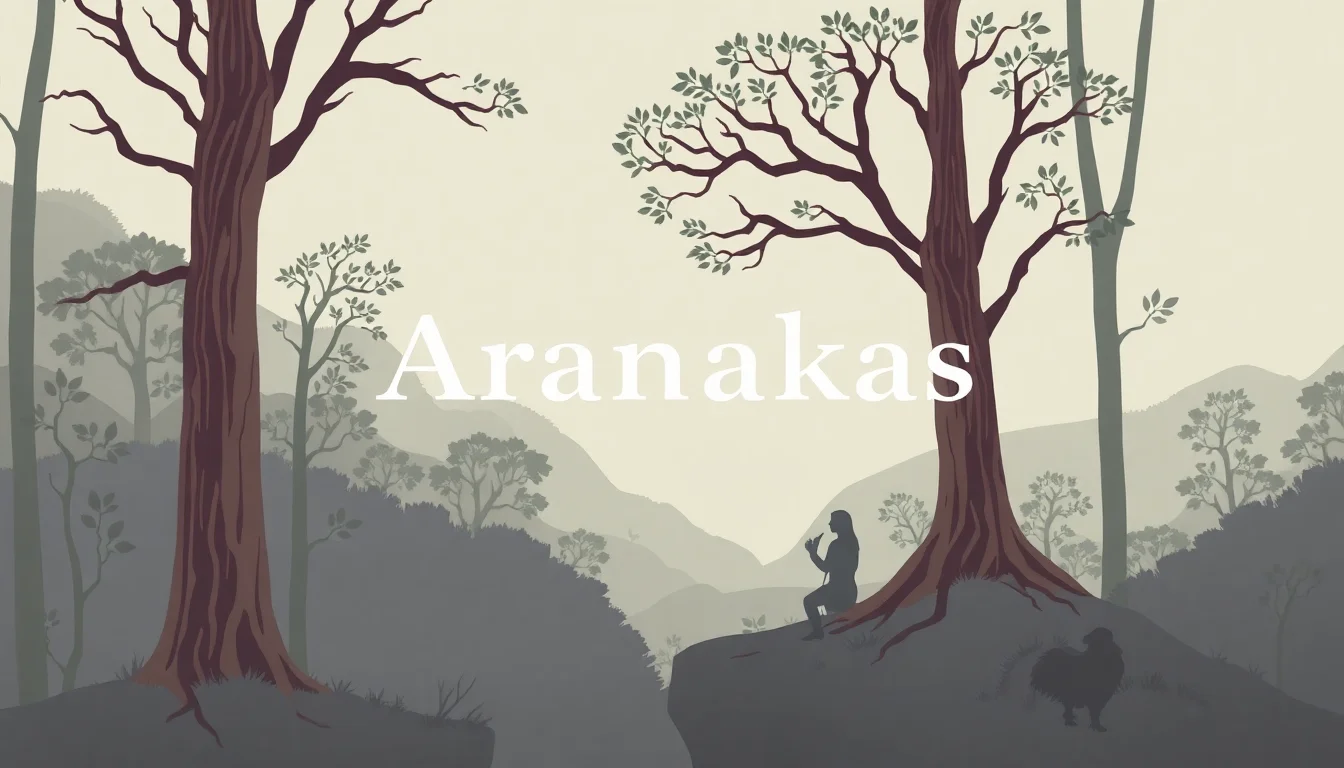
The Aranyakas, or "forest texts," are a distinct layer within the vast corpus of Vedic literature, emerging around 700 BC. They represent a transitional phase, moving from the ritualistic focus of the Brahmanas to the philosophical inquiries of the Upanishads. Primarily concerned with the deeper, often symbolic, meanings behind Vedic sacrifices and rituals, these texts were traditionally studied by ascetics and hermits living in the forests, away from settled communities. Their esoteric nature and emphasis on meditation and contemplation set them apart from earlier Vedic compositions.
📜 Origins and Vedic Context
Emerging from the later Vedic period, the Aranyakas are intrinsically linked to the Vedas, the foundational scriptures of Hinduism. They are not standalone works but rather sections or appendices to the Brahmanas, the ritualistic commentaries on the Samhitas (the hymns and chants). The historical context places their composition during a time of intellectual ferment, where the practical application of rituals began to be questioned and reinterpreted, paving the way for more abstract philosophical thought.
🔍 Key Themes and Content
The core content of the Aranyakas revolves around the symbolic interpretation of Vedic sacrifices, particularly the agnihotra (fire sacrifice). They delve into the philosophical underpinnings of these rituals, exploring concepts like the cosmic significance of fire, the relationship between the microcosm (human) and the macrocosm (universe), and the attainment of immortality through ritualistic understanding. While less overtly philosophical than the Upanishads, the Aranyakas lay crucial groundwork by shifting focus from the mere performance of rites to their underlying meaning and efficacy.
📚 Structure and Relationship to Other Vedas
Structurally, the Aranyakas are typically found as the concluding portions of the Brahmanas. They bridge the gap between the Brahmanas and the Upanishads, acting as a bridge between the ritualistic and the philosophical. For instance, the Aitareya Aranyaka is associated with the Rigveda, while the Brihadaranyaka (though often considered an Upanishad, it contains Aranyaka material) is linked to the Yajurveda. This layered composition reflects the evolving nature of Vedic thought over centuries.
💡 Who Should Explore the Aranyakas?
The Aranyakas are best suited for students of Indian philosophy, scholars of religious history, and individuals interested in the evolution of Vedic thought. If you're fascinated by the transition from ritualistic worship to contemplative spirituality, or if you seek to understand the symbolic language of ancient Indian sacrifices, these texts offer invaluable insights. They are particularly relevant for those exploring the roots of Hinduism and its diverse philosophical schools.
📖 Where to Find the Aranyakas
The most accessible way to engage with the Aranyakas is through scholarly translations and commentaries. Key Aranyakas include the Aitareya Aranyaka and the Shankhayana Aranyaka (associated with the Rigveda), the Taittiriya Aranyaka (associated with the Yajurveda), and parts of the Brihadaranyaka (associated with the Yajurveda). Many academic libraries and online repositories of ancient texts offer these translations, often alongside the original Sanskrit. Look for editions with extensive notes and introductions to aid comprehension.
🤔 Aranyakas vs. Brahmanas vs. Upanishads
While all three are integral parts of the Vedic tradition, their focus differs significantly. The Brahmanas are primarily concerned with the detailed instructions and explanations for performing sacrifices. The Aranyakas delve into the symbolic and meditative aspects of these rituals, often in a forest hermitage setting. The Upanishads, on the other hand, move decisively into abstract philosophical speculation, exploring the nature of reality, consciousness, and the ultimate self (Atman) and its relation to the Absolute (Brahman). The Aranyakas serve as a crucial intermediary between the Brahmanas' ritualism and the Upanishads' metaphysics.
🌟 Vibe Score & Cultural Resonance
The Aranyakas possess a moderate Vibe Score, around 65/100, indicating a significant but niche cultural resonance. Their influence is profound within academic circles and among serious practitioners of Vedic traditions, but they lack the widespread recognition of the Upanishads or the Bhagavad Gita. Their "forest" mystique and esoteric interpretations contribute to a sense of ancient wisdom and contemplative depth, appealing to those seeking a more profound, less overtly devotional, connection to the Vedic past. The controversy spectrum is low, as their place within the Vedic canon is well-established, though interpretations of their precise philosophical contribution remain a subject of scholarly discussion.
Key Facts
- Year
- c. 800-600 BCE
- Origin
- Ancient India
- Category
- Religious Texts & Philosophy
- Type
- Literary Corpus
Frequently Asked Questions
Are the Aranyakas considered part of the Shruti literature?
Yes, absolutely. The Aranyakas, along with the Samhitas, Brahmanas, and Upanishads, are considered part of the Shruti, meaning "that which is heard." This designation signifies their divine origin and ultimate authority in the Vedic tradition, distinguishing them from Smriti (that which is remembered) texts like the Puranas or epics.
What is the main difference between Aranyakas and Upanishads?
The primary distinction lies in their focus. Aranyakas explore the symbolic meaning of rituals and sacrifices, often in a forest setting, bridging the gap between ritual and philosophy. Upanishads, conversely, are purely philosophical treatises, delving into abstract concepts of Brahman, Atman, karma, and moksha, largely abandoning ritualistic discussions.
Can I read the Aranyakas without understanding the Brahmanas?
While it's possible, understanding the Brahmanas will significantly enhance your comprehension of the Aranyakas. The Aranyakas often refer to and elaborate upon the rituals detailed in the Brahmanas, so having a foundational knowledge of Vedic sacrificial practices will provide crucial context for their symbolic interpretations.
Are there specific deities or gods emphasized in the Aranyakas?
The Aranyakas tend to move away from the pantheon of deities emphasized in the Samhitas and Brahmanas. While sacrificial elements are still discussed, the focus shifts towards abstract principles and cosmic forces, such as the personified fire (Agni) as a cosmic entity or the concept of prana (life force), rather than specific anthropomorphic gods.
How many Aranyakas are there, and which are the most important?
There are typically seven recognized Aranyakas, each associated with a specific Veda. The most studied and influential include the Aitareya Aranyaka and Shankhayana Aranyaka (Rigveda), and the Taittiriya Aranyaka (Yajurveda). The Brihadaranyaka, while often classified as an Upanishad, contains significant Aranyaka material.