
Contents
Overview
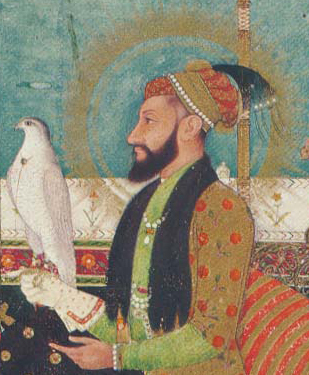
Aurangzeb, born Muhi al-Din Muhammad in Dahod on November 3, 1618, was the third son of Shah Jahan and Mumtaz Mahal. His early life was marked by rigorous training in administration and warfare, serving as viceroy of the Deccan and governor of Gujarat under his father's reign. The pivotal moment arrived when Shah Jahan fell ill, triggering a fierce succession struggle. Aurangzeb, a devout Sunni Muslim and a shrewd politician, outmaneuvered his liberal elder brother Dara Shikoh, who was favored by their father, and his other siblings. After defeating allied forces at the Battle of Samugarh and later Battle of Deorai, Aurangzeb imprisoned his father and ascended the throne, adopting the title 'Alamgir', meaning 'Conqueror of the Universe'. His reign, spanning nearly half a century, would witness the Mughal Empire reach its maximum territorial extent.
⚙️ How It Works
Aurangzeb's rule was a complex machinery of centralized imperial power, driven by a dual focus on military expansion and religious orthodoxy. His administration was structured around a vast bureaucracy, with provincial governors (subahdars) and military commanders (mansabdars) responsible for maintaining order and collecting revenue. The empire's economy was largely agrarian, with land revenue forming the primary source of income, meticulously managed through systems like the Zabt system. Aurangzeb's military campaigns, particularly the protracted wars in the Deccan against the Maratha Empire under Shivaji Maharaj and his successors, consumed vast resources and manpower. His judicial system was heavily influenced by Islamic jurisprudence (Sharia), leading to the compilation of the Fatawa-e-Alamgiri, a comprehensive digest of Islamic legal opinions. This strict adherence to religious law, however, often clashed with the diverse religious landscape of the empire, particularly the Sikh and Hindu populations.
📊 Key Facts & Numbers
Aurangzeb presided over an empire that, at its peak, encompassed an estimated 150 million people, representing roughly a quarter of the world's population in the late 17th century. His reign saw the Mughal treasury accumulate an estimated annual revenue of over 100 million Indian Rupees (equivalent to billions in modern currency). The empire's military strength was formidable, with estimates suggesting an army of over 300,000 soldiers and a navy that, while not as prominent as European navies, patrolled the coasts. Aurangzeb personally led numerous campaigns, spending over 25 years of his reign in the Deccan, a region that absorbed an immense portion of the empire's military and financial might. Despite the vast territorial gains, the empire's administrative capacity began to strain under the immense pressure of constant warfare and the sheer scale of its territories, with over 20 provinces (subahs) under its control.
👥 Key People & Organizations
Key figures during Aurangzeb's era include his father, Shah Jahan, whose reign set the stage for the empire's grandeur and succession crisis. His mother, Mumtaz Mahal, though deceased before his ascension, remained a significant influence. Aurangzeb's sons, particularly Bahadur Shah I (later Muazzam), his eventual successor, and Azam Shah, were deeply involved in the imperial politics and subsequent wars of succession. His formidable adversary, Shivaji Maharaj, founder of the Maratha Empire, posed a persistent challenge to Mughal authority in the Deccan. Other significant figures include his chief minister, Ashraf Khan, and influential ulema who advised on religious matters. The Maratha and Sikh movements, led by figures like Guru Gobind Singh, also rose to prominence as significant challenges to his rule.
🌍 Cultural Impact & Influence
Aurangzeb's reign left an indelible mark on the cultural and political landscape of the Indian subcontinent. While he commissioned fewer grand architectural projects compared to his predecessors like Shah Jahan (responsible for the Taj Mahal), his patronage of Islamic scholarship and calligraphy was significant, leading to the compilation of the Fatawa-e-Alamgiri. However, his policies of religious intolerance, including the reimposition of the Jizya tax on non-Muslims and the destruction of numerous Hindu temples, fostered deep resentment and contributed to the rise of regional powers like the Maratha Empire and the Sikh Confederacy. This shift from the syncretic policies of emperors like Akbar the Great fundamentally altered the Mughal Empire's relationship with its diverse populace, impacting its long-term stability and cultural synthesis. His military campaigns, while expanding the empire, also drained its resources and sowed the seeds of future fragmentation.
⚡ Current State & Latest Developments
In the contemporary era, Aurangzeb remains a figure of intense historical debate, particularly in India and Pakistan. Scholarly discourse continues to grapple with his legacy, with some historians emphasizing his administrative acumen and military prowess, while others condemn his religious policies and their divisive impact. The ongoing political discourse in India often invokes Aurangzeb as a symbol of historical oppression, used to frame contemporary political narratives. Academic research continues to analyze his vast correspondence and administrative records, seeking to provide a more nuanced understanding of his motivations and the complex socio-political dynamics of his reign. The historical interpretation of his rule remains a live issue, influencing national identity and historical memory in South Asia.
🤔 Controversies & Debates
The most persistent controversy surrounding Aurangzeb centers on his religious policies. Critics point to the reimposition of the Jizya in 1679, the destruction of thousands of Hindu temples, and the persecution of Sikhs and other minority groups as evidence of his intolerance. Proponents, however, argue that his actions were politically motivated responses to perceived threats and rebellions, and that he also patronized Islamic scholarship and maintained a functioning administration. Another major debate revolves around his role in the decline of the Mughal Empire. While his reign marked the empire's territorial peak, the constant warfare, particularly in the Deccan, the alienation of key populations, and the strain on imperial finances are seen by many historians, such as Jadunath Sarkar, as direct causes of the empire's eventual disintegration after his death. His war of succession against his brothers also highlights the brutal realities of Mughal dynastic politics.
🔮 Future Outlook & Predictions
The future outlook for understanding Aurangzeb involves a continued re-evaluation of his reign through interdisciplinary lenses. Advances in digital humanities and data analysis may allow for more sophisticated mapping of his empire's administration and economic flows, potentially revealing new insights into the logistical challenges of his vast military campaigns. Comparative historical studies could further illuminate his rule by placing it alongside other large empires of the era, such as the Ottoman Empire or the Safavid Dynasty, to understand broader trends in imperial governance and religious policy. Emerging scholarship may also focus on the long-term consequences of his policies on regional identities and the formation of successor states, offering a more granular understanding of how his reign shaped the subcontinent's subsequent political geography. The debate over his legacy is unlikely to subside, continuing to be a focal point for discussions on secularism, religious pluralism, and national identity in South Asia.
💡 Practical Applications
While Aurangzeb himself is a historical figure, the principles
Key Facts
- Category
- history
- Type
- topic