
Contents
Overview
Automation in manufacturing refers to the use of technology to perform tasks previously done by humans in the production of goods. This encompasses a wide spectrum, from early mechanical devices to sophisticated robotic systems and artificial intelligence. Its primary drivers are increased efficiency, improved quality, reduced costs, and enhanced worker safety by removing humans from hazardous or repetitive jobs. The global market for industrial automation is vast, with significant investments in areas like robotics, AI, and the Internet of Things (IoT). This evolution has fundamentally altered the factory floor, creating new job roles while displacing others, and continues to be a central theme in discussions about the future of work and industrial competitiveness.
🎵 Origins & History
The roots of automation in manufacturing stretch back centuries, long before the term itself was coined. Early mechanization, like the water-powered mills of the Roman Empire and the automated looms developed during the Industrial Revolution in the 18th century, represented nascent forms of replacing human labor with machines. The concept truly gained momentum with the advent of the assembly line, famously pioneered by Henry Ford at Ford Motor Company in 1913, which systematized production and laid the groundwork for further automation. The post-World War II era saw the introduction of early programmable controllers and the first industrial robots, marking a significant leap towards flexible automation.
⚙️ How It Works
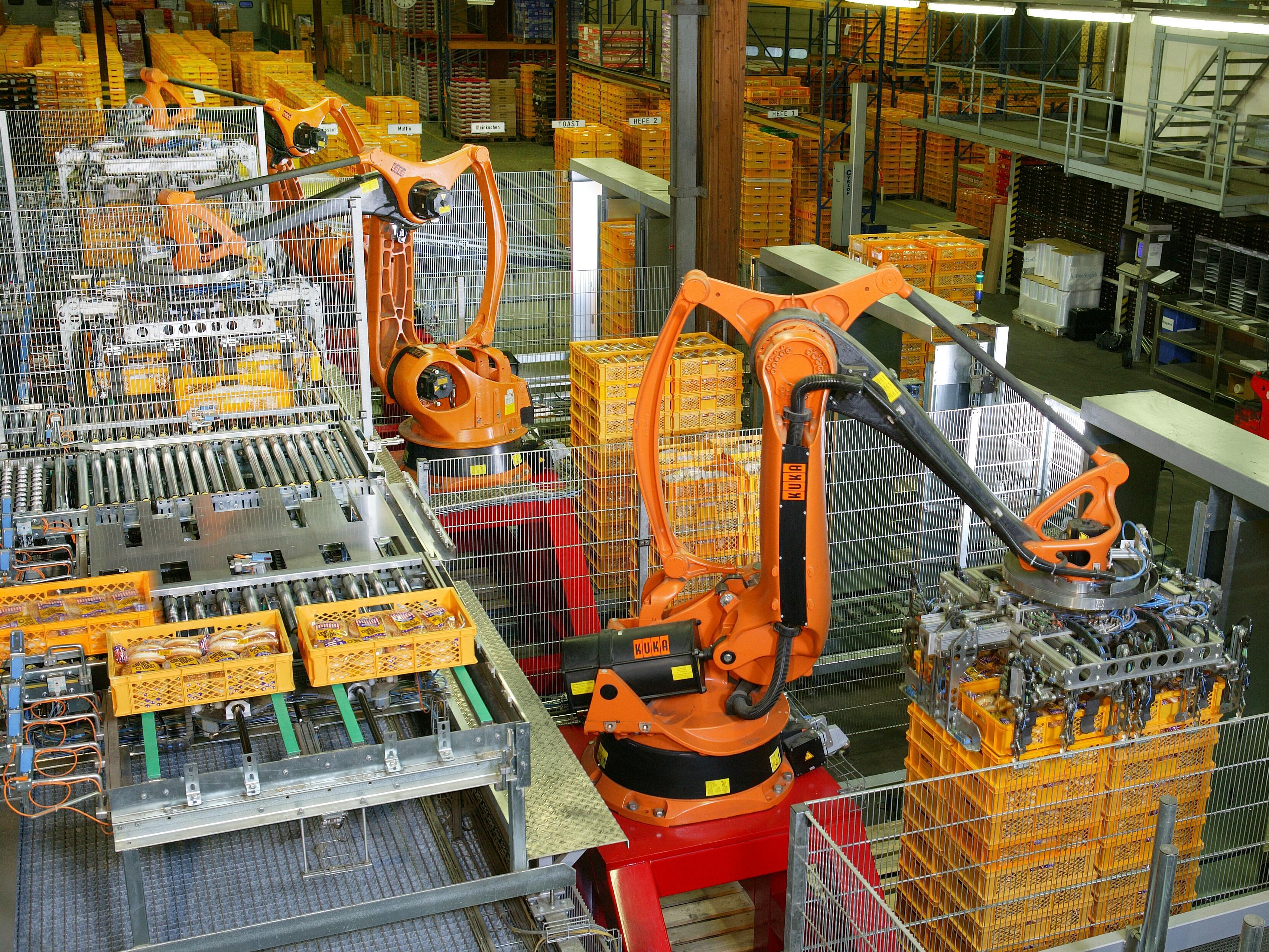
At its core, manufacturing automation involves integrating machines, software, and control systems to execute production processes with minimal human intervention. This can range from simple Programmable Logic Controllers (PLCs) managing conveyor belts and robotic arms on an assembly line, to complex Distributed Control Systems (DCS) overseeing entire chemical plants. Modern systems often incorporate Artificial Intelligence (AI) and Machine Learning (ML) for tasks like predictive maintenance, quality inspection via computer vision, and optimizing production schedules. Robots are a cornerstone, performing tasks from welding and painting to intricate assembly and material handling, often working in conjunction with collaborative robots (cobots) designed to work safely alongside human operators.
📊 Key Facts & Numbers
The global industrial automation market is colossal. The robotics segment alone is expected to grow significantly. Investments in smart factory technologies, including IoT sensors and data analytics, are also soaring, with companies spending billions annually to upgrade their facilities.
👥 Key People & Organizations
Key figures in the history of manufacturing automation include Henry Ford, whose assembly line revolutionized mass production, and George Devol and Joseph Engelberger, the inventors of the first industrial robot. Major organizations driving innovation include robotics giants like FANUC, KUKA, and ABB, alongside automation software providers such as Siemens and Rockwell Automation. Tech behemoths like Google AI and Microsoft Azure are increasingly contributing through AI and cloud computing platforms that enable more intelligent automation solutions. The World Economic Forum also plays a role in shaping discussions around the future of manufacturing and automation.
🌍 Cultural Impact & Influence
Automation's impact on manufacturing culture is profound. It has shifted the perception of the factory floor from a place of brute physical labor to one requiring technical expertise, programming skills, and data analysis. While it has led to the displacement of many traditional manual labor jobs, it has also created new roles in areas like robotics maintenance, automation engineering, and data science. The pursuit of efficiency and precision through automation has also influenced product design and quality standards across industries. Furthermore, the rise of lean manufacturing principles is often intertwined with automation, as both aim to eliminate waste and optimize processes.
⚡ Current State & Latest Developments
The current state of manufacturing automation is characterized by rapid advancements in robotics, particularly in cobots, which are becoming more affordable and easier to deploy. AI and Machine Learning are increasingly integrated for predictive maintenance, anomaly detection, and process optimization, leading to more adaptive and resilient production lines. The Internet of Things (IoT) is connecting machines and systems, enabling real-time data collection and analysis for enhanced decision-making. Companies are investing heavily in digital twins to simulate and optimize factory operations before physical implementation. The push for sustainability is also driving automation, with systems designed to reduce energy consumption and waste.
🤔 Controversies & Debates
The debates surrounding automation in manufacturing are multifaceted. Concerns exist regarding job displacement due to the rapid adoption of automation. Proponents, however, contend that automation creates new, higher-skilled jobs and ultimately boosts productivity and economic growth. Ethical considerations also arise regarding the increasing autonomy of machines and the potential for errors or malicious use. Furthermore, there's ongoing debate about the accessibility of advanced automation technologies, with concerns that smaller businesses may be left behind, widening the gap between large corporations and SMEs.
🔮 Future Outlook & Predictions
The future of manufacturing automation points towards increasingly intelligent, interconnected, and autonomous systems. Industry 5.0 is emerging as a concept that emphasizes human-centric automation, where humans and robots collaborate more closely, leveraging the strengths of each. Expect further integration of generative AI for product design and process simulation, and more sophisticated edge computing solutions for real-time control and analysis on the factory floor. The development of more versatile and adaptable robots, capable of handling a wider range of tasks and materials, is also anticipated. The drive for hyper-personalization in manufacturing will likely necessitate more flexible and reconfigurable automated systems.
💡 Practical Applications
Automation in manufacturing has a vast array of practical applications. In the automotive industry, robots perform welding, painting, and assembly tasks with high precision. In electronics manufacturing, automated systems handle delicate component placement and soldering. The food and beverage sector uses automation for packaging, sorting, and quality control. Pharmaceuticals rely on automated processes for precise dosing, sterile filling, and packaging. Aerospace manufacturing employs automation for complex machining, composite layup, and inspection of critical components. Even in agriculture, automated systems are used for planting, harvesting, and monitoring crops.
Key Facts
- Category
- technology
- Type
- technology