
Contents
Overview
The genesis of automotive safety systems can be traced back to the early days of the automobile. Early efforts were largely voluntary, driven by individual manufacturers' initiatives rather than regulation. The 1950s saw significant advancements, notably the introduction of the padded dashboard and the three-point seatbelt, famously developed by Nils Bohlin for Volvo in 1959. This era marked a turning point, shifting safety from an afterthought to a design consideration. The subsequent decades witnessed the mandatory implementation of safety features, spurred by organizations like the NHTSA in the United States, which mandated features like dual-circuit braking systems and collapsible steering columns. The development of airbags, initially conceived in the 1950s, finally saw widespread commercialization in the 1970s and became standard equipment by the 1990s, fundamentally altering occupant protection strategies.
⚙️ How It Works
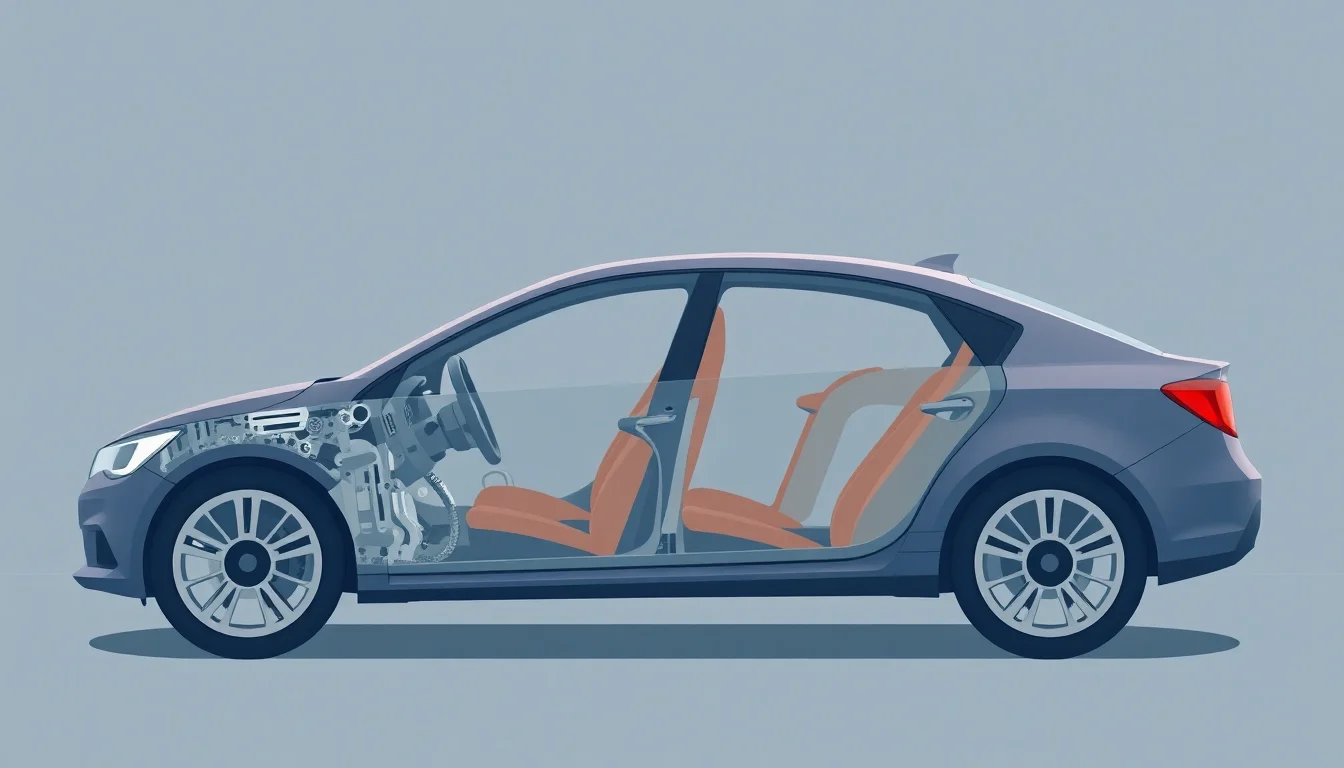
Automotive safety systems operate on a dual principle: preventing accidents and mitigating their effects. Passive safety systems, such as seatbelts, airbags, and the vehicle's structural integrity (crumple zones, safety cages), are designed to protect occupants during a crash. Airbags, for instance, deploy rapidly upon detecting a significant impact, creating a cushion between the occupant and hard surfaces. Active safety systems, conversely, aim to avoid crashes. Technologies like anti-lock braking systems (ABS) prevent wheel lock-up during hard braking, maintaining steering control. Electronic Stability Control (ESC) uses sensors to detect loss of traction and can automatically apply brakes to individual wheels to help the driver regain control. More advanced systems, known as Advanced Driver-Assistance Systems (ADAS), include features like lane departure warnings, automatic emergency braking (AEB), and adaptive cruise control, which use sensors, cameras, and radar to monitor the environment and intervene when necessary.
📊 Key Facts & Numbers
The impact of automotive safety systems is quantifiable. Globally, traffic accidents claimed an estimated 1.3 million lives in 2020, according to the World Health Organization, a figure that would be significantly higher without modern safety interventions. In the United States, the NHTSA estimates that seat belts saved over 14,955 lives in 2017 alone. The widespread adoption of ESC has been credited with preventing over 10,000 fatalities annually in the US since its mandatory implementation in 2012. The global automotive safety systems market was valued at approximately $35 billion in 2022 and is projected to exceed $70 billion by 2030, growing at a compound annual growth rate (CAGR) of over 7%. The average vehicle today contains dozens of sensors, microcontrollers, and actuators dedicated solely to safety, representing a significant portion of a vehicle's electronic content.
👥 Key People & Organizations
Numerous individuals and organizations have been instrumental in the advancement of automotive safety. Nils Bohlin, a Swedish engineer, invented the modern three-point seatbelt for Volvo in 1959, a design now used in virtually every car. Robert W. Koch was a key figure in the development of airbags, leading research at Morris Florin and later at AlliedSignal (now Honeywell) in the 1970s. Joyson Safety Systems (JSS), formed from the acquisition of Takata Corporation by Ningbo Joyson Electronic Corporation, is a major global supplier, with Philip Shan serving as its CEO and overseeing operations across 32 plants worldwide. Regulatory bodies like the NHTSA in the US and the Euro NCAP in Europe play a crucial role in setting safety standards and influencing manufacturer development through rigorous testing and rating systems.
🌍 Cultural Impact & Influence
Automotive safety systems have profoundly reshaped societal perceptions of driving and vehicle design. The widespread adoption of features like airbags and ABS has fostered a sense of security, influencing consumer purchasing decisions and contributing to a cultural expectation of vehicle safety. This has led to a continuous cycle of innovation, where manufacturers compete not only on performance and aesthetics but also on their safety credentials, often highlighted in marketing campaigns and safety ratings. The development of ADAS has further shifted the paradigm, introducing the concept of the car as an active participant in safety, rather than a passive shell. This cultural shift is also reflected in media, with safety ratings from organizations like Consumer Reports and Euro NCAP becoming significant factors in consumer research, akin to checking reviews for any major purchase.
⚡ Current State & Latest Developments
The current landscape of automotive safety is dominated by the rapid integration of ADAS and the ongoing development towards autonomous driving. Features like pedestrian detection, traffic sign recognition, and driver monitoring systems are becoming increasingly common, even in mid-range vehicles. The push for Level 3 and Level 4 autonomy, where the vehicle can handle most driving tasks under specific conditions, is accelerating, with companies like Tesla, Waymo, and Cruise making significant strides. Furthermore, the focus is expanding beyond occupant safety to include the protection of vulnerable road users, such as cyclists and pedestrians, through enhanced sensor suites and predictive algorithms. The ongoing global semiconductor shortage has presented challenges, but the industry's commitment to safety innovation remains steadfast.
🤔 Controversies & Debates
The development and deployment of automotive safety systems are not without controversy. The cost of advanced safety features can make them inaccessible to lower-income consumers, creating a disparity in safety levels. Debates also arise regarding the effectiveness and reliability of certain ADAS features, particularly in adverse weather conditions or complex driving scenarios. The increasing reliance on software and sensors raises concerns about cybersecurity vulnerabilities, where malicious actors could potentially compromise safety systems. Furthermore, the ethical implications of autonomous vehicle decision-making in unavoidable accident scenarios—the so-called 'trolley problem'—remain a significant point of contention. The Takata airbag recall, one of the largest in automotive history, highlighted critical failures in manufacturing and oversight, leading to billions in costs and significant public distrust.
🔮 Future Outlook & Predictions
The future of automotive safety is inextricably linked to the progression of autonomous driving and Vehicle-to-Everything (V2X) communication. As vehicles become more autonomous, the role of the human driver diminishes, shifting the focus to system reliability, redundancy, and fail-safe mechanisms. V2X technology, enabling vehicles to communicate with each other, infrastructure, and pedestrians, promises to create a more connected and predictive safety environment, allowing cars to anticipate hazards beyond their immediate sensor range. The integration of artificial intelligence and machine learning will enable systems to learn from vast datasets, continuously impr
Key Facts
- Category
- technology
- Type
- topic