
Contents
Overview
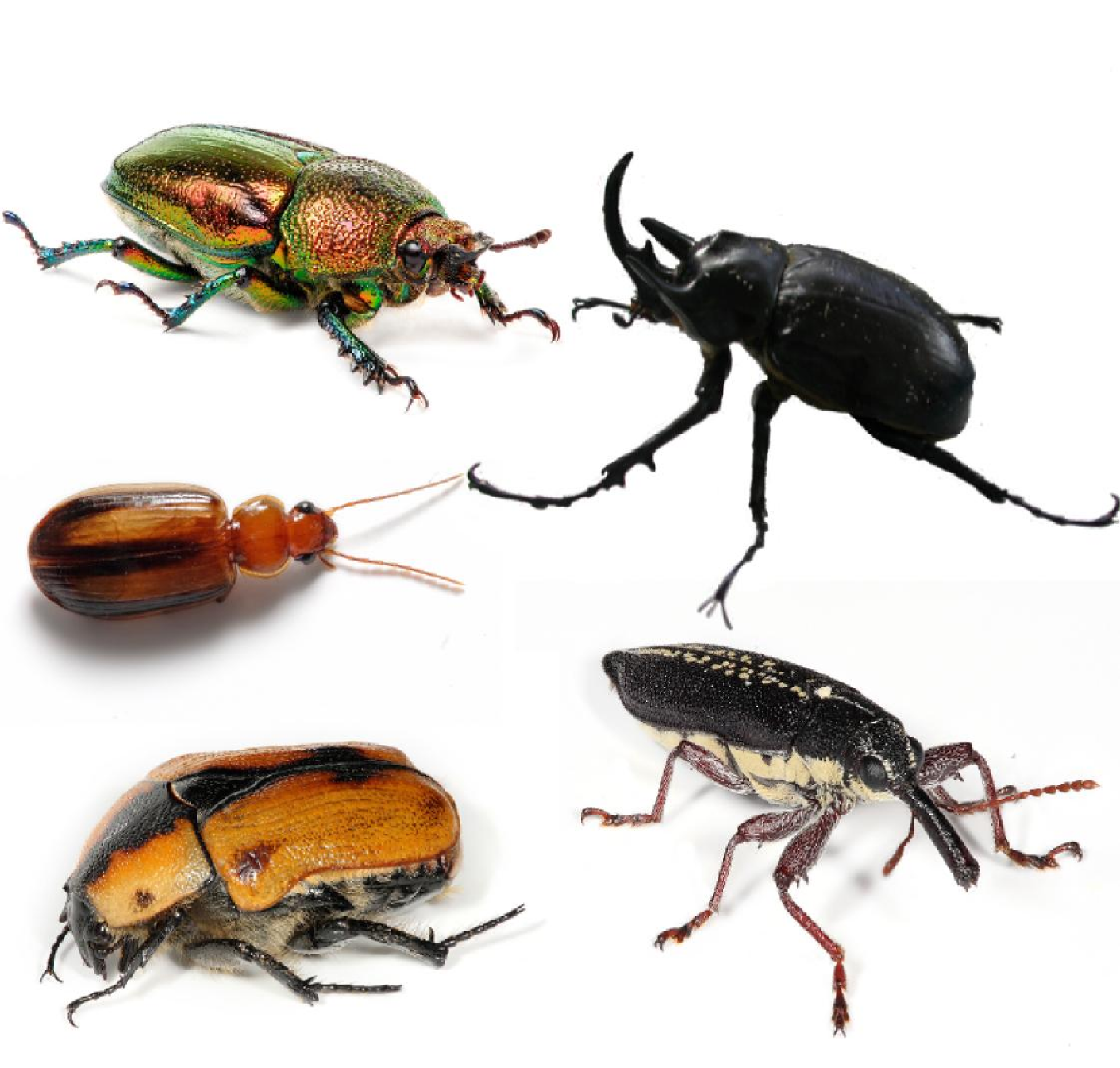
The evolutionary journey of beetles traces back to ancient lineages, with their development likely facilitated by the emergence of hardened elytra, a defining characteristic of the order Coleoptera. These likely provided a crucial advantage, offering protection against predators and environmental extremes, thus facilitating their diversification. Early beetles likely fed on primitive plants and fungi, gradually expanding their ecological niches as terrestrial ecosystems evolved. The Mesozoic era saw a significant radiation of beetle families, coinciding with the rise of flowering plants, which provided new food sources and habitats. By the Cenozoic, beetles had established their dominance, with most modern families already present.
⚙️ How It Works
The defining feature of beetles is their hardened forewings, the elytra, which are fused along the midline of the back and cover the membranous hindwings when at rest. These elytra are not used for flight but serve as protective armor, shielding the abdomen and the delicate, folded hindwings from physical damage and desiccation. When a beetle prepares to fly, the elytra are lifted, and the hindwings are unfurled. Their mouthparts are typically adapted for chewing, with strong mandibles, though variations exist for piercing, sucking, or filtering food. Respiration occurs through a network of tracheae, with air entering via spiracles, usually located on the sides of the thorax and abdomen. Metamorphosis in beetles is complete, involving four distinct stages: egg, larva, pupa, and adult, with the larval stage often being worm-like and adapted for a specific environment, such as burrowing in soil or wood.
📊 Key Facts & Numbers
Beetles are a remarkably diverse group of insects. The family Curculionidae (weevils) is the largest beetle family, followed by Staphylinidae (rove beetles) and Carabidae (ground beetles). A single hectare of tropical rainforest can host thousands of beetle species.
👥 Key People & Organizations
While no single individual can claim to have 'discovered' beetles, entomologists like William E. Broadhead and Charles W. Woodruff have made significant contributions to understanding their taxonomy and ecology. Major institutions such as the Smithsonian National Museum of Natural History and the Natural History Museum, London house vast collections and conduct ongoing research into beetle diversity and evolution. Organizations like the Entomological Society of America foster research and collaboration among scientists studying these insects. The International Commission on Zoological Nomenclature plays a crucial role in standardizing beetle taxonomy and nomenclature.
🌍 Cultural Impact & Influence
Beetles have permeated human culture for millennia, appearing in ancient Egyptian art and mythology, most notably the scarab beetle (Scarabaeidae), which symbolized rebirth and regeneration, often depicted in amulets and seals. Their striking appearances, from the iridescent sheen of jewel beetles to the formidable horns of stag beetles, have inspired artists and designers. In literature, beetles sometimes feature as symbols of decay or resilience, while in folklore, they are often associated with luck or omens. The ladybug (family Coccinellidae) is a near-universal symbol of good fortune. Conversely, pest species like the Colorado potato beetle have significantly impacted agriculture and human history, leading to the development of pest control strategies and influencing farming practices globally.
⚡ Current State & Latest Developments
The study of beetles is a dynamic field, with new species being described at a rapid pace, particularly from under-explored regions like the Amazon basin and Southeast Asian rainforests. Advances in genomic sequencing and phylogenetic analysis are continually refining our understanding of beetle evolutionary relationships, challenging existing classifications. Researchers are increasingly using citizen science platforms, such as iNaturalist, to gather data on beetle distribution and abundance, democratizing entomological research. The impact of environmental factors on beetle populations, including shifts in geographic ranges and phenology, is a growing area of concern and research, with significant implications for ecosystems and agriculture.
🤔 Controversies & Debates
One of the most significant debates surrounding beetles revolves around their sheer, and still largely uncatalogued, biodiversity. The question of how many species truly exist and how to effectively conserve them in the face of habitat loss and environmental changes is paramount. Another point of contention lies in pest management; while some beetles are beneficial predators, others cause billions of dollars in agricultural damage annually, leading to ongoing debates about the efficacy and environmental impact of various pesticide and biological control methods. The classification of certain beetle families also remains a subject of ongoing taxonomic revision, with new molecular data sometimes leading to significant reclassifications.
🔮 Future Outlook & Predictions
The future of beetle research is poised for significant advancements, driven by technologies that could revolutionize species discovery and monitoring. Predictive modeling, incorporating environmental change scenarios and land-use patterns, will be crucial for forecasting shifts in beetle distribution and identifying species at risk of extinction. There's a growing emphasis on understanding the complex interactions between beetles and their microbial symbionts, which could unlock novel applications in areas like biotechnology and bioremediation. The potential for discovering new compounds with medicinal or industrial properties from beetle species remains vast, suggesting continued exploration of their chemical ecology.
💡 Practical Applications
Beetles have numerous practical applications, both direct and indirect. Many species, such as ladybugs and ground beetles, are vital biological control agents, preying on agricultural pests like aphids and caterpillars, thus reducing reliance on chemical pesticides. Certain beetles, like the mealworm (larvae of darkling beetles), are being explored as sustainable protein sources for animal feed and potentially human consumption, offering an eco-friendly alternative to traditional livestock. The wood-boring beetle larvae, while often pests, are also crucial decomposers in forest ecosystems, breaking down dead trees and recycling nutrients. Furthermore, the unique structural properties of beetle elytra have inspired biomimetic designs in materials science and engineering.
Key Facts
- Category
- nature
- Type
- topic