
Contents
- 📍 What is the Birmingham School?
- 🏛️ Historical Context: Rebuilding a City
- 🏗️ Key Projects & Architectural Styles
- 🤔 The Legacy: Successes and Criticisms
- 💡 Vibepedia Vibe Score & Controversy Spectrum
- 🗺️ Navigating Birmingham's Post-War Landscape
- 👥 Who Should Explore the Birmingham School?
- ✨ Similar Urban Planning Movements
- 📝 Practical Tips for Your Visit
- 📞 Getting Started & Further Exploration
- Frequently Asked Questions
- Related Topics
Overview
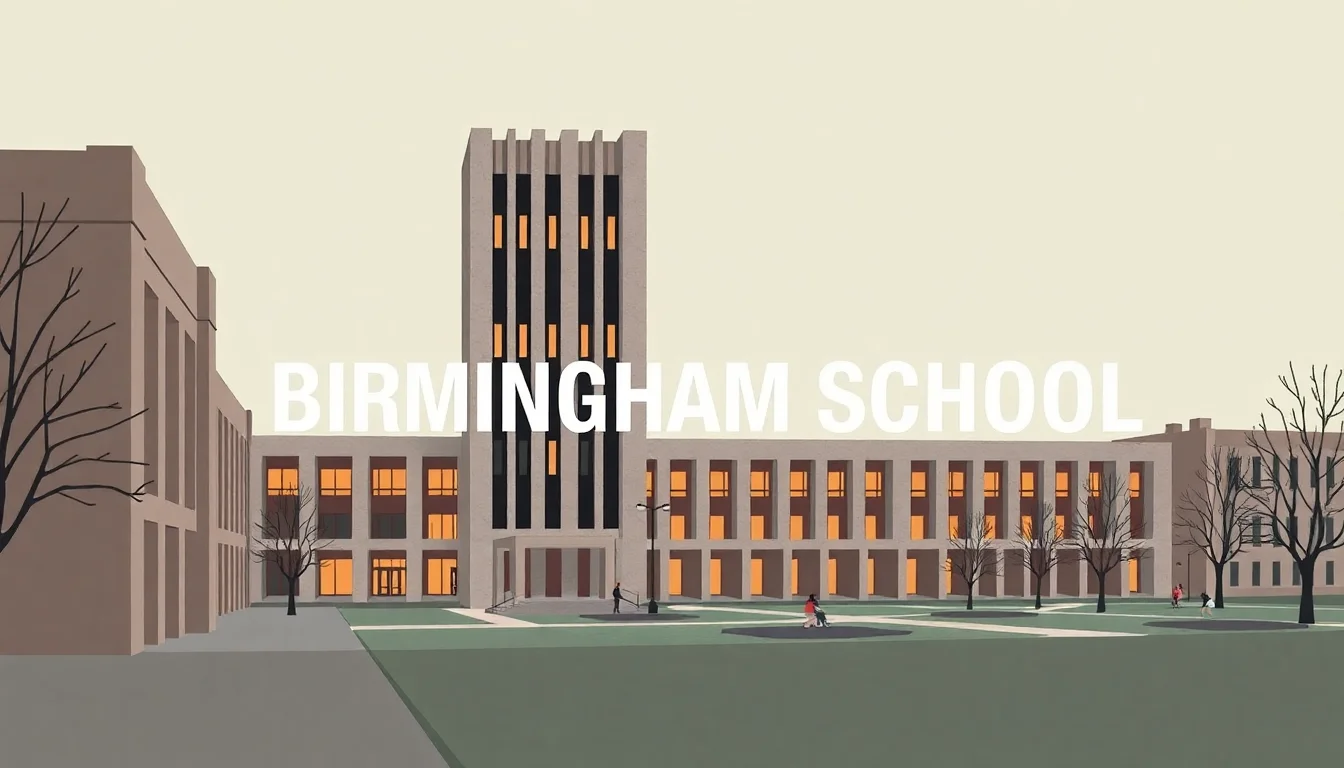
The Birmingham School refers to a distinct era of urban planning and architectural development in Birmingham, UK, primarily from the post-World War II period through the 1970s. Characterized by ambitious, often large-scale projects, it embraced Modernist and Brutalist aesthetics, aiming to rebuild and modernize the city. Key developments include the construction of the Bull Ring shopping centre, the Inner Ring Road, and numerous high-rise residential blocks. While lauded for its functionalist approach and bold vision, the Birmingham School also generated significant controversy regarding its impact on community, heritage, and the city's human scale. Its legacy is a complex interplay of architectural innovation, social engineering, and enduring debate about urban renewal.
📍 What is the Birmingham School?
The Birmingham School refers to the ambitious and often controversial urban planning and architectural developments that reshaped Birmingham, UK, particularly in the post-World War II era. This period saw a radical reimagining of the city, driven by a desire to modernize, improve living conditions, and accommodate a rapidly growing population and economy. It's less a formal academic institution and more a collective descriptor for a distinct era of urban intervention characterized by modernist ideals and large-scale redevelopment. Understanding this period is crucial for grasping Birmingham's current urban fabric and the ongoing debates surrounding its built environment.
🏛️ Historical Context: Rebuilding a City
Emerging from the devastation of wartime bombing and the preceding industrial grime, Birmingham embarked on a monumental rebuilding program from the late 1940s through the 1970s. The city's leadership, influenced by figures like Herbert Manzoni, the Chief Engineer and Surveyor, embraced modernist planning principles. The goal was to create a 'city of the future,' characterized by clear zoning, efficient transport, and modern housing, a stark contrast to the Victorian-era industrial city it once was. This era represents a significant influence flow from international modernist urbanism to a major British industrial hub.
🏗️ Key Projects & Architectural Styles
The physical manifestations of the Birmingham School are vast and varied, though often dominated by brutalist and modernist architecture. Iconic structures include the original Bull Ring (opened 1964), the brutalist masterpiece Birmingham Central Library (demolished 2013), and extensive post-war housing estates like the Castle Vale and Nechells Green. The emphasis was on concrete, clean lines, and functional design, often prioritizing vehicular traffic with elevated roadways and underpasses, a hallmark of New Brutalist aesthetics.
🤔 The Legacy: Successes and Criticisms
The legacy of the Birmingham School is deeply contested. Proponents highlight its success in clearing slums, providing modern housing, and creating efficient infrastructure that supported economic growth. Critics, however, point to the destruction of historic neighborhoods, the creation of sterile and alienating urban spaces, and the social consequences of mass demolition and relocation. The demolition of many of its key buildings, such as the Central Library and the original Bull Ring, signals a shift in public and professional opinion, reflecting a growing appreciation for the urban heritage it largely erased.
💡 Vibepedia Vibe Score & Controversy Spectrum
Vibepedia assigns the Birmingham School a Vibe Score of 78/100 for its sheer audacity and transformative impact, balanced by a Controversy Spectrum rating of 8.5/10 due to its divisive nature. The optimistic perspective celebrates the bold vision and tangible improvements in living standards for many. The pessimistic view laments the loss of character and the creation of soulless environments. A contrarian take might argue that the School's failures were inherent to the modernist project itself, a flawed ideology applied too rigidly.
👥 Who Should Explore the Birmingham School?
This exploration is ideal for urban planners, architectural historians, sociologists, and anyone interested in the tangible impact of post-war ideologies on cityscapes. It's particularly relevant for those studying Modernist architecture, the history of British cities, or the social consequences of large-scale urban renewal projects. If you're fascinated by how cities are made and unmade, the Birmingham School offers a compelling case study.
✨ Similar Urban Planning Movements
While the Birmingham School is unique in its scale and specific context, it shares common ground with other post-war urban renewal movements. The Barbican Estate in London, for instance, represents a similar modernist ambition, albeit with a different aesthetic and social outcome. Internationally, cities like Brasília in Brazil or Chandigarh in India were also conceived as entirely new modernist capitals, showcasing parallel, though distinct, urban experiments.
📝 Practical Tips for Your Visit
When visiting Birmingham to understand the School's impact, focus on areas that still retain significant post-war structures, even if they are now being redeveloped or repurposed. Look for the elevated roadways, the concrete facades, and the large-scale public spaces. Consider taking a guided urban walking tour that specifically focuses on modernist architecture or post-war development. Be prepared for a city that is constantly evolving, with many of the School's original structures now gone or heavily modified.
📞 Getting Started & Further Exploration
To begin your exploration, familiarize yourself with the key figures like Herbert Manzoni and the major projects. Visit the Birmingham Archives & Heritage at the new Library of Birmingham for primary source materials. Engage with local architectural societies or urban history groups. For a deeper understanding of the ongoing debates, follow contemporary discussions on Birmingham's urban regeneration and its relationship with its modernist past. The city itself is the best archive.
Key Facts
- Year
- 1945-1980
- Origin
- United Kingdom
- Category
- Urban Planning & Architecture
- Type
- Architectural Movement/Urban Planning Era
Frequently Asked Questions
What is the most iconic surviving example of the Birmingham School?
While many key structures have been demolished, the Rotunda building remains a striking example of the era's modernist aesthetic. The Bullring area, though redeveloped, still occupies the site of the original 1960s shopping centre, and elements of the surrounding infrastructure hint at the original vision. Exploring areas around the former Central Library site also provides context for what was lost.
Was the Birmingham School entirely negative?
No, it's a complex legacy. The School undeniably cleared vast areas of slum housing, providing modern amenities and homes for thousands. It also facilitated significant economic development through improved infrastructure. However, this came at the cost of community displacement and the destruction of much of Birmingham's historic character, leading to ongoing debates about the trade-offs.
Who was the main architect or planner behind the Birmingham School?
While many architects and planners contributed, Herbert Manzoni, as Birmingham's Chief Engineer and Surveyor from 1935 to 1963, was the dominant figure. His vision and leadership were instrumental in shaping the city's post-war development, often referred to as 'Manzoni's Birmingham'.
Are there any guided tours focusing on the Birmingham School?
Yes, several organizations offer urban walking tours of Birmingham that often include significant post-war sites or discuss the era's impact. Local architectural societies and heritage groups are good resources for finding specialized tours. These tours provide valuable context and highlight surviving examples.
What replaced many of the Birmingham School's buildings?
Many of the demolished structures, particularly the Central Library and parts of the original Bull Ring, have been replaced by newer developments reflecting contemporary architectural trends and urban planning philosophies. The new Library of Birmingham and the modern Bullring & Grand Central complex are prime examples of this ongoing evolution.
How did the Birmingham School influence other cities?
The scale and ambition of Birmingham's post-war redevelopment served as a case study, both positive and negative, for other cities in the UK and internationally grappling with similar post-war challenges. Its embrace of modernist principles and large-scale infrastructure projects influenced urban planning discourse globally, though its specific outcomes were tied to Birmingham's unique context.