
Contents
Overview
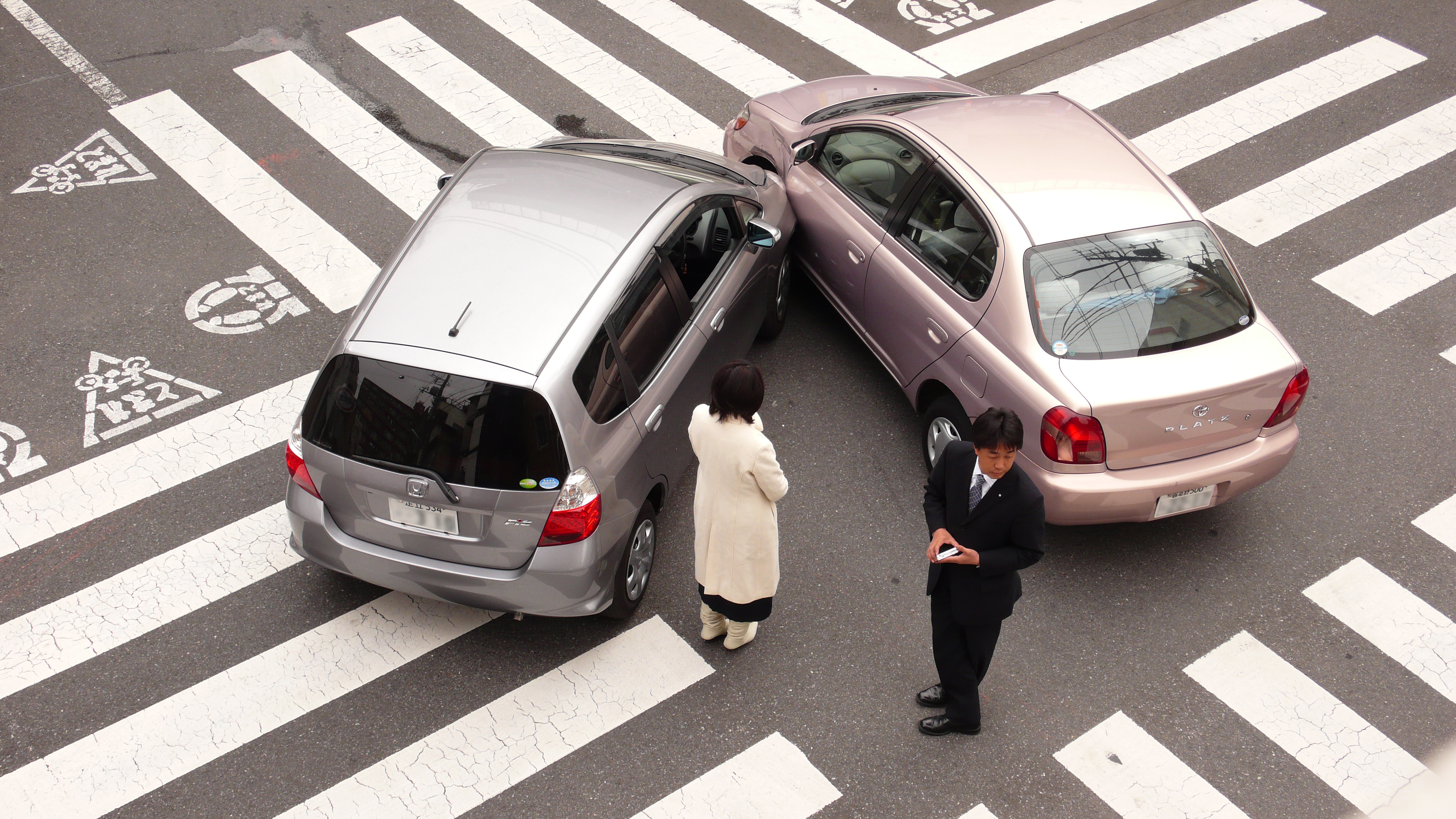
A car accident, more formally termed a motor vehicle collision, is an incident where a vehicle impacts another vehicle, a pedestrian, an animal, road debris, or a stationary object like a tree or pole. The term 'car accident' itself is increasingly scrutinized by official bodies like the Associated Press and the National Union of Journalists, who advocate for more precise language like 'collision' to avoid implying inevitability or lack of human agency. These incidents range from minor fender-benders to catastrophic pile-ups, with consequences spanning property damage, severe injuries, permanent disabilities, and fatalities.
🎵 Origins & History
The genesis of car accidents is inextricably linked to the invention and proliferation of the automobile. While early horseless carriages posed novel risks, the true era of the 'car accident' began with mass production. Early studies, like those conducted by the National Safety Council in the United States, began to quantify the human and economic costs.
⚙️ How It Works
At its core, a car accident is a physics problem involving kinetic energy. When a vehicle in motion encounters an obstruction, its kinetic energy must be dissipated. This energy transfer can cause deformation of vehicle structures, injury to occupants, and damage to the obstruction. The severity of an accident is dictated by factors such as the mass and speed of the vehicles involved, the angle of impact, and the safety features of the vehicles (e.g., airbags, seatbelts, crumple zones). Human factors, including driver distraction, impairment (e.g., alcohol or drug impairment), fatigue, and aggressive driving, are overwhelmingly the primary contributors to collision causation, according to numerous studies by organizations like the NHTSA.
📊 Key Facts & Numbers
Key figures and organizations are central to understanding and mitigating car accidents. The NHTSA (USA) sets vehicle safety standards and conducts research. The Road Safety Audits framework, developed by entities like the Federal Highway Administration, provides systematic reviews of road designs. Vision Zero, a global initiative championed by figures like Claes Tingvall, aims for zero fatalities and serious injuries on roads, shifting focus from individual blame to systemic safety improvements. Organizations like the Insurance Institute for Highway Safety (IIHS) conduct rigorous crash testing and research. In the realm of accident reconstruction, experts like Lee Moore utilize forensic engineering principles to determine the mechanics of collisions.
👥 Key People & Organizations
Car accidents have profoundly shaped culture and media. They are a recurring motif in films, literature, and news, often serving as dramatic plot devices or stark reminders of mortality. The rise of the automobile itself is a cultural phenomenon, and its inherent dangers have been both celebrated in narratives of freedom and lamented in stories of tragedy. Public service announcements (PSAs) from organizations like Mothers Against Drunk Driving (MADD) have significantly influenced public perception and behavior regarding drunk driving. The visual language of accident scenes – flashing lights, crumpled metal, emergency responders – has become instantly recognizable, reflecting the pervasive reality of road risks in modern life. The very concept of 'road rage' is a cultural byproduct of increased traffic density and driver stress.
🌍 Cultural Impact & Influence
The landscape of car accidents is continually evolving with technological advancements. The development of autonomous vehicle (AV) technology promises to drastically reduce human-error-related crashes, with proponents like Waymo and Cruise investing billions. Advanced Driver-Assistance Systems (ADAS), including automatic emergency braking (AEB) and lane keeping assist, are becoming standard in new vehicles, demonstrably reducing crash rates. However, the integration of AVs and ADAS introduces new challenges, including cybersecurity risks and ethical dilemmas in accident scenarios.
⚡ Current State & Latest Developments
The debate over terminology – 'accident' versus 'collision' – highlights a core controversy: the role of human agency and systemic design. Critics argue that 'accident' implies an unavoidable event, downplaying factors like poor road design, inadequate enforcement, and corporate negligence. The Vision Zero movement actively pushes for the term 'collision' to emphasize that these events are preventable. Another significant debate surrounds the deployment of autonomous vehicles, with ongoing discussions about safety validation, liability in the event of a crash, and the potential for AVs to exacerbate existing societal inequalities. The effectiveness and ethical implications of certain enforcement strategies, such as widespread speed cameras or facial recognition for traffic violations, also spark considerable public and political contention.
🤔 Controversies & Debates
The future of car accidents is poised for a radical transformation driven by technology. Widespread adoption of Level 4 and Level 5 autonomous vehicles could theoretically eliminate the vast majority of crashes caused by human error, potentially saving millions of lives annually. The integration of vehicle-to-everything (V2X) communication will allow cars to 'talk' to each other and to infrastructure, enabling proactive collision avoidance. Smart city initiatives will incorporate intelligent traffic management systems to optimize flow and reduce congestion, a known contributor to accidents. However, the transition period, where human-driven and autonomous vehicles share the road, presents unique safety challenges. Furthermore, the development of more robust vehicle-to-infrastructure (V2I) and vehicle-to-vehicle (V2V) communication systems will be crucial for realizing these safety gains.
🔮 Future Outlook & Predictions
Understanding car accidents has direct practical applications in engineering, public policy, and personal safety. Automotive engineers use crash data from organizations like the IIHS to design safer vehicles with improved crumple zones, advanced airbag systems, and stronger passenger compartments. Urban planners and transportation engineers utilize accident statistics to identify high-risk locations and implement traffic calming measures, redesign intersections, and improve road signage. Law enforcement agencies use accident reports for investigations and to inform traffic enforcement strategies. For individuals, understanding accident causes informs safer driving practices, such as avoiding distracted driving, adhering to speed limits, and maintaining proper vehicle maintenance, as promoted by resour
Key Facts
- Category
- phenomenon
- Type
- topic