
Contents
Overview
Classical music, a broad term encompassing Western art music from roughly the 11th century to the present, represents a monumental achievement in human artistic expression. It's not a monolithic entity but a sprawling historical and stylistic continuum, from the monophonic chants of the Middle Ages to the complex, often avant-garde works of the 21st century. Its development is intrinsically linked to societal shifts, technological advancements in instrument making, and the patronage of institutions like the church and aristocracy, later expanding to public concert halls and commercial recordings.
The genre is often periodized, with distinct eras like the Medieval, Renaissance, Baroque, Classical, Romantic, and 20th/21st-century periods, each characterized by unique compositional techniques, instrumentation, and aesthetic ideals. Composers like Johann Sebastian Bach in the Baroque era, Wolfgang Amadeus Mozart in the Classical era, and Ludwig van Beethoven bridging Classical and Romantic, are cornerstones. Later figures such as Igor Stravinsky and Arnold Schoenberg pushed boundaries, leading to a diverse array of styles in the modern era, including serialism, minimalism, and electronic music.
Classical music's influence is profound, permeating film scores, popular music, and everyday soundscapes. Despite facing challenges from changing popular tastes and the economics of the music industry, it continues to evolve, with contemporary composers finding new audiences through innovative programming, cross-genre collaborations, and digital platforms. Its enduring power lies in its complexity, emotional depth, and its ability to communicate across cultures and time.
🎬 Origins and Eras
The roots of classical music stretch back to the liturgical music of the early Christian church, particularly Gregorian chant, which laid the groundwork for Western harmony and notation. The Medieval period saw the rise of polyphony, with composers like Hildegard von Bingen and Guillaume de Machaut developing more complex vocal textures. The Renaissance brought about a flourishing of secular music, with forms like the madrigal and the development of instrumental music, influenced by innovations from composers such as Josquin des Prez and Giovanni Pierluigi da Palestrina. The subsequent Baroque era, epitomized by the towering genius of Johann Sebastian Bach, George Frideric Handel, and Antonio Vivaldi, introduced opera, the concerto, and the fugue, characterized by ornate melodies and strong rhythmic drive.
📖 The Musical Journey
The Classical period, from roughly 1750 to 1820, is often seen as the era of refinement and balance, with composers like Wolfgang Amadeus Mozart, Joseph Haydn, and early Ludwig van Beethoven mastering forms like the symphony, sonata, and string quartet. This was followed by the Romantic era (c. 1800-1910), a period of intense emotional expression, individualism, and expansion of orchestral forces, featuring titans such as Pyotr Ilyich Tchaikovsky, Johannes Brahms, and Richard Wagner. The 20th and 21st centuries witnessed an explosion of diverse styles, from the atonality of Arnold Schoenberg to the complex rhythms of Igor Stravinsky, the minimalist explorations of Philip Glass, and the electronic and experimental works of countless contemporary artists.
🏆 Reception and Challenges
The reception of classical music has varied dramatically across its history. While initially the domain of the church and aristocracy, public concerts gained prominence in the 18th century. The Romantic era saw the rise of the virtuoso performer and a more widespread public engagement. Today, classical music faces challenges in maintaining relevance in a rapidly shifting media landscape, with debates often centering on accessibility, the role of orchestras, and the future of composition. Despite this, its enduring appeal is evidenced by the continued existence of major symphony orchestras, opera houses, and conservatories worldwide, and a dedicated global audience.
✨ Enduring Influence
The legacy of classical music is immeasurable. Its harmonic language, structural principles, and melodic devices have influenced virtually every genre of Western music, from jazz and film scores to rock and pop. Composers like John Williams explicitly draw from classical traditions for their iconic movie soundtracks. The theoretical frameworks developed by classical composers remain fundamental to music education. Furthermore, the performance practices and ensemble traditions established over centuries continue to inform musical performance today, making classical music not just a historical artifact but a living, evolving tradition.
Key Facts
- Year
- Ongoing
- Origin
- Global
- Category
- videos
- Type
- documentary
Frequently Asked Questions
What's the difference between Baroque, Classical, and Romantic music?
Baroque music (c. 1600-1750) is ornate and complex (Bach, Handel). Classical music (c. 1750-1820) emphasizes balance and clarity (Mozart, Haydn). Romantic music (c. 1800-1910) is emotionally expressive and features larger orchestras (Beethoven, Tchaikovsky).
Is classical music only for old people?
While it has a rich history, classical music continues to evolve and attract diverse audiences. Many contemporary composers and performers are actively engaging younger generations through innovative concerts and digital media.
Do I need to understand music theory to enjoy classical music?
No! While understanding theory can deepen appreciation, enjoying classical music primarily relies on engaging with its melodies, harmonies, rhythms, and emotional expression. Just listen and feel.
What are the most important instruments in classical music?
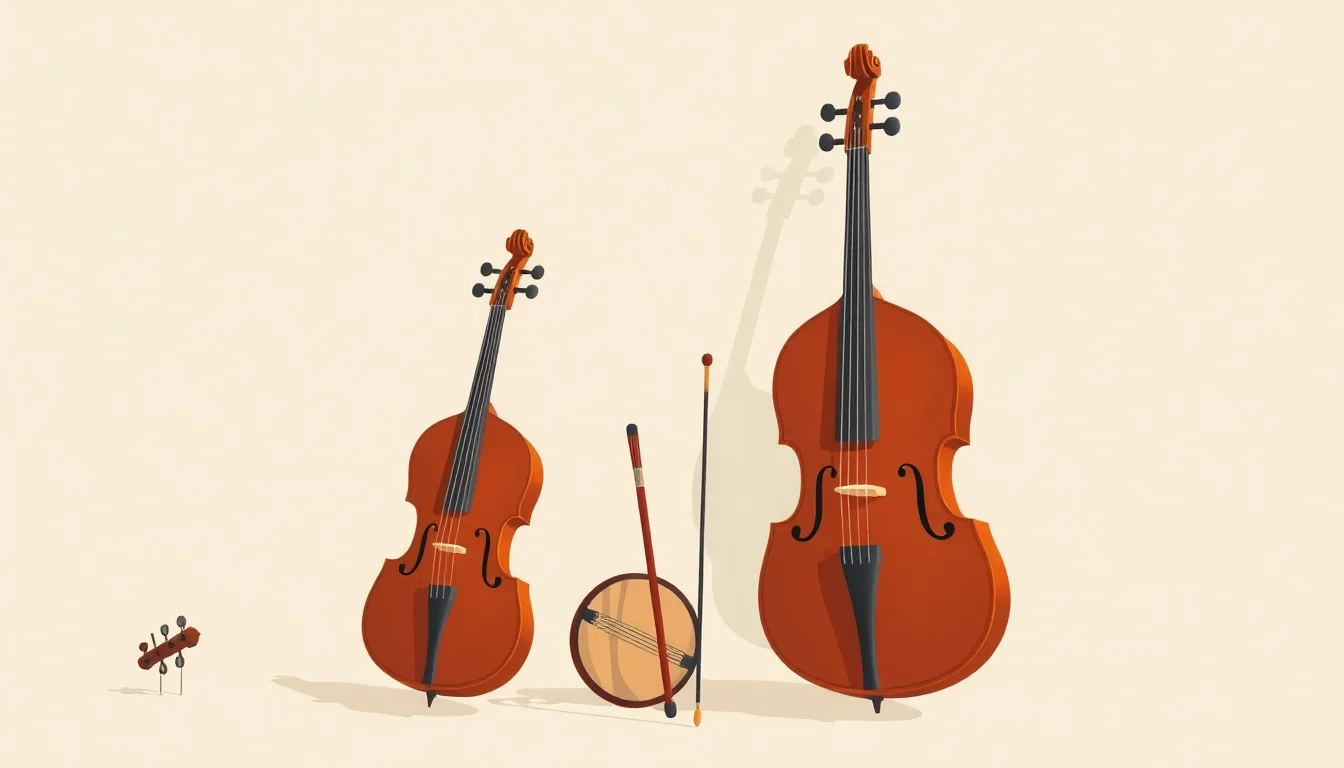
The orchestra is central, featuring strings (violin, viola, cello, double bass), woodwinds (flute, oboe, clarinet, bassoon), brass (trumpet, horn, trombone, tuba), and percussion. Piano, organ, and voice are also vital solo and ensemble instruments.