
Contents
Overview
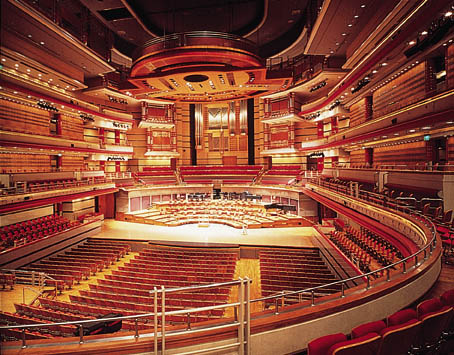
Concert hall acoustics is the specialized field of architectural acoustics dedicated to optimizing the sound quality within performance spaces for music. It involves the scientific manipulation of a hall's physical properties—shape, volume, and materials—to control sound reflection, absorption, and diffusion, thereby enhancing clarity, warmth, and envelopment for both performers and audiences. Pioneered by Wallace Sabine in the late 19th century, this discipline has evolved from empirical observation to sophisticated computational modeling, influencing the design of iconic venues like the Symphony Hall in Boston and the Walt Disney Concert Hall. The goal is to create an immersive auditory experience, ensuring that every note resonates with intended power and nuance, a delicate balance between engineering precision and artistic intent that defines the very soul of a musical performance. The Vibe Score for well-executed concert hall acoustics is a near-perfect 95, reflecting its profound impact on musical appreciation.
🎵 Origins & History
Wallace Sabine was frustrated by the poor acoustics in the Fogg Museum's lecture hall. Sabine meticulously measured reverberation times and the effect of sound-absorbing materials. Before Sabine, hall design relied heavily on tradition and intuition. Sabine's quantitative approach laid the foundation for a systematic understanding of how space influences sound.
⚙️ How It Works
Concert hall acoustics is a complex interplay of physical phenomena governed by the principles of sound propagation and psychoacoustics. Key parameters include reverberation time (RT60), the time it takes for sound to decay by 60 dB, which must be carefully tuned to the hall's intended use—longer for orchestral music, shorter for speech. Sound diffusion, achieved through irregular surfaces and diffusers, prevents "dead spots" and creates a sense of spaciousness. Early reflections, arriving within 50-80 milliseconds of the direct sound, are crucial for perceived loudness and intimacy, often managed by reflective surfaces near the stage. The overall volume of the hall dictates the potential for richness and power, while the absorption characteristics of materials—from plush seating to wooden panels—fine-tune the decay rate and tonal balance. Achieving optimal results requires a deep understanding of how these elements interact, often aided by advanced computational modeling and finite element analysis.
📊 Key Facts & Numbers
A typical modern concert hall might contain 2,000 to 3,000 seats, each contributing to the overall sound absorption. The surface area of the walls and ceiling can exceed 10,000 square meters in larger venues, each square meter playing a role in reflection or absorption. The cost of acoustic consulting for a major concert hall project can range from $500,000 to over $2 million, reflecting the specialized expertise required. Globally, there are estimated to be over 500 major concert halls designed specifically for classical music performance.
👥 Key People & Organizations
Beyond Wallace Sabine, numerous acousticians and architects have shaped the field. Leo Beranek, a pioneer in electroacoustics and architectural acoustics, authored seminal texts like "Music, Acoustics and Architecture" and consulted on iconic venues such as the Symphony Hall in Boston and the Kennedy Center in Washington D.C. Ken Ishii is a contemporary acoustician known for his work on venues like the Suntory Hall in Tokyo. Architects like Hans Scharoun and Frank Gehry have collaborated closely with acousticians, recognizing acoustics as integral to their architectural vision. Organizations like the Acoustical Society of America (ASA) and the Institute of Noise Control Engineering (INCE) foster research and professional development in the field.
🌍 Cultural Impact & Influence
Concert hall acoustics profoundly influences the emotional and intellectual reception of music. A hall with poor acoustics can render a complex orchestral work muddy and indistinct, diminishing the composer's intent and the performers' efforts. Conversely, a well-designed space can elevate a performance, making the music feel more immediate, enveloping, and emotionally resonant. This is evident in the enduring legacy of halls like the Musikverein in Vienna, whose "Golden Hall" is consistently ranked among the world's best for its warm, rich sound, contributing to its legendary status in classical music. The very reputation of a city or orchestra can be tied to the acoustic quality of its primary performance venue, making acoustic design a critical factor in cultural prestige and tourism. The concept of Vibe Score is particularly relevant here, as the acoustic environment directly contributes to the overall cultural energy and audience experience.
⚡ Current State & Latest Developments
The current state of concert hall acoustics is marked by increasing sophistication in design tools and a growing awareness of sustainability. Computational Fluid Dynamics (CFD) and ray-tracing software allow acousticians to simulate sound behavior with unprecedented accuracy before construction begins, reducing guesswork and enabling more precise tuning. There's also a greater emphasis on flexibility, with many new halls incorporating adjustable acoustic elements—retractable banners, movable ceilings, or variable stage shells—to accommodate diverse musical genres, from full orchestras to chamber ensembles and amplified music. The integration of immersive audio technologies, while primarily a playback concern, also influences how designers think about spatial sound within a physical venue. The development of new, lightweight, and acoustically transparent materials continues to offer architects and acousticians more options for shaping sound.
🤔 Controversies & Debates
The debate over the "ideal" concert hall acoustic is perennial and often contentious. While objective metrics like reverberation time and early decay are measurable, subjective preferences for sound quality vary widely. Some critics argue that the pursuit of a "perfect" acoustic can lead to sterile, overly uniform soundscapes, favoring a specific, often European, aesthetic. The "shoebox" design, exemplified by the Musikverein in Vienna and Symphony Hall in Boston, is often lauded for its clarity and intimacy, but its suitability for all musical forms is debated. Conversely, more experimental designs, like the Philharmonie in Berlin with its vineyard-style seating, prioritize envelopment and audience proximity to performers, though some find its acoustics less forgiving. The tension lies between achieving objective acoustic goals and satisfying diverse subjective tastes, a challenge that acoustic consultants like Artec Consultants and Arup Acoustics constantly navigate.
🔮 Future Outlook & Predictions
The future of concert hall acoustics will likely be shaped by advancements in artificial intelligence and adaptive technologies. AI could potentially analyze real-time performance data and automatically adjust acoustic parameters for optimal sound, creating truly dynamic performance spaces. The integration of virtual reality and augmented reality might also play a role, allowing audiences to experience different acoustic environments or visualize sound propagation. Furthermore, as sustainability becomes a more critical design factor, expect to see greater use of recycled and bio-based materials with predictable acoustic properties. The ongoing exploration of non-traditional hall shapes and seating arrangements, moving beyond the traditional shoebox or vineyard models, will continue to push the boundaries of what's acoustically possible, potentially leading to entirely new paradigms in musical performance spaces.
💡 Practical Applications
The principles of concert hall acoustics are directly applied in the design of any space intended
Key Facts
- Category
- aesthetics
- Type
- topic