
Contents
Overview
Consonance, in its broadest sense, refers to the agreeable combination of elements, most commonly in music and poetry. Musically, it describes intervals or chords perceived as stable and resolved, often associated with pleasantness, though this perception is heavily influenced by cultural context and learned musical conventions. In literature, consonance denotes the repetition of consonant sounds within words, creating a subtle sonic texture. Beyond these formal definitions, the term can extend to the harmonious alignment of ideas, concepts, or even social structures, suggesting a state of agreement or accord. The perception of consonance is not universal; what one culture or individual finds harmonious, another might perceive as bland or even dissonant, highlighting its subjective and dynamic nature. This inherent variability makes consonance a fascinating subject for analysis across music theory, linguistics, and cultural studies.
🎵 Origins & History
The concept of consonance, as a pleasing auditory or conceptual harmony, has roots stretching back to ancient Greek philosophy, particularly the Pythagorean fascination with numerical ratios and their relation to musical intervals. Aristotle, in his "Politics," discussed the impact of musical modes on character, implicitly touching upon the emotional effects of consonant and dissonant sounds. For centuries, Western music theory codified specific intervals—like the octave, perfect fifth, and perfect fourth—as consonant, based on simple integer ratios. This framework, largely established by theorists like Pythagoras and later refined by Claude Perez in 17th-century treatises, dominated musical thought. The understanding of consonance was intrinsically linked to the perceived order and beauty of the universe, a divine mathematical blueprint.
⚙️ How It Works
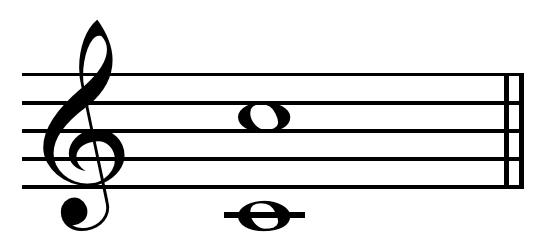
In music, consonance is typically understood through the lens of intervals and chords. Simple intervals, such as the unison (1:1 ratio), octave (2:1), perfect fifth (3:2), and perfect fourth (4:3), are generally considered consonant due to their pure, stable sound. When these intervals form chords, they create a sense of resolution and stability. Dissonance, conversely, arises from intervals with more complex ratios, like the major seventh (15:8) or minor second (16:15), which create tension. The perception of consonance is not solely acoustic; it's also psychoacoustic and cultural. What sounds consonant to a listener trained in Western classical music might sound unresolved or even jarring to someone accustomed to the microtonal scales of Indian classical music or the atonal experiments of Arnold Schoenberg. The interplay between these stable and unstable sounds forms the bedrock of musical tension and release, a fundamental element in compositions from Johann Sebastian Bach to Billie Eilish.
📊 Key Facts & Numbers
While precise global statistics on the perception of consonance are elusive, studies offer insights. Research in psychoacoustics suggests that humans generally find simple frequency ratios (e.g., 2:1 for an octave) more consonant than complex ones. A 2018 study published in Nature Human Behaviour indicated that musical consonance preferences can be learned, with infants showing a bias towards consonant intervals but adults' preferences aligning more closely with their cultural musical exposure. In poetry, consonance is a stylistic device; analysis of the Shakespearean canon reveals frequent use of consonant repetition, particularly in sonnets, to enhance rhythm and memorability. For instance, the phrase "weak wing of sleep" from Macbeth features repeated 'w' and 'k' sounds. The global music market, valued at over $25 billion in 2023, is built upon the successful manipulation of consonance and dissonance to evoke emotion and create engaging listening experiences.
👥 Key People & Organizations
Key figures in understanding consonance span centuries and disciplines. Pythagoras (c. 570 – c. 495 BC) is credited with early investigations into the mathematical basis of musical harmony. Paul Hindemith, in his 1942 book "The Craft of Musical Composition," presented a detailed theory of consonance and dissonance based on harmonic series. Linguistically, figures like Gerard Manley Hopkins (1844–1889) championed the use of consonance in poetry, influencing generations of poets. In modern music, composers like Philip Glass have explored extended consonant harmonies, while avant-garde artists like John Cage have challenged traditional notions of consonance altogether. Organizations like the Royal Academy of Music in London and the Juilliard School in New York continue to teach and debate the principles of consonance within their curricula.
🌍 Cultural Impact & Influence
Consonance profoundly shapes cultural experiences. In Western music, the prevalence of consonant harmonies in popular music, from The Beatles to Taylor Swift, underpins its broad appeal. Conversely, the deliberate use of dissonance in genres like free jazz or industrial music by artists such as Meredith Monk or Nine Inch Nails serves to express angst, chaos, or alienation. In literature, consonance contributes to the sonic richness of verse, aiding in memorization and emotional impact, a technique employed by poets from Edgar Allan Poe to contemporary spoken-word artists. The very notion of social harmony or agreement can be seen as a form of conceptual consonance, where differing viewpoints or societal elements align agreeably, a principle explored in political science and sociology.
⚡ Current State & Latest Developments
The contemporary landscape of consonance is marked by increasing globalization and technological influence. Streaming platforms like Spotify and Apple Music expose listeners to a wider array of musical traditions, potentially broadening or altering their perception of consonance. AI-powered music generation tools, such as Amper Music and Google's Magenta project, are exploring new harmonic possibilities, sometimes generating novel consonant or dissonant textures. In linguistics, computational analysis of vast text corpora, like those on Project Gutenberg, allows for more sophisticated studies of consonance in literature across different eras and languages. The debate over what constitutes "pleasant" sound continues, fueled by cross-cultural musical exchange and experimental artistic practices.
🤔 Controversies & Debates
The primary controversy surrounding consonance lies in its subjective and culturally relative nature. While Western music theory has long posited objective criteria for consonance, many scholars and musicians argue that these are merely conventions. The historical shift from the perceived dissonance of the tritone (the "devil's interval") in medieval times to its common use in jazz is a prime example. Critics of purely acoustically-driven theories, like Henry Cowell, argued for the importance of perceptual and cultural factors. Furthermore, the deliberate use of dissonance in contemporary art music, often perceived as challenging or even unpleasant by mainstream audiences, sparks debate about the purpose and boundaries of musical expression. Is the goal of music always to be consonant, or does dissonance serve an equally vital expressive function?
🔮 Future Outlook & Predictions
The future of consonance will likely be shaped by continued cross-cultural pollination and technological innovation. As AI becomes more sophisticated in music composition, we may see entirely new systems of harmony emerge, challenging our current definitions of consonance. The increasing accessibility of diverse musical traditions through digital platforms could lead to a more globalized, yet potentially homogenized, understanding of pleasing sounds. There's also a possibility of a resurgence in interest in microtonal music, which explores intervals beyond the standard 12-tone system, pushing the boundaries of what is perceived as consonant. The ongoing dialogue between acoustic principles, learned preferences, and artistic intent will continue to redefine consonance in the coming decades, with predictions suggesting a further blurring of lines between what is considered stable and what is considered tense.
💡 Practical Applications
Consonance finds practical application across numerous fields. In music production, understanding consonance and dissonance is crucial for crafting emotionally resonant melodies, harmonies, and arrangements, from pop anthems by Ariana Grande to film scores by Hans Zimmer. In speech therapy and phonetics, the study of consonant sounds (as opposed to vowel sounds) is fundamental to understanding articulation and pronunciation. In linguistics, analyzing patterns of consonance in language helps explain phonetic shifts and the evolution of dialects. Even in user interface design, the "sonance" of feedback sounds—whether a notification chime is perceived as pleasingly consonant or annoyingly dissonant—can impact user experi
Key Facts
- Category
- aesthetics
- Type
- topic