
Contents
Overview
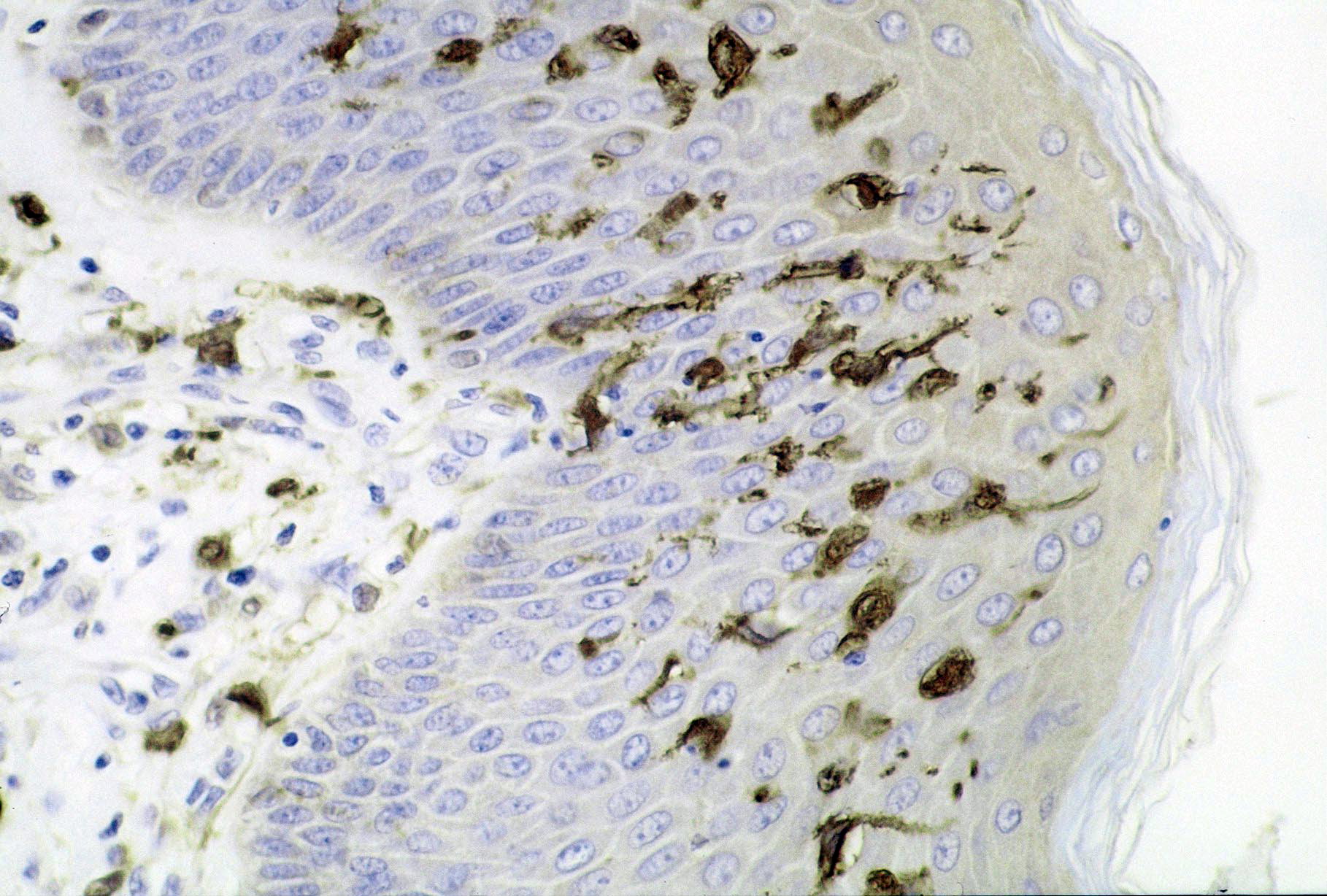
Dendritic cells (DCs) are specialized white blood cells crucial for orchestrating the immune response. These cells act as the immune system's scouts, constantly surveying tissues for foreign invaders or cellular distress signals. Upon encountering pathogens or abnormal cells, DCs capture and process antigen material, then migrate to lymph nodes. There, they present these antigens to T cells, initiating and shaping the adaptive immune response. Their unique, branched morphology, resembling tree dendrites, gives them their name and facilitates extensive interaction with other immune cells. Found in various tissues and circulating in the blood, DCs are indispensable for distinguishing self from non-self and mounting effective defenses against infection and cancer, while also playing roles in immune tolerance.
🎵 Origins & History
The concept of dendritic cells emerged from early observations of 'Langerhans cells' in human epidermis. However, their true identity and function remained obscure for over a century. It wasn't until later that their role as distinct immune cells with potent antigen-presenting capabilities was established. Research in this area, which earned a share of the 2011 Nobel Prize in Physiology or Medicine, established DCs as critical initiators of adaptive immunity, moving beyond the earlier understanding of macrophages as the primary APCs. This groundbreaking discovery fundamentally reshaped immunology, revealing a sophisticated communication network within the immune system.
⚙️ How It Works
Dendritic cells function as the immune system's primary sentinels and messengers. Immature DCs reside in peripheral tissues, where they continuously sample their environment for antigens—fragments of pathogens or abnormal self-proteins. Upon detecting danger signals, such as pathogen-associated molecular patterns (PAMPs) recognized by Toll-like Receptors (TLRs), DCs mature, upregulate co-stimulatory molecules, and begin migrating via lymphatic vessels to secondary lymphoid organs like lymph nodes. In these nodes, mature DCs present processed antigens to naive T cells. This presentation, coupled with co-stimulatory signals, is essential for activating T cells, thereby initiating antigen-specific adaptive immune responses, including cytotoxic T lymphocyte and helper T cell responses. They also interact with B cells to facilitate antibody production.
📊 Key Facts & Numbers
Dendritic cells represent a small fraction of nucleated cells in the human body, yet their impact is disproportionately large. Their precise numbers and frequencies in different tissues and blood are subjects of ongoing research. These cells play a vital role in immune surveillance and response initiation.
👥 Key People & Organizations
The foundational work on dendritic cells is inextricably linked to research that established their critical role in immunity, earning recognition such as the 2011 Nobel Prize. Major research institutions like The National Institutes of Health (NIH), Stanford University, and The University of Pennsylvania host leading DC research labs. Organizations such as the Society for Investigative Dermatology and the American Association of Immunologists foster collaboration and dissemination of findings in the field of immunology and DC biology.
🌍 Cultural Impact & Influence
Dendritic cells have profoundly influenced our understanding of immunity, shifting the paradigm from a simpler view of immune surveillance to a complex, multi-cellular communication network. This understanding has permeated medical science, inspiring new strategies in vaccine development, cancer immunotherapy, and the treatment of autoimmune diseases. The visual metaphor of their 'tree-like' dendrites has also entered popular scientific discourse, making them an accessible concept even outside specialist circles, symbolizing interconnectedness and communication within biological systems.
⚡ Current State & Latest Developments
Current research on dendritic cells is rapidly advancing, particularly in the realm of cancer immunotherapy. Scientists are exploring novel ways to engineer DCs ex vivo to target specific tumor antigens, leading to personalized cancer vaccines like dendritic cell vaccines that have shown promise in clinical trials for melanoma and other cancers. The development of CRISPR-Cas9 gene-editing technologies is enabling more precise manipulation of DC function for therapeutic purposes. Furthermore, understanding the role of specific DC subsets, such as plasmacytoid dendritic cells (pDCs), in antiviral immunity and autoimmune diseases like lupus is opening new avenues for targeted therapies. The integration of single-cell RNA sequencing is providing unprecedented resolution into DC heterogeneity and activation states.
🤔 Controversies & Debates
A significant debate revolves around the precise hierarchy and functional redundancy of different dendritic cell subsets and macrophage populations in initiating immune responses. While research has established DCs as critical antigen-presenting cells, some research suggests that under certain conditions, macrophages or other cell types can also effectively prime T cells, blurring the lines of functional specialization. Another area of contention is the optimal strategy for DC-based vaccine development; while ex vivo maturation and antigen loading are common, questions remain about the most effective methods to ensure robust and long-lasting T cell activation without inducing unwanted tolerance. The role of DCs in maintaining immune tolerance versus promoting inflammation is also a complex balance, with ongoing research seeking to precisely control this duality.
🔮 Future Outlook & Predictions
The future of dendritic cell research is poised for significant breakthroughs, particularly in therapeutic applications. We can anticipate the development of more sophisticated cancer immunotherapies that leverage genetically engineered DCs to overcome tumor immune evasion mechanisms. The use of DCs in vaccine development for infectious diseases, including HIV, and even for age-related conditions, is likely to expand. Furthermore, a deeper understanding of DC-microbe interactions could lead to novel strategies for modulating the gut microbiome and treating inflammatory bowel diseases. Predictive models integrating single-cell data will enable more personalized immune interventions, tailoring DC-based therapies to individual patient profiles. The ultimate goal is to harness the inherent power of DCs to precisely control immune responses for health and disease.
💡 Practical Applications
Dendritic cells are central to several cutting-edge therapeutic strategies. In cancer immunotherapy, DCs are harvested from patients, loaded with tumor-specific antigens or tumor cell lysates, and re-infused to stimulate anti-cancer T cell responses. This forms the basis of dendritic cell vaccines used in treating melanoma and other malignancies. DCs are also crucial for vaccine development, serving as potent adjuvants that enhance the immunogenicity of vaccine antigens, accelerating the development of vaccines against emerging infectious diseases like COVID-19. In transplantation immunology, understanding DC function is key to developing strategies that promote immune tolerance towards transplanted organs, preventing rejection. Research is also exploring their use in treating autoimmune diseases.
Key Facts
- Category
- science
- Type
- topic