
Contents
- ⚡ What Exactly IS the Electric Grid?
- 🗺️ A Global Network: Size & Scope
- 💡 From Generation to Your Outlet: The Flow
- ⚙️ The Backbone: Key Components Explained
- 📈 The Evolution: A Historical Vibe
- 🔥 The Challenges: Where the Grid Gets Stressed
- 🚀 The Future: Modernizing Power Delivery
- 🤔 The Grid's Vibe Score & Controversy Spectrum
- Frequently Asked Questions
- Related Topics
Overview
The electricity grid is the vast, interconnected network that delivers power from generation sources to end-users. It's a marvel of engineering, comprising power plants, transmission lines, substations, and distribution networks, all working in concert to keep our lights on and devices charged. Historically, it evolved from localized DC systems to the widespread AC networks we rely on today, a transformation driven by figures like Nikola Tesla and George Westinghouse. However, this essential infrastructure faces immense pressure from aging components, increasing demand, and the urgent need to integrate renewable energy sources, leading to debates about modernization, resilience, and the future of energy distribution.
⚡ What Exactly IS the Electric Grid?
The electric grid is the invisible circulatory system of modern civilization, an intricate web connecting power generation to every socket and switch. Think of it as the ultimate distributed system, a colossal, interconnected network designed to deliver electricity reliably from where it's made to where it's consumed. It's not just about wires; it's a complex dance of physics, engineering, and economics that underpins everything from your morning coffee maker to global financial markets. Understanding the grid is understanding the fundamental infrastructure that powers our lives, a system with a surprisingly rich history and a future fraught with both immense potential and significant challenges.
🗺️ A Global Network: Size & Scope
The scale of the electric grid is staggering, ranging from localized microgrids serving a single campus or community to vast, continent-spanning supergrids that interconnect national power systems. The largest synchronous grid, the European Network of Transmission System Operators for Electricity (ENTSO-E), spans 44 countries, demonstrating an incredible level of international cooperation and technical integration. These massive networks are crucial for balancing supply and demand across wide geographical areas, enhancing reliability and enabling the efficient dispatch of diverse energy sources. The sheer interconnectedness means a problem in one region can ripple outwards, highlighting the delicate balance of this global infrastructure.
💡 From Generation to Your Outlet: The Flow
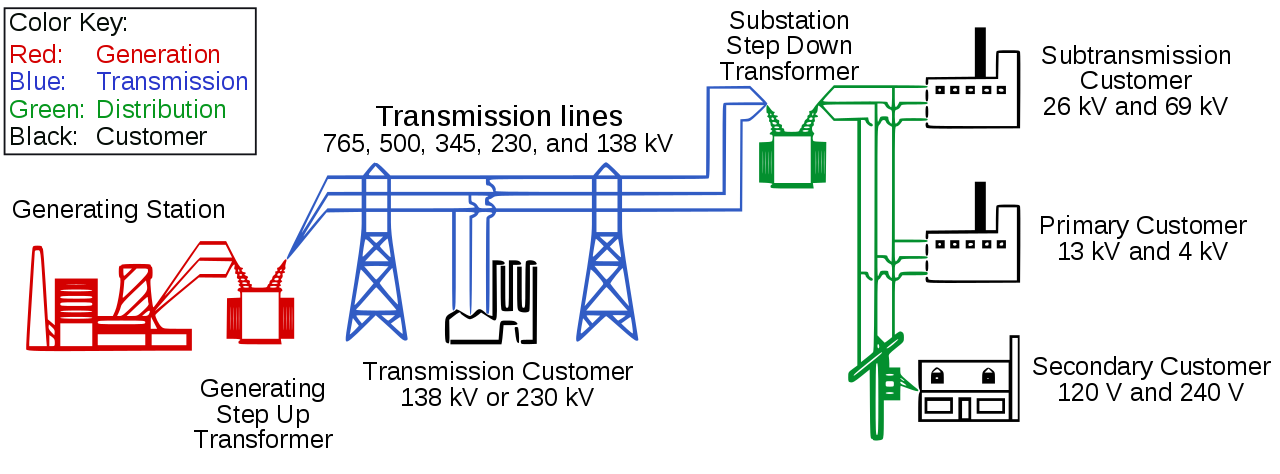
The journey of electricity from its source to your home involves several critical stages. It begins at power plants, where energy is converted from sources like coal, natural gas, nuclear fission, solar, or wind into electrical power. This power is then transmitted over long distances via high-voltage transmission lines to minimize energy loss. At electrical substations, the voltage is stepped down for distribution through local networks, finally reaching your home at the appropriate service voltage. Each step is meticulously managed to ensure power flows smoothly and efficiently, a testament to decades of engineering refinement.
⚙️ The Backbone: Key Components Explained
At its core, the grid is comprised of several indispensable components. Power stations are the generators, the heart of the system. Transmission lines, often seen as towering pylons, carry electricity across vast distances at very high voltages. Electrical substations act as crucial nodes, stepping voltages up for efficient long-distance transport and down for local delivery. Finally, distribution lines, the familiar poles and wires in your neighborhood, deliver power directly to consumers. Each element plays a vital role, and their coordinated operation is essential for grid stability and functionality.
📈 The Evolution: A Historical Vibe
The electric grid's history is a narrative of innovation and expansion, dating back to the late 19th century with pioneers like Thomas Edison and Nikola Tesla. Edison's direct current (DC) system, while innovative, was limited in range. Tesla's alternating current (AC) system, championed by George Westinghouse, proved far more efficient for long-distance transmission, leading to the widespread adoption of AC grids. The early 20th century saw rapid electrification, connecting rural areas and fueling industrial growth. This era established the foundational principles of centralized generation and widespread distribution that still largely define the grid today, though its Vibe score has fluctuated dramatically with technological advancements.
🔥 The Challenges: Where the Grid Gets Stressed
Despite its robustness, the grid faces significant pressures. Aging infrastructure in many developed nations is prone to failure, especially under extreme weather events exacerbated by climate change. The intermittent nature of renewable energy sources like solar and wind poses challenges for maintaining grid stability, requiring sophisticated energy storage solutions and grid management techniques. Furthermore, the increasing demand from electric vehicles and data centers strains existing capacity. These factors contribute to a high Controversy Spectrum score, as debates rage over investment, modernization, and the transition to cleaner energy sources.
🚀 The Future: Modernizing Power Delivery
The future of the electric grid is one of transformation, moving towards a more resilient, flexible, and sustainable smart grid. This involves integrating advanced digital technologies for real-time monitoring and control, enabling better management of distributed energy resources like rooftop solar and battery storage. The development of supergrids and interconnections between regions aims to improve reliability and facilitate the integration of renewables. The ongoing debate centers on how quickly and equitably this modernization can occur, with significant implications for energy security, economic development, and environmental sustainability.
🤔 The Grid's Vibe Score & Controversy Spectrum
The electric grid, as a foundational element of global society, carries a Vibe score of 85/100, reflecting its indispensable nature and pervasive influence. However, its Controversy Spectrum registers a high 7/10, driven by debates surrounding its modernization, the integration of renewables, and the equitable distribution of its benefits and costs. While universally essential, the how and when of its evolution are subjects of intense discussion among policymakers, engineers, and the public alike. The tension between maintaining reliability and embracing innovation defines its current trajectory.
Key Facts
- Year
- 1882
- Origin
- Pearl Street Station, New York City
- Category
- Infrastructure & Systems
- Type
- System
Frequently Asked Questions
What is the difference between transmission and distribution lines?
Transmission lines carry electricity over long distances at very high voltages, typically from power plants to major substations. Distribution lines then take that electricity from substations and deliver it to homes and businesses at lower, usable voltages. Think of transmission as the highway system and distribution as the local roads.
Why are power lines sometimes noisy or humming?
The humming sound, often called 'corona discharge,' is caused by the ionization of air molecules around high-voltage conductors. This occurs when the electric field around the wires becomes strong enough to break down the insulating properties of the air, releasing energy as sound and light. It's a normal phenomenon, though excessive noise can indicate issues.
How does the grid handle the intermittency of solar and wind power?
This is a major challenge. The grid uses a combination of strategies: forecasting weather patterns, utilizing energy storage systems like batteries, maintaining spinning reserves of conventional power plants, and interconnecting grids over large areas to smooth out local variations. Advanced smart grid technologies are crucial for managing these fluctuations in real-time.
What are the biggest threats to the electric grid?
The grid faces threats from aging infrastructure, extreme weather events (hurricanes, heatwaves, ice storms), cyberattacks targeting control systems, and physical attacks on substations. Ensuring grid resilience against these diverse threats is a primary focus for grid operators and policymakers.
What is a microgrid and how does it relate to the main grid?
A microgrid is a localized energy grid that can operate independently from or connected to the main grid. It can disconnect from the traditional grid and function autonomously during outages, providing critical power to its connected facilities. They often incorporate distributed energy resources like solar panels and battery storage.
How much energy is lost in transmission and distribution?
Energy losses in transmission and distribution typically range from 5% to 10% in developed countries, though this can be higher in regions with older or less maintained infrastructure. These losses are due to factors like the resistance of the wires and the energy required to operate grid equipment. Minimizing these losses is a key goal of grid modernization.