
Contents
Overview
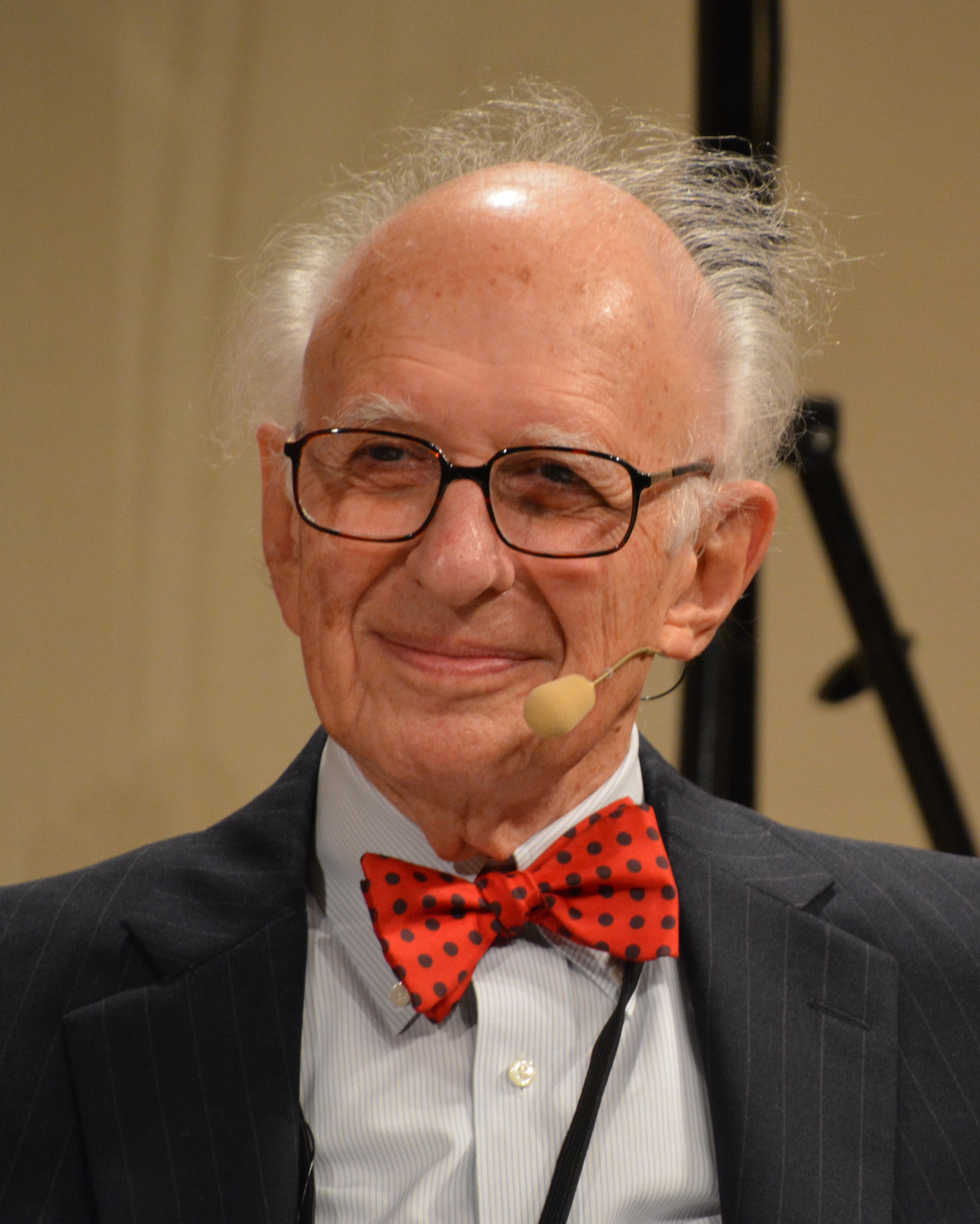
Born in Vienna, Austria, on November 7, 1929, his early life was profoundly shaped by the rise of Nazism. His family fled Austria in 1939, immigrating to the United States and settling in Brooklyn, New York. Kandel's initial academic interests were in history and psychoanalysis, leading him to study at Harvard University before pursuing medicine. He earned his medical degree from the Columbia University College of Physicians and Surgeons in 1956. It was during his psychiatric residency at Yale University that Kandel became captivated by the possibility of understanding the biological underpinnings of mental processes, particularly memory, a pursuit that would define his illustrious career and lead him to work with simpler model organisms like the sea slug Aplysia californica.
⚙️ How It Works
Kandel's research hinges on identifying the molecular and cellular changes that occur in neurons during learning and memory. By studying Aplysia californica, a marine mollusk with a relatively simple nervous system and large, identifiable neurons, he was able to trace the biochemical pathways involved in habituation and sensitization. He demonstrated that short-term memory involves transient changes in existing synapses, such as increased neurotransmitter release, while long-term memory requires the synthesis of new proteins and the growth of new synaptic connections. This work elucidated the role of cyclic AMP (cAMP) and protein kinase A (PKA) in memory consolidation, and later identified specific genes like CREB that are crucial for long-term memory formation. His findings provided a concrete molecular basis for how experiences can alter brain function and lead to lasting behavioral changes.
📊 Key Facts & Numbers
Kandel's work has been recognized with numerous prestigious awards. The Nobel Prize in Physiology or Medicine in 2000, awarded for his discoveries concerning signal transduction in the nervous system in relation to memory storage, is the pinnacle of his scientific achievements. He has published over 600 scientific papers and authored several influential books, including 'Principles of Neural Science,' a foundational textbook in the field, and his memoir 'In Search of Memory.' He has been a Howard Hughes Medical Institute investigator for nearly four decades, securing substantial research funding, estimated to be in the tens of millions of dollars over his career.
👥 Key People & Organizations
Central to Kandel's scientific journey are his collaborations and mentorship. Paul Greengard and Arvid Carlsson, fellow Nobel laureates, were contemporaries whose work on neurotransmission and signaling pathways complemented Kandel's own. At Columbia University, he founded and directed the Center for Neurobiology and Behavior (now the Department of Neuroscience), fostering a vibrant research environment. His wife, Denise Kandel, a neurobiologist herself, has been a consistent collaborator and intellectual partner throughout his career. He also benefited from early mentorship by Harry Einhorn, who encouraged his pursuit of neuroscience.
🌍 Cultural Impact & Influence
Kandel's influence extends far beyond the laboratory, significantly shaping our understanding of the mind and mental illness. His work provided a biological framework for understanding conditions like PTSD and addiction, suggesting that these too involve molecular changes in the brain that could potentially be targeted therapeutically. His accessible writing, particularly in 'In Search of Memory,' has inspired countless students and the public alike to engage with the complexities of neuroscience. The National Academy of Sciences has recognized his contributions with numerous accolades, underscoring his stature in American science. His research has also spurred advancements in computational neuroscience and the development of new pharmacological treatments for cognitive disorders.
⚡ Current State & Latest Developments
As of 2024, Kandel remains an emeritus professor at Columbia University and continues to engage in scientific discourse. While his primary research on Aplysia has largely concluded, the principles he uncovered are being applied to more complex mammalian models of memory and learning. He remains a vocal advocate for basic scientific research and the importance of understanding the brain's fundamental mechanisms. Recent discussions in neuroscience often reference his foundational work when exploring new avenues in artificial intelligence and brain-computer interfaces, seeking to replicate or understand biological learning processes.
🤔 Controversies & Debates
One persistent debate surrounding Kandel's work, and indeed much of molecular neuroscience, is the extent to which findings from simple model organisms like Aplysia can be directly extrapolated to the vastly more complex human brain. Critics sometimes argue that focusing solely on molecular mechanisms might overlook the crucial role of higher-level cognitive processes, social interactions, and individual experience in shaping memory. While Kandel's Nobel Prize recognized his work on the physiological basis of memory, some philosophers and psychologists maintain that a complete understanding of consciousness and memory requires integrating these molecular insights with broader psychological and phenomenological perspectives. The reductionist approach, while powerful, is not without its limitations in capturing the full spectrum of human cognition.
🔮 Future Outlook & Predictions
The future of memory research, heavily influenced by Kandel's foundational work, is poised for significant advancements. With the advent of CRISPR technology and sophisticated optogenetic tools, researchers are gaining unprecedented control over neural circuits and gene expression in mammals, allowing for more direct testing of Kandel's hypotheses in complex brains. The ongoing exploration into the molecular basis of memory consolidation and retrieval is expected to yield new therapeutic strategies for memory disorders such as Alzheimer's disease and age-related cognitive decline. Furthermore, understanding how memories are encoded and retrieved at a molecular level could inform the development of more sophisticated machine learning algorithms and artificial memory systems.
💡 Practical Applications
Kandel's discoveries have direct implications for understanding and treating neurological and psychiatric conditions. His work on long-term potentiation (LTP) and depression, for instance, has informed the development of antidepressant medications that target specific molecular pathways in the brain. Furthermore, his research provides a scientific basis for psychotherapy techniques that aim to modify maladaptive memories, such as those involved in phobias and trauma. The principles of synaptic plasticity he elucidated are also being explored in the context of rehabilitation after brain injury, aiming to harness the brain's natural ability to rewire itself.
Key Facts
- Category
- science
- Type
- topic