
Contents
Overview
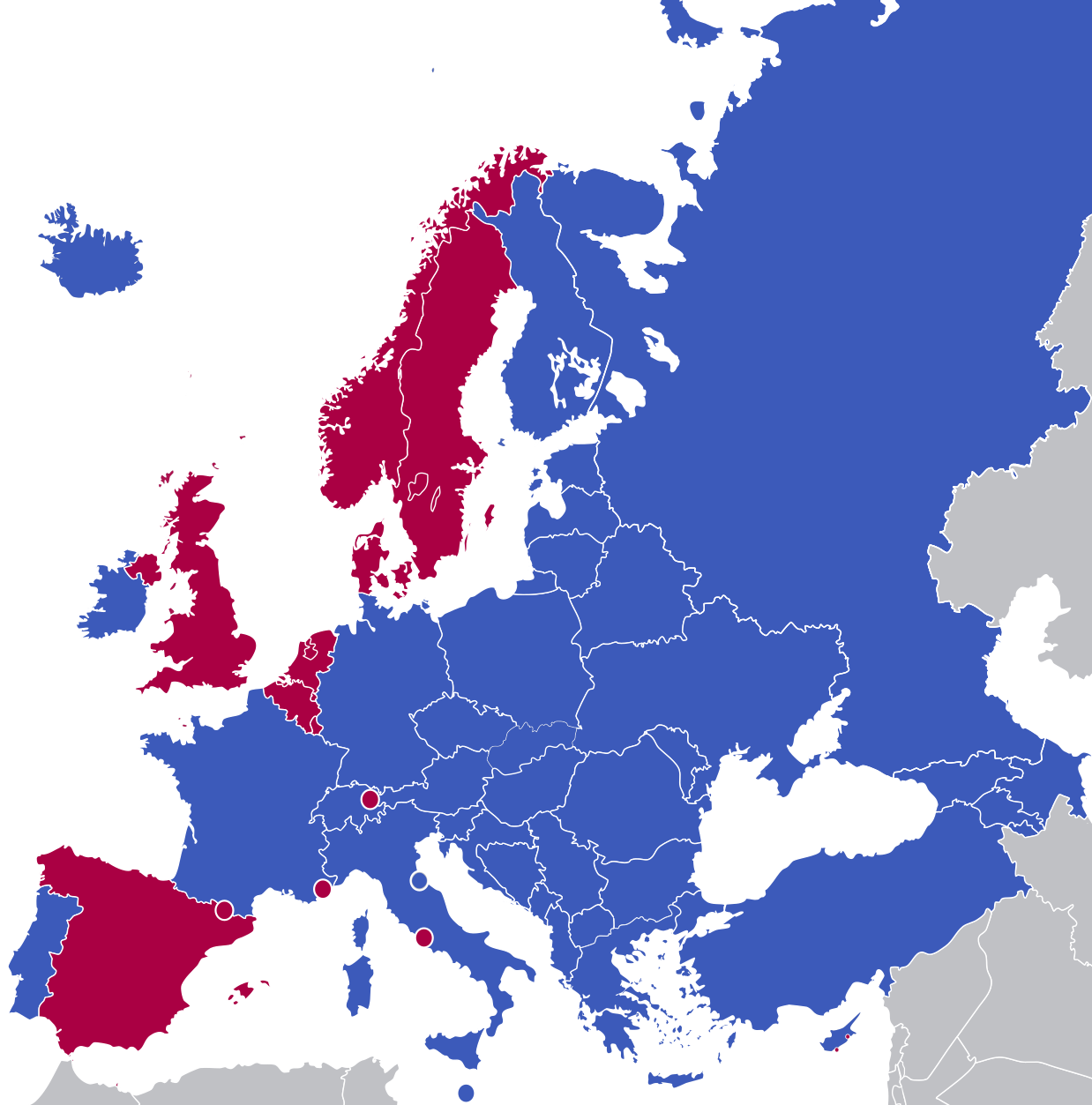
The history of European monarchies is complex and multifaceted, with roots in the Middle Ages when monarchs like Charlemagne and William the Conqueror ruled over vast territories. The concept of monarchy was influenced by the ideas of philosophers like Aristotle and Thomas Aquinas, who wrote about the role of monarchs in their works, such as Aristotle's 'Politics' and Aquinas' 'Summa Theologica'. As the centuries passed, monarchies evolved and adapted to changing circumstances, with some, like the United Kingdom, becoming constitutional monarchies, while others, like France, experienced revolutions that led to the establishment of republics, as seen in the French Revolution and the rise of Napoleon Bonaparte. Today, monarchies like Denmark, Norway, and Sweden continue to play an important role in their respective countries, with monarchs like Queen Margrethe II of Denmark and King Harald V of Norway serving as symbols of national identity and tradition, as discussed by historians like David Cannadine and Jeremy Black.
👑 How It Works
The inner workings of European monarchies vary from country to country, but most are constitutional monarchies, where the monarch's powers are limited by a constitution or laws. In the United Kingdom, for example, the monarch serves as head of state but has limited powers, with most executive authority resting with the Prime Minister, as seen in the relationship between Queen Elizabeth II and Prime Ministers like Tony Blair and Boris Johnson. In contrast, monarchs like the King of Sweden have more formal powers, but these are largely ceremonial, as discussed by scholars like Vernon Bogdanor and Robert Hazell. The role of monarchies in modern Europe is also influenced by international organizations like the European Union, which has led to increased cooperation and integration among European countries, as seen in the EU's monarchies like Belgium and the Netherlands, with monarchs like King Philippe of Belgium and King Willem-Alexander of the Netherlands playing a role in promoting European unity.
🌍 Cultural Impact
European monarchies have had a profound impact on culture and society, with many monarchs serving as patrons of the arts and supporters of charitable causes. The British monarchy, for example, has a long history of supporting organizations like the Royal Academy of Arts and the Prince's Trust, founded by Prince Charles, as discussed by art historians like Andrew Graham-Dixon and cultural critics like Jonathan Freedland. Monarchs like Queen Beatrix of the Netherlands and King Carl XVI Gustaf of Sweden have also been involved in environmental and social causes, highlighting the role of monarchies in promoting social responsibility and sustainability, as seen in the work of organizations like the World Wildlife Fund and the Swedish Red Cross. The cultural significance of European monarchies is also reflected in their continued popularity, with many people around the world fascinated by the history and pageantry of monarchies like the British royal family, as discussed by scholars like Paul Burrell and Dickie Arbiter.
🔮 Legacy & Future
The future of European monarchies is uncertain, with some arguing that they are outdated and undemocratic, while others see them as an important part of national identity and tradition. As the European Union continues to evolve and integrate, it is likely that monarchies will play a role in shaping the continent's future, with monarchs like King Felipe VI of Spain and King Philippe of Belgium serving as symbols of national unity and cooperation, as discussed by scholars like Timothy Garton Ash and Ian Kershaw. However, the legacy of European monarchies is also complex and contested, with some criticizing their historical role in colonialism and imperialism, as seen in the debates surrounding the British monarchy's role in the slave trade and the colonization of Africa, as discussed by historians like Niall Ferguson and Linda Colley. Ultimately, the future of European monarchies will depend on their ability to adapt and evolve in response to changing circumstances, while also respecting their historical significance and cultural importance, as discussed by scholars like David Cannadine and Jeremy Black.
Key Facts
- Year
- 2025
- Origin
- Europe
- Category
- history
- Type
- concept
Frequently Asked Questions
What is the history of European monarchies?
European monarchies have a rich history dating back to the Middle Ages, with monarchs like Charlemagne and William the Conqueror ruling over vast territories. The concept of monarchy was influenced by the ideas of philosophers like Aristotle and Thomas Aquinas, and evolved over time with the rise of constitutional monarchies and the decline of absolute monarchies, as discussed by historians like David Cannadine and Jeremy Black.
What is the role of monarchies in modern Europe?
Monarchies in modern Europe serve as symbols of national identity and tradition, with many monarchs involved in charitable causes and supporting the arts. However, the role of monarchies is also contested, with some arguing that they are outdated and undemocratic, as discussed by scholars like Timothy Garton Ash and Ian Kershaw. The future of European monarchies will depend on their ability to adapt and evolve in response to changing circumstances, while also respecting their historical significance and cultural importance.
What is the cultural significance of European monarchies?
European monarchies have had a profound impact on culture and society, with many monarchs serving as patrons of the arts and supporters of charitable causes. The cultural significance of European monarchies is also reflected in their continued popularity, with many people around the world fascinated by the history and pageantry of monarchies like the British royal family, as discussed by scholars like Paul Burrell and Dickie Arbiter. However, the legacy of European monarchies is also complex and contested, with some criticizing their historical role in colonialism and imperialism, as seen in the debates surrounding the British monarchy's role in the slave trade and the colonization of Africa.
What is the future of European monarchies?
The future of European monarchies is uncertain, with some arguing that they are outdated and undemocratic, while others see them as an important part of national identity and tradition. As the European Union continues to evolve and integrate, it is likely that monarchies will play a role in shaping the continent's future, with monarchs like King Felipe VI of Spain and King Philippe of Belgium serving as symbols of national unity and cooperation, as discussed by scholars like Timothy Garton Ash and Ian Kershaw. However, the legacy of European monarchies is also complex and contested, with some criticizing their historical role in colonialism and imperialism, as seen in the debates surrounding the British monarchy's role in the slave trade and the colonization of Africa.
How have European monarchies influenced each other?
European monarchies have influenced each other throughout history, with monarchs like Napoleon Bonaparte and Queen Victoria playing a significant role in shaping the modern concept of European monarchy. The rise of constitutional monarchies in countries like the United Kingdom and Sweden has also had an impact on the development of monarchies in other European countries, as discussed by scholars like David Cannadine and Jeremy Black. However, the influence of European monarchies on each other is also complex and multifaceted, with some monarchies serving as models for others, while others have been criticized for their historical role in colonialism and imperialism, as seen in the debates surrounding the British monarchy's role in the slave trade and the colonization of Africa.