
Contents
Overview
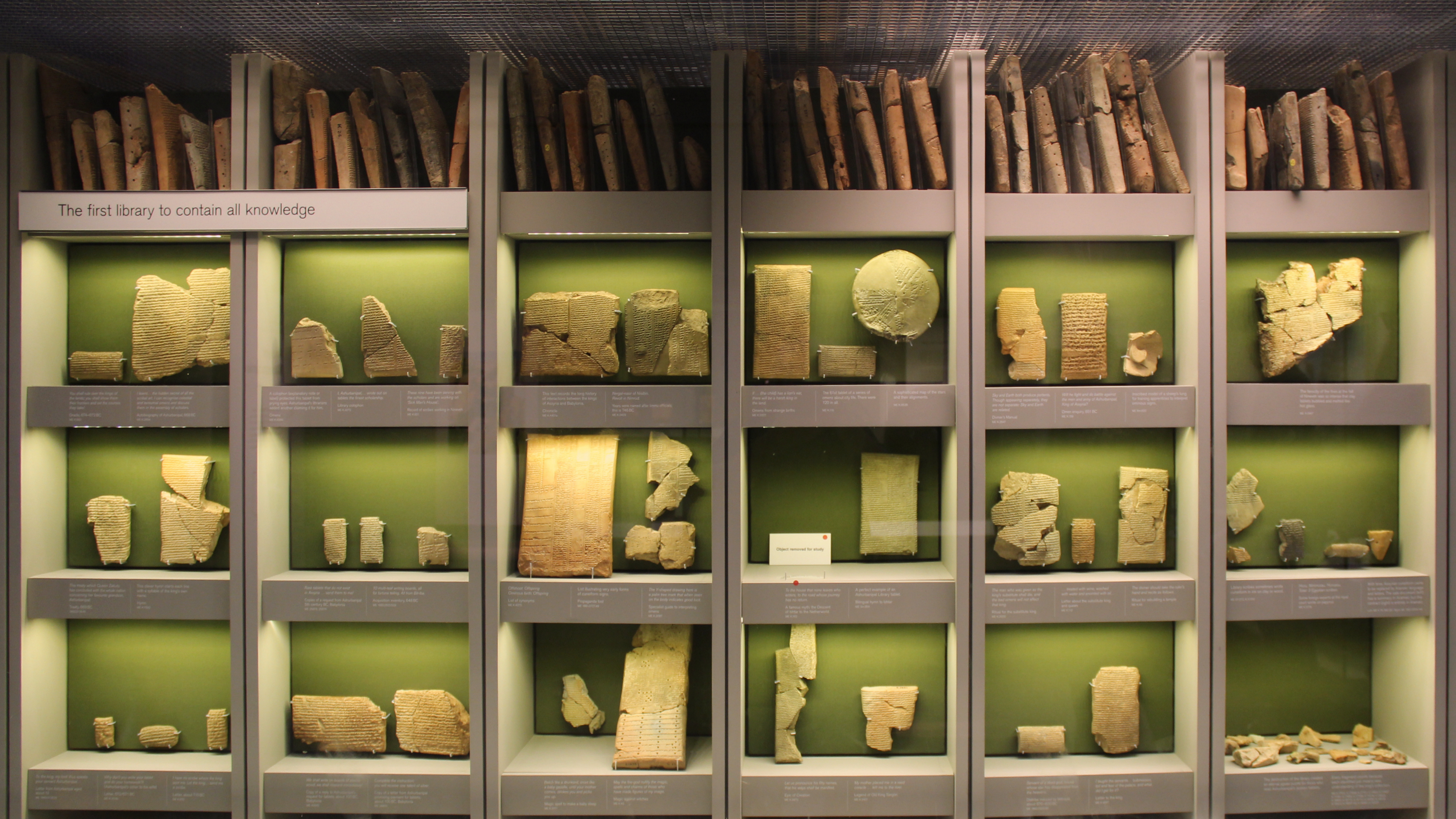
The genesis of the Great Library of Ashurbanipal lies not in a single act of creation, but in the deliberate consolidation of existing royal archives and the systematic acquisition of new texts by King Ashurbanipal during his reign (c. 668–627 BCE). While earlier Assyrian kings maintained records, Ashurbanipal's ambition was unprecedented: to gather all the world's knowledge into his palace at Nineveh. He dispatched scribes across his vast empire, from the Mediterranean coast to the Persian Gulf, to copy texts from older libraries, temples, and private collections. This monumental effort ensured the preservation of literature, science, and history that might otherwise have been lost. The library's contents were meticulously organized, cataloged with colophons (identifying the tablet's content and origin), and stored in designated rooms within the royal palace, a testament to Assyrian administrative prowess and Ashurbanipal's personal intellectual curiosity, a trait noted by historians like H. G. Wells.
⚙️ How It Works
The library functioned as a sophisticated information retrieval system for its time. Tablets were inscribed in cuneiform script on clay, a durable medium that, when baked, could last for millennia. Texts were categorized by subject matter, with tablets on similar topics grouped together. A key innovation was the use of colophons, which acted as bibliographic entries, often stating the title of the work, the number of lines, and sometimes even the name of the scribe or the source from which the text was copied. This allowed scribes and scholars to locate specific information efficiently. The library's holdings were not static; new tablets were continuously added, and existing ones were repaired or recopied. The organization was so advanced that scholars today can reconstruct the library's layout and cataloging system with remarkable accuracy, a feat of archaeological detective work led by figures like John Curtis.
📊 Key Facts & Numbers
The sheer scale of the Great Library of Ashurbanipal is staggering. It comprises over 30,000 tablets and fragments, representing an estimated 10,000 distinct literary works. These texts span a vast chronological depth, with some originating from as early as the 2nd millennium BCE. The library's collection includes a significant number of literary works, omen texts, historical inscriptions, and significant collections of medical, astronomical, and lexicographical materials. The Epic of Gilgamesh is among the works found in the library. The administrative records indicate that the library's cataloging system alone comprised hundreds of tablets. The total weight of the recovered artifacts is estimated to be several tons, requiring specialized handling and preservation techniques by institutions like the British Museum.
👥 Key People & Organizations
The driving force behind the library was King Ashurbanipal, the last great ruler of the Neo-Assyrian Empire, whose reign (c. 668–627 BCE) marked both the zenith and the beginning of the end for Assyria. His personal dedication to scholarship and his vision for a comprehensive collection are well-documented. Key figures in its rediscovery include Austen Henry Layard, who led initial excavations at Nineveh in the 1840s and 1850s, and his assistant Hormuzd Rassam, who unearthed the majority of the library's tablets. The British Museum played a pivotal role in acquiring, cataloging, and studying these artifacts, with scholars like E. A. Wallis Budge dedicating their careers to deciphering and translating the cuneiform texts.
🌍 Cultural Impact & Influence
The cultural impact of the Great Library of Ashurbanipal is immeasurable, fundamentally reshaping our understanding of ancient Near Eastern civilizations. The discovery of the Epic of Gilgamesh provided the world with one of the earliest known literary masterpieces, revealing sophisticated themes of mortality, friendship, and the human condition. The library's medical texts offer insights into ancient pharmacology and surgery, predating many later medical advancements. Its astronomical records and omen texts demonstrate a sophisticated understanding of celestial phenomena and a complex system of divination that influenced later Babylonian and Greek astrology. The sheer volume of historical records, royal inscriptions, and administrative documents has allowed historians to reconstruct the political landscape, social structures, and economic activities of the Neo-Assyrian Empire and its contemporaries with unprecedented detail, a process that continues to be refined by scholars like Simo Parpola.
⚡ Current State & Latest Developments
The library's physical remnants are primarily housed and studied at the British Museum in London, where they undergo ongoing conservation and digital archiving. Modern techniques, including 3D scanning and advanced imaging, are being employed to create digital facsimiles of the fragile clay tablets, making them accessible to a global audience and aiding in the reconstruction of fragmented texts. Researchers are also utilizing computational linguistics and artificial intelligence to accelerate the translation and analysis of the vast corpus of cuneiform literature. The ongoing political instability in Iraq, particularly in the region of Mosul, has presented challenges to direct archaeological work at the Nineveh site, necessitating a greater reliance on existing collections and digital surrogates, a situation that concerns heritage organizations like UNESCO.
🤔 Controversies & Debates
One of the primary controversies surrounding the library revolves around the ethics of its excavation and acquisition. Many of the tablets were removed from Iraq during the colonial era by British archaeologists, leading to ongoing debates about repatriation and cultural heritage ownership, a sentiment echoed by Iraqi cultural authorities. Another point of contention, though largely resolved by modern scholarship, was the initial interpretation of certain texts, particularly the Epic of Gilgamesh, and its perceived parallels with biblical narratives like the Story of Noah, which fueled early debates about the origins of religious texts. Furthermore, the destruction of parts of the Nineveh site by ISIS in 2015, though not directly targeting the library's main collection (which was largely removed prior to the destruction), highlighted the vulnerability of ancient heritage sites and the ongoing threat of cultural vandalism.
🔮 Future Outlook & Predictions
The future of the Great Library of Ashurbanipal lies in enhanced digital accessibility and interdisciplinary research. Efforts are underway to create comprehensive, searchable databases of all translated texts, allowing for more sophisticated comparative analysis across different genres and historical periods. Researchers anticipate that advanced AI tools will help identify previously unrecognized patterns in the texts, potentially uncovering new literary works or shedding light on obscure scientific or philosophical concepts. The ongoing decipherment of marginal or damaged sections of tablets may reveal further details about Assyrian society, religion, and daily life. There is also a growing movement to train a new generation of Assyriologists, ensuring the continued study and interpretation of this vital historical resource, with institutions like the University of Oxford playing a key role in this educational push.
💡 Practical Applications
The practical applications of studying the Great Library of Ashurbanipal are primarily academic and historical, but they extend to broader fields. For historians, it provides primary source material for understanding the political, social, and economic structures of the ancient Near East, offering insights into governance, law, and international relations that can inform contemporary studies. For linguists, the cuneiform texts are crucial for understanding the evolution of ancient languages and writing systems. For literary scholars, the library offers a rich corpus of early narrative, poetry, and wisdom l
Key Facts
- Category
- history
- Type
- topic