
Contents
Overview
The genesis of the Greek language traces back to the Proto-Greek period, likely emerging around the 3rd millennium BCE. The earliest attested form, Mycenaean Greek, is found on Linear B tablets dating from the 15th century BCE, primarily administrative and economic records unearthed at sites like Pylos and Knossos. Following the collapse of Mycenaean civilization, a 'dark age' ensued with a hiatus in written records until the adoption of an alphabet around the 8th century BCE, which was adapted to create the Classical Greek alphabet. This period saw the flourishing of epic poetry, most notably the works of Homer, whose Iliad and Odyssey became cornerstones of Western literature. The language then diversified into various dialects, including Attic (spoken in Athens), Ionic, Doric, and Aeolic, each leaving its mark on subsequent linguistic developments. Koine Greek, a Hellenistic koiné (common dialect), emerged following the conquests of Alexander the Great, becoming the lingua franca of the Eastern Mediterranean and the language of the New Testament. Medieval Greek, or Byzantine Greek, followed, evolving into Modern Greek.
⚙️ How It Works
The Greek language is characterized by its rich inflectional system, a hallmark of its heritage. Nouns, pronouns, and adjectives decline for case (nominative, genitive, accusative, vocative), number (singular, dual, plural), and gender (masculine, feminine, neuter). Verbs are conjugated for person, number, tense, mood, and voice. A distinctive feature is the dual voice system for verbs: active and passive. The language also retains a complex system of moods, including indicative, imperative, subjunctive, and optative, though the optative mood has largely fallen out of use in Modern Greek. The Greek alphabet, comprising 24 letters, is phonemic, with each letter generally representing a single sound. Diacritics, such as the acute, grave, and circumflex accents, historically indicated pitch, but in Modern Greek, the polytonic system has been simplified to a monotonic system, primarily marking stress. The vocabulary is vast, with a significant portion of scientific and technical terms in Western languages deriving from Greek roots, such as 'biology' (bios + logos) and 'philosophy' (philos + sophia).
📊 Key Facts & Numbers
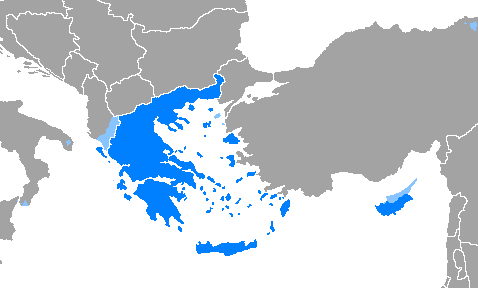
Approximately 13 million people speak Greek worldwide, with the majority residing in Greece and Cyprus. There are also significant Greek-speaking communities in Albania, Turkey, and diaspora populations in the United States, Australia, and Canada. The Greek alphabet has 24 letters, and its use dates back to around the 8th century BCE. The earliest written records, Mycenaean Greek in Linear B, date back to the 15th century BCE, making its documented history over 3,400 years long. Modern Greek has two main standard forms: Demotic (Dimotiki), the official language, and Katharevousa, a more archaic form that was influential until the late 20th century. The Greek language has contributed an estimated 50,000 words to the English language, including 'democracy', 'physics', 'theater', and 'music'.
👥 Key People & Organizations
While no single individual 'founded' the Greek language, its development is inextricably linked to countless scholars, poets, and philosophers. Key figures in its literary history include Homer, whose epic poems, the Iliad and Odyssey, codified early Greek. Plato and Aristotle established philosophical discourse in Classical Attic Greek, shaping Western thought for millennia. During the Hellenistic period, Euclid wrote his seminal work on geometry, The Elements, in Greek. In the Byzantine era, figures like John Chrysostom contributed to the development of Medieval Greek. For Modern Greek, Dionysios Solomos, the national poet of Greece, played a crucial role in establishing Demotic Greek as a literary language. The University of Athens and the Aristotle University of Thessaloniki are major centers for Greek language and literature studies. Organizations like the Hellenic Foundation for Culture actively promote the language and culture globally.
🌍 Cultural Impact & Influence
The influence of the Greek language on Western civilization is immeasurable. Ancient Greek literature, philosophy, and science laid the groundwork for much of modern thought. The Greek alphabet is the ancestor of the Latin alphabet, used by English and many other European languages, as well as the Cyrillic alphabet. Greek provided a vast lexicon of scientific, medical, and philosophical terms that are still in use today. Concepts like democracy, philosophy, logic, and mathematics are Greek in origin and were first articulated and debated in the Greek language. The New Testament, written in Koine Greek, has profoundly shaped Christianity and global culture. The enduring legacy of Greek literature, from Sophocles' tragedies to Nikos Kazantzakis' novels, continues to resonate, influencing writers and thinkers across continents. The Byzantine Empire's preservation and transmission of Greek texts were critical in the Renaissance.
⚡ Current State & Latest Developments
Modern Greek continues to evolve, with ongoing efforts to standardize and promote its use. The language is taught in universities worldwide, and its cultural products, from contemporary music to cinema, maintain a global presence. The digital age has seen an increase in Greek language content online, with websites like LiFO and Kathimerini providing news and cultural commentary. The Greek government and various cultural institutions actively support language education abroad through programs like the Hellenic American Educational Foundation. Despite the dominance of English, Greek remains a vibrant language, particularly within its native communities and the global diaspora, with ongoing literary and artistic output. The recent economic challenges in Greece have not diminished the language's cultural capital, though they have impacted educational funding.
🤔 Controversies & Debates
One of the most persistent debates surrounding Greek is the 'Diglossia' issue, which historically pitted Demotic (the spoken vernacular) against Katharevousa (a purist, archaizing form). While Demotic was officially adopted as the standard language in 1976, remnants of Katharevousa's influence can still be found in formal contexts and older literature. Another point of discussion is the perceived difficulty of Modern Greek for learners, particularly its complex grammar and pronunciation nuances. Some linguists debate the precise lineage and influence of various dialects on Modern Greek. Furthermore, the preservation of Greek dialects, such as Pontic Greek and Cappadocian Greek, faces challenges due to assimilation and declining speaker numbers, sparking discussions about linguistic heritage and conservation efforts.
🔮 Future Outlook & Predictions
The future of the Greek language appears stable, anchored by its status as the official language of Greece and Cyprus and its significant diaspora. Continued globalization and the internet will likely facilitate greater access to Greek language resources and foster new forms of digital communication. Efforts to promote Greek language education abroad, supported by organizations like the Greek Embassies in various countries, will play a crucial role in maintaining its international presence. While English will undoubtedly remain the dominant global lingua franca, Greek's historical weight and cultural richness ensure its continued relevance. The potential for renewed interest in classical studies, spurred by archaeological discoveries or new interpretations of ancient texts, could also invigorate the study of both ancient and modern forms of the language. The ongoing development of AI translation tools may also impact how the language is learned and used.
💡 Practical Applications
The Greek language serves as a vital tool in numerous practical applications. It is the primary language of government, education, and daily life in Greece and Cyprus. For scholar
Key Facts
- Category
- language
- Type
- topic