
Contents
Overview
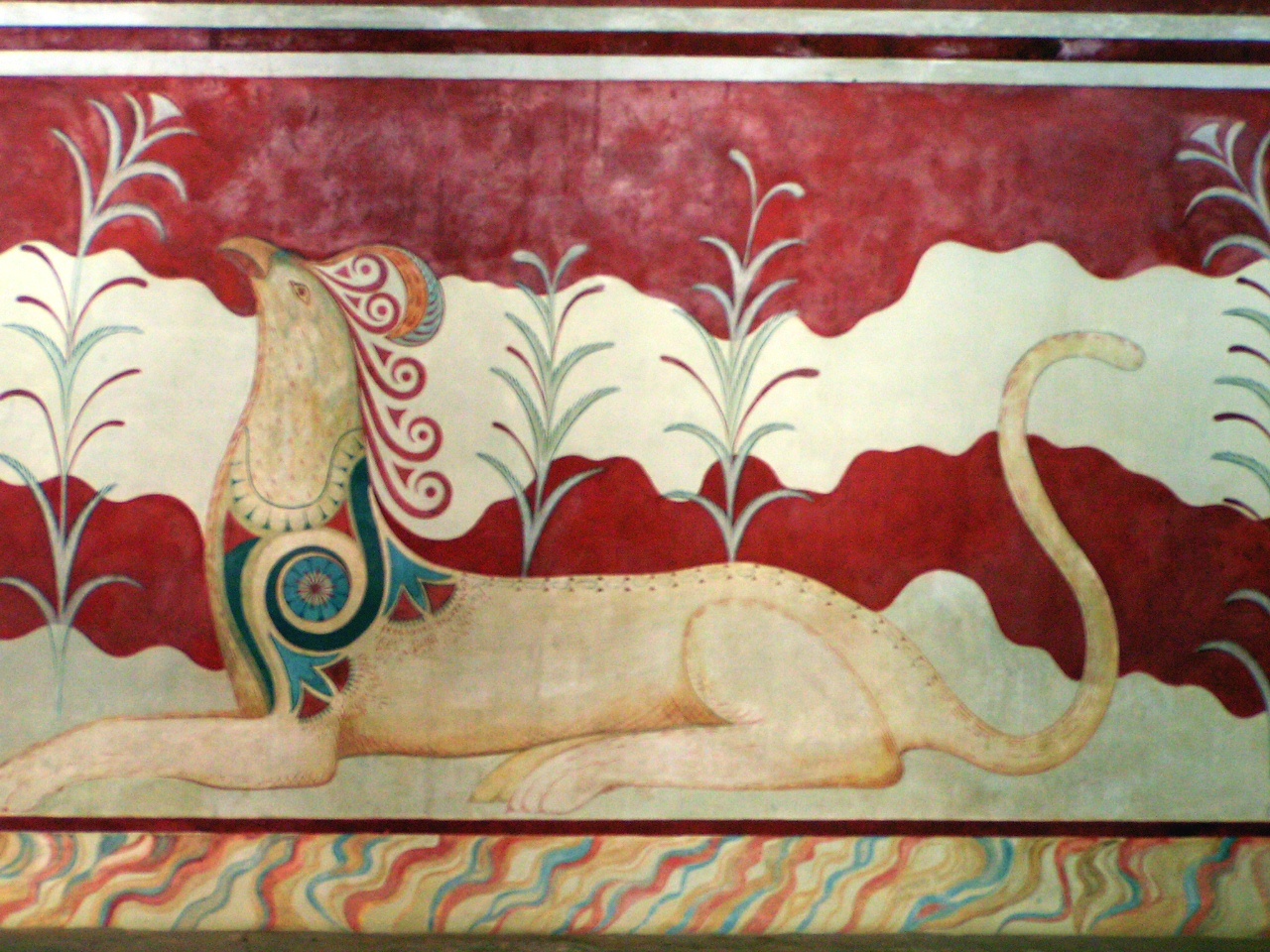
Early depictions of the griffin emerged from the art of ancient Mesopotamia and Persia. These early forms often featured a lion's body with an eagle's head, a potent combination that resonated across cultures. Ancient Greek writers like Aeschylus and Pindar referenced griffins, often associating them with the Scythians and the guarding of gold mines in the remote, mountainous regions of Central Asia. The Romans, too, adopted the griffin, integrating it into their mosaics and sculptures, often as a symbol of vigilance and protection. During the Middle Ages, the griffin experienced a resurgence in popularity, particularly within Christian symbolism, where it represented the dual nature of Christ—divine and human—and served as a guardian of heavenly treasures. This rich historical tapestry, spanning over 6,000 years, underscores the griffin's deep roots in human imagination and its consistent role as a powerful symbolic entity.
⚙️ How It Works
The griffin's physical construction is a marvel of mythical engineering, combining the most formidable attributes of the lion and the eagle. Its body, hindquarters, and tail are unequivocally leonine, granting it immense terrestrial power, speed, and the ability to stalk prey with stealth. The forelegs, however, are often depicted with the sharp, grasping talons of an eagle, perfect for seizing prey or defending its hoard. Its head is that of a majestic eagle, complete with a hooked beak capable of tearing flesh and eyes possessing the legendary keen vision of birds of prey, allowing it to spot threats or treasures from great distances. The addition of powerful, feathered wings bestows upon it the gift of flight, enabling it to survey its domain from above, escape terrestrial predators, and transport itself with unparalleled speed. This biological synthesis creates a creature that embodies both the grounded strength of the earth and the soaring dominion of the sky, a perfect guardian and a formidable adversary.
📊 Key Facts & Numbers
Its association with gold and treasure is nearly universal. In ancient Greek art, griffins appear in surviving sculptures and vase paintings from the Archaic period (c. 800-480 BCE). The medieval period saw a significant increase in griffin imagery. Its roar is said to be capable of paralyzing up to 100 enemies simultaneously, a testament to its fearsome power in legend.
👥 Key People & Organizations
While no single individual 'created' the griffin, its mythos was shaped by countless storytellers, artists, and cultures. During the Renaissance, artists like Albrecht Dürer incorporated griffins into their woodcuts and engravings, further embedding them in Western art. In modern fantasy, authors such as J.R.R. Tolkien have referenced griffin-like creatures, though not always by name, influencing their portrayal in contemporary media. Organizations like the Heraldry Society continue to document and study the griffin's use in heraldry, preserving its legacy. The Westminster College in Salt Lake City, founded in 1875, even adopted a griffin as its mascot, demonstrating its enduring appeal in educational institutions.
🌍 Cultural Impact & Influence
The griffin's influence permeates art, literature, and symbolism across millennia. In ancient Greece, it was a symbol of divine power and a protector against evil, often depicted on temples and public buildings. Its adoption into Christian theology as a representation of Christ's dual nature (human and divine) and as a guardian of the faithful cemented its spiritual significance. Medieval heraldry embraced the griffin as a symbol of courage, strength, and vigilance, appearing on countless family crests and national emblems, including those of England and Scotland. In literature, from Chaucer's 'The Squire's Tale' to modern fantasy epics, the griffin serves as a majestic mount, a fearsome guardian, or a noble beast. The griffin's image has been adopted by numerous sports teams and organizations, such as the Seattle Seahawks (whose logo features a stylized eagle-like creature with lionistic elements), demonstrating its continued power as an emblem of ferocity and pride. Its visual motif has also inspired countless works of art, from classical sculptures to contemporary digital illustrations, maintaining its status as an iconic mythical creature.
⚡ Current State & Latest Developments
In the contemporary landscape, griffins remain a potent force in popular culture, particularly within the fantasy genre. They are staple creatures in video games like 'World of Warcraft' and 'Dungeons & Dragons', where they often serve as mounts or formidable adversaries. While no new major mythological texts featuring griffins have emerged recently, their presence in visual media, including animated films and graphic novels, remains robust.
🤔 Controversies & Debates
The primary controversy surrounding griffins revolves around their precise mythological origins and the potential for cultural appropriation. Some scholars debate whether the griffin originated in Persia or Ancient Egypt, with evidence supporting both claims, leading to ongoing academic discussion. More recently, discussions have arisen regarding the use of griffin imagery by Western cultures, particularly in heraldry and fantasy, and whether it inadvertently overshadows or misrepresents the original cultural contexts from which the mythos emerged. For instance, the adoption of griffin motifs by colonial powers has been critiqued for potentially diluting their original significance. Furthermore, the depiction of griffins as solely guardians of treasure can be seen as a reductionist interpretation, ignoring their broader symbolic roles as divine messengers or representations of justice in various ancient traditions. The debate centers on respecting the deep historical and cultural roots of the griffin versus its widespread, often decontextualized, popularization.
🔮 Future Outlook & Predictions
The future of the griffin in popular culture appears secure, driven by its inherent symbolic power and visual appeal. As digital art and virtual reality technologies advance, we can expect increasingly sophisticated and immersive depictions of griffins, potentially reaching an audience of over 100 million gamers and VR users within the next decade. Their role as guardians and symbols of power will likely continue to be explored in new literary and cinematic works, possibly with a greater emphasis on their original mythological contexts, as audiences seek more authentic cultural narratives. There's also potential for the griffin to be re-contextualized in new philosophical discussions, perhaps as a metaphor for balancing disparate forces or integrating seemingly contradictory aspects of identity. The griffin's adaptability suggests it will remain a releva
Key Facts
- Category
- culture
- Type
- topic