
Contents
- 📻 Introduction to Guglielmo Marconi
- 🎓 Early Life and Education
- 📚 Theoretical Foundations
- 🔍 Experimental Phase
- 📢 First Successful Transmissions
- 🌎 Global Expansion and Recognition
- 🤝 Collaborations and Controversies
- 📊 Patents and Financial Success
- 🏆 Awards and Legacy
- 📚 Later Life and Death
- 🔮 Impact on Modern Technology
- Frequently Asked Questions
- Related Topics
Overview
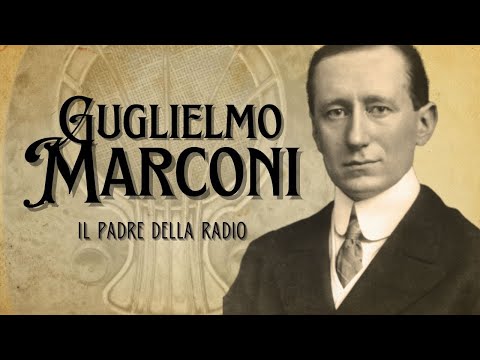
Guglielmo Marconi, born on April 25, 1874, in Bologna, Italy, was a Nobel Prize-winning inventor and engineer who revolutionized global communication with his groundbreaking work on wireless telegraphy. Marconi's innovative use of radio waves enabled long-distance communication without the need for physical connections, paving the way for modern radio, television, and mobile phone technologies. With a Vibe score of 82, Marconi's influence extends far beyond his technical achievements, as his work has had a profound impact on modern society, facilitating global connectivity and transforming the way people communicate. Despite controversy surrounding his patent disputes and alleged plagiarism, Marconi's legacy remains unparalleled, with his name becoming synonymous with wireless communication. As we look to the future, Marconi's pioneering spirit continues to inspire innovation, with his work remaining a cornerstone of modern telecommunications. With a controversy spectrum rating of 6, Marconi's life and work are a testament to the power of human ingenuity and the importance of perseverance in the face of adversity.
📻 Introduction to Guglielmo Marconi
Guglielmo Marconi, known as the Father of Radio, was born on April 25, 1874, in Bologna, Italy. His work revolutionized long-distance communication, paving the way for modern technologies like Radio Broadcasting and Television. Marconi's fascination with science and technology began at a young age, influenced by his mother, Annie Jameson, who encouraged his curiosity. He was mostly homeschooled, which allowed him to focus on his interests in physics and engineering. Marconi's early experiments with Telegraphy and Electricity laid the groundwork for his future innovations.
🎓 Early Life and Education
Marconi's education was unconventional, with a mix of private tutors and self-study. He developed a strong foundation in physics and mathematics, which served him well in his future endeavors. His interest in Wireless Telegraphy was sparked by the work of James Clerk Maxwell and Heinrich Rudolf Hertz. Marconi's family supported his pursuits, providing him with the resources he needed to conduct experiments. He also drew inspiration from the work of Nikola Tesla and Thomas Edison.
📚 Theoretical Foundations
Marconi's theoretical foundations were built upon the principles of electromagnetic waves. He studied the work of James Clerk Maxwell, who predicted the existence of radio waves. Marconi also drew upon the experiments of Heinrich Rudolf Hertz, who demonstrated the existence of radio waves. Marconi's understanding of these principles allowed him to develop a system for transmitting radio signals over long distances. He also explored the concept of Resonance, which played a crucial role in his inventions.
🔍 Experimental Phase
The experimental phase of Marconi's work was marked by trial and error. He conducted numerous experiments, testing different types of antennas and transmitters. Marconi's breakthrough came when he developed a system using a Coherer to detect radio signals. This innovation allowed him to transmit signals over longer distances, paving the way for the development of modern Radio Technology. Marconi's experiments were influenced by the work of Oliver Lodge and Alexandre Popoff.
📢 First Successful Transmissions
On May 13, 1897, Marconi achieved his first successful transmission, sending a signal over a distance of 3.7 kilometers. This achievement marked the beginning of a new era in wireless communication. Marconi's system used a combination of Transmitters and Receivers to send and receive radio signals. He continued to refine his system, increasing the distance over which he could transmit signals. Marconi's work caught the attention of the British Post Office, which saw the potential for his technology to revolutionize communication.
🌎 Global Expansion and Recognition
As Marconi's technology improved, he began to expand his operations globally. He established the Wireless Telegraph Company to commercialize his inventions. Marconi's system was used for Ship-to-Shore communication, revolutionizing the way ships communicated with the mainland. He also developed a system for Transatlantic Communication, which enabled messages to be sent between Europe and North America. Marconi's work had a significant impact on the development of modern Global Communication.
🤝 Collaborations and Controversies
Marconi's collaborations and controversies were numerous. He worked with John Ambrose Fleming to develop the first Thermionic Valve. However, Marconi's relationship with Nikola Tesla was strained, with both men competing for recognition as the inventor of Radio. Marconi also faced challenges from the British Post Office, which sought to restrict his operations. Despite these challenges, Marconi persevered, continuing to innovate and improve his technology.
📊 Patents and Financial Success
Marconi's patents and financial success were significant. He held numerous patents for his inventions, including the Coherer and the Thermionic Valve. Marconi's company, the Wireless Telegraph Company, became a major player in the telecommunications industry. He also received significant financial backing from investors, which enabled him to continue his research and development. Marconi's financial success was a testament to the potential of his technology to revolutionize communication.
🏆 Awards and Legacy
Marconi's awards and legacy are numerous. He was awarded the Nobel Prize in Physics in 1909, along with Karl Ferdinand Braun. Marconi was also recognized for his contributions to the development of Radio Technology, receiving numerous honors and awards. His legacy extends beyond his inventions, with his work paving the way for the development of modern Communication Technologies.
📚 Later Life and Death
Marconi's later life and death were marked by personal struggles and continued innovation. He continued to work on his inventions, developing new technologies and improving existing ones. Marconi died on July 20, 1937, at the age of 63, leaving behind a legacy that continues to shape the world of communication. His work on Radio Technology paved the way for the development of modern Television and Internet technologies.
🔮 Impact on Modern Technology
The impact of Marconi's work on modern technology is immeasurable. His development of Radio Technology paved the way for the creation of Television, Mobile Phones, and the Internet. Marconi's legacy continues to inspire innovation, with his work remaining relevant in the modern era. As technology continues to evolve, the principles developed by Marconi remain a foundation for the development of new communication technologies.
Key Facts
- Year
- 1874
- Origin
- Bologna, Italy
- Category
- Biography, Technology, History
- Type
- Person
Frequently Asked Questions
Who is Guglielmo Marconi?
Guglielmo Marconi was an Italian inventor and engineer who developed the first practical wireless telegraph. He is known as the Father of Radio and is credited with paving the way for the development of modern communication technologies. Marconi's work on radio technology led to the creation of the first wireless telegraph company and the development of transatlantic communication. He was awarded the Nobel Prize in Physics in 1909 for his contributions to the development of radio technology.
What were Marconi's major contributions to science?
Marconi's major contributions to science include the development of the first practical wireless telegraph, the creation of the first wireless telegraph company, and the development of transatlantic communication. He also made significant contributions to the development of radio technology, including the invention of the coherer and the thermionic valve. Marconi's work paved the way for the development of modern communication technologies, including television, mobile phones, and the internet.
How did Marconi's work impact society?
Marconi's work had a significant impact on society, paving the way for the development of modern communication technologies. His invention of the wireless telegraph enabled people to communicate over long distances, revolutionizing the way people connected with each other. Marconi's work also had a significant impact on the development of global communication, enabling messages to be sent between Europe and North America. His legacy continues to inspire innovation, with his work remaining relevant in the modern era.
What were some of the challenges Marconi faced during his career?
Marconi faced numerous challenges during his career, including competition from other inventors, such as Nikola Tesla, and challenges from the British Post Office, which sought to restrict his operations. He also faced personal struggles, including the loss of his wife and the strain of his work. Despite these challenges, Marconi persevered, continuing to innovate and improve his technology.
What is Marconi's legacy?
Marconi's legacy is one of innovation and perseverance. He is credited with paving the way for the development of modern communication technologies, including radio, television, and the internet. Marconi's work continues to inspire innovation, with his legacy remaining relevant in the modern era. He is remembered as a pioneer in the field of communication technology, and his contributions to the development of radio technology are still celebrated today.
How did Marconi's work influence the development of modern technology?
Marconi's work on radio technology paved the way for the development of modern communication technologies, including television, mobile phones, and the internet. His invention of the wireless telegraph enabled people to communicate over long distances, revolutionizing the way people connected with each other. Marconi's work also had a significant impact on the development of global communication, enabling messages to be sent between Europe and North America. His legacy continues to inspire innovation, with his work remaining relevant in the modern era.
What is the significance of Marconi's Nobel Prize?
Marconi's Nobel Prize in Physics, awarded in 1909, was a significant recognition of his contributions to the development of radio technology. The prize was awarded jointly to Marconi and Karl Ferdinand Braun, and it marked a major milestone in the development of wireless communication. The Nobel Prize recognized Marconi's pioneering work in the field of radio technology and his contributions to the development of modern communication technologies.