
Contents
Overview
The genesis of Hispanophone music is a complex narrative woven from indigenous traditions, European colonial imposition, and subsequent African diasporic contributions. Pre-Columbian civilizations across the Americas possessed rich musical heritages, utilizing instruments like flutes, percussion, and rattles, the echoes of which can still be found in contemporary folk music. The arrival of Spanish colonizers in the 15th century introduced European harmonic structures, stringed instruments like the guitar, and vocal styles. Simultaneously, the transatlantic slave trade brought African musical sensibilities, particularly rhythmic complexity and call-and-response patterns, which profoundly shaped genres in the Caribbean and South America. Early colonial music often served religious and ceremonial purposes, but secular forms like the Spanish zarzuela and various regional folk dances began to flourish, laying the groundwork for distinct national and regional styles that would emerge with independence movements throughout the 19th century.
⚙️ How It Works
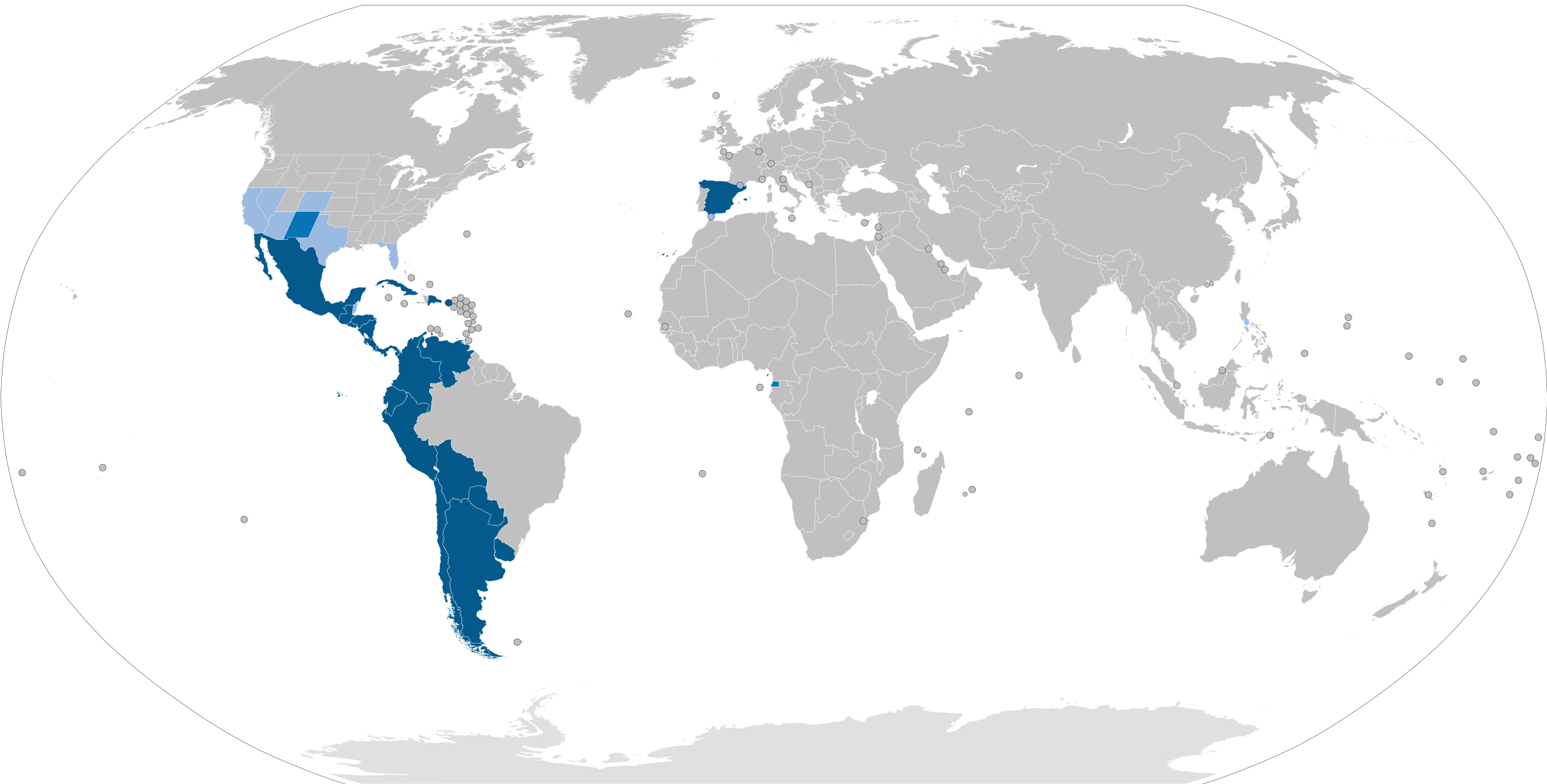
Hispanophone music operates through a vast network of creators, performers, producers, and distributors, unified by the Spanish language. Its 'mechanics' are not monolithic but rather a dynamic interplay of traditional instrumentation and modern technology. For instance, a traditional mariachi ensemble might feature violins, trumpets, and guitarrón, while a contemporary reggaeton track relies heavily on digital audio workstations (DAWs) and synthesized beats, often incorporating samples from older Latin American genres. The distribution model has evolved dramatically, moving from physical media like vinyl and cassettes to dominant digital streaming platforms such as Spotify, Apple Music, and YouTube. This linguistic commonality facilitates cross-pollination, allowing artists from Mexico to Argentina, and Spain to Colombia, to reach a shared, massive audience, fostering trends that can rapidly gain global traction.
📊 Key Facts & Numbers
The sheer scale of Hispanophone music is staggering. Spanish-language tracks consistently rank among the most-streamed songs on platforms like Spotify. The Billboard Latin charts regularly feature songs with hundreds of millions of views on YouTube. This economic power underscores the global commercial significance of music sung in Spanish.
👥 Key People & Organizations
The landscape of Hispanophone music is populated by countless influential figures and organizations. Historically, artists like Celia Cruz (Cuba), Carlos Gardel (Argentina), and Francisco Gabilondo Ponce (Mexico, known as 'Cri-Cri') laid foundational stones. Record labels such as Sony Music Latin, Universal Music Latin Entertainment, and independent labels champion emerging talent. Music festivals like Vive Latino in Mexico and Sónar in Spain serve as crucial platforms for showcasing established and new artists, fostering community and innovation within the Hispanophone music scene.
🌍 Cultural Impact & Influence
The cultural impact of Hispanophone music is profound and far-reaching, extending beyond mere entertainment. Genres like salsa, bachata, and cumbia have become global dance phenomena, transcending linguistic barriers. The rhythmic and melodic innovations found in styles like flamenco and tango have influenced jazz, pop, and classical music worldwide. Furthermore, Hispanophone music often serves as a vehicle for social commentary and cultural preservation, articulating the experiences, histories, and aspirations of diverse communities across the Hispanic world.
⚡ Current State & Latest Developments
The global expansion of Spanish-language music festivals and award shows further indicates an upward trajectory for Hispanophone music. Artists are experimenting with fusions of regional folk music with electronic sounds, and the influence of K-Pop is also being felt, with some Spanish-speaking artists incorporating elements of the genre.
🤔 Controversies & Debates
One of the primary controversies surrounding Hispanophone music is the debate over cultural appropriation versus appreciation, particularly when non-Spanish-speaking artists incorporate Latin rhythms or Spanish lyrics. Critics argue that the commercialization and 'globalization' of genres like reggaeton leads to homogenization and the dilution of regional specificities. There's also tension between traditionalists and modernists, particularly in genres like flamenco, where innovation is sometimes met with resistance from purists who prioritize adherence to established forms. The dominance of certain genres and artists on global platforms also raises questions about representation and the visibility of less commercially viable, yet culturally significant, Hispanophone musical traditions.
🔮 Future Outlook & Predictions
The future of Hispanophone music appears exceptionally bright, with continued global expansion on the horizon. Expect further genre-bending fusions as artists explore new sonic territories, potentially incorporating more influences from Afrobeats and K-Pop alongside existing Latin American and Spanish traditions. The increasing accessibility of music production technology will likely empower more independent artists from diverse backgrounds within the Hispanophone world. Furthermore, as global audiences become more receptive to non-English music, Spanish-language artists are poised to break even more records and achieve greater mainstream penetration in markets previously dominated by English-language music. The economic power of the Hispanophone music market will undoubtedly continue to grow, influencing global music industry strategies.
💡 Practical Applications
Hispanophone music's practical applications extend far beyond concert halls and streaming playlists. Its rhythms and melodies are integral to dance classes worldwide, from salsa and bachata studios to tango salons. The music is a cornerstone of cultural celebrations, festivals, and community gatherings in Spanish-speaking countries and diaspora communities globally. In education, it serves as a powerful tool for teaching Spanish language and culture, offering an engaging entry point for learners. Furthermore, the therapeutic benefits of music are widely recognized, and the emotional resonance of Hispanophone genres like bolero and ranchera provides solace and connection for millions. Its infectious energy also fuels fitness routines and global dance crazes.
Key Facts
- Category
- culture
- Type
- topic