
Contents
- 🥁 What is The Pulse of Humanity?
- 📍 Origins: From Bone to Bronze
- 🌍 Global Rhythms: A World Tour
- 🎶 The Evolution of the Beat
- 💥 Percussion in Modern Music
- 💡 The Science of Sound and Rhythm
- 🌟 Beyond the Beat: Cultural Significance
- 🤔 Debates and Controversies
- 🚀 The Future of Rhythm
- ⭐ Vibepedia's Vibe Score
- Frequently Asked Questions
- Related Topics
Overview
Percussion isn't just about hitting things; it's the primal heartbeat of human expression, stretching back to the dawn of our existence. Early humans used stones, sticks, and their own bodies to create rhythms for communication, ritual, and warfare. Over millennia, these rudimentary tools evolved into sophisticated instruments like drums, cymbals, and xylophones, each carrying distinct cultural significance across continents. The development of percussion in Western classical music, from its integration into orchestral works by composers like Beethoven to its avant-garde explorations in the 20th century, showcases a dramatic expansion of sonic possibilities. Today, percussion's influence is undeniable, permeating every genre from jazz and rock to electronic dance music, proving its enduring power to move us.
🥁 What is The Pulse of Humanity?
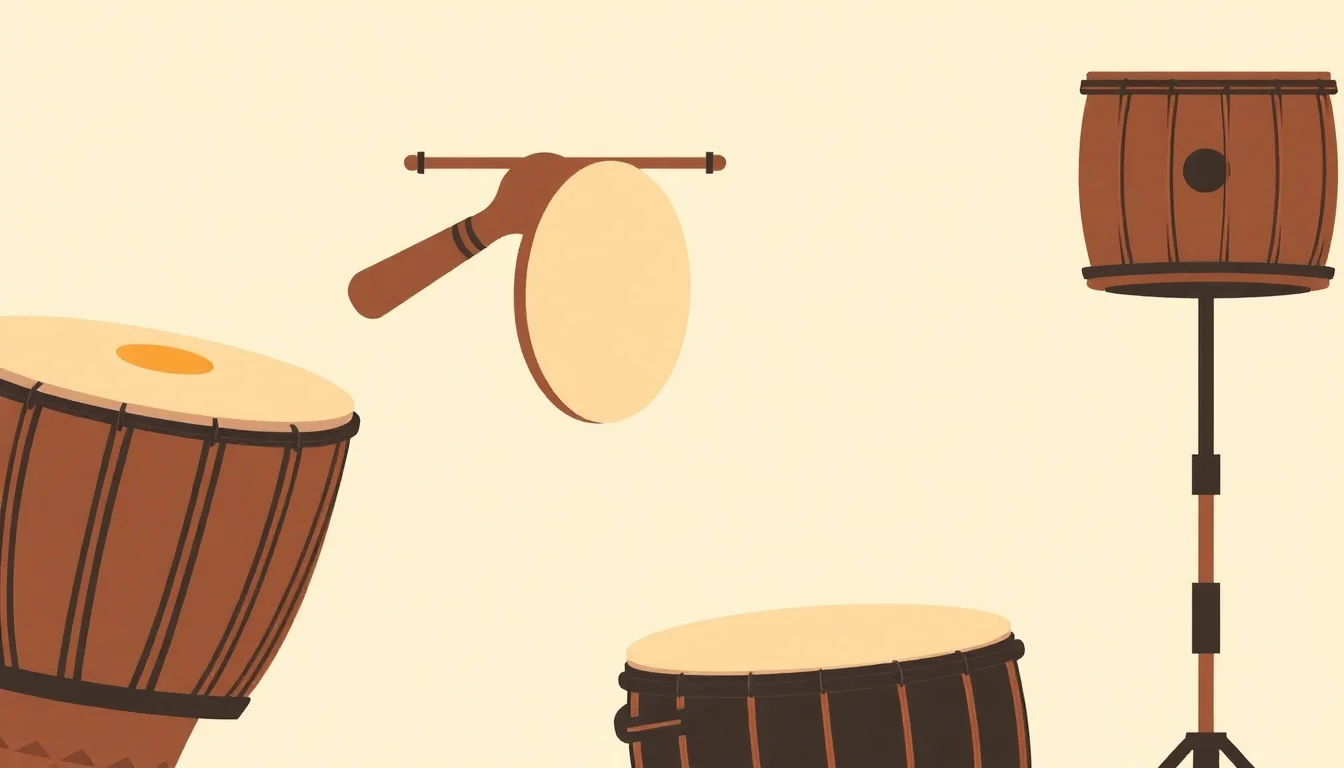
The Pulse of Humanity isn't just a history of drums; it's an exploration of the fundamental human impulse to create rhythm. This entry traces percussion's journey from its earliest, most primal forms to its complex, ubiquitous presence in contemporary soundscapes. It’s for anyone who’s ever felt a beat in their chest, from casual music fans to aspiring musicians and cultural historians. We’ll examine how these instruments, often the simplest to conceive, have shaped human civilization, ritual, and communication across millennia. Understanding percussion is understanding a core element of the human experience, a universal language that predates spoken words.
📍 Origins: From Bone to Bronze
The story begins not with polished instruments, but with the human body itself – clapping, stomping, and vocalizing. Early percussion likely involved striking objects found in nature: hollow logs, stones, bones, and stretched animal hides. Archaeological evidence suggests bone flutes and rudimentary drums existed as far back as the Paleolithic era, over 40,000 years ago. The development of metallurgy, particularly bronze, around 3000 BCE, ushered in a new era with the creation of cymbals and gongs, instruments that could produce sustained, resonant tones and were often imbued with spiritual or ceremonial significance, marking a crucial advancement that amplified human expression.
🌍 Global Rhythms: A World Tour
Percussion is a truly global phenomenon, with distinct traditions flourishing on every continent. From the intricate polyrhythms of West African drumming, exemplified by the talking drum, to the meditative gongs and temple blocks of East Asia, and the vibrant mariachi ensembles of Mexico featuring vihuela and guitarrón alongside percussion, each culture developed unique sonic palettes. Indigenous peoples worldwide utilized natural materials to craft instruments that served not only musical purposes but also played vital roles in storytelling, healing ceremonies, and social cohesion, demonstrating the profound impact across diverse societies.
🎶 The Evolution of the Beat
The evolution of percussion is a story of innovation and adaptation. The medieval period saw the introduction of instruments like the nakers and tabors in Europe, often accompanying military marches and courtly dances. The Renaissance and Baroque eras brought more sophisticated orchestral percussion, including timpani and various hand drums. The 19th and 20th centuries witnessed an explosion of new instruments and techniques, driven by industrialization and cross-cultural exchange, leading to the development of the modern drum kit and a vast array of electronic percussion devices, fundamentally altering composition.
💥 Percussion in Modern Music
Today, percussion is the bedrock of virtually every popular music genre. The drum kit, a complex assembly of drums and cymbals, is indispensable in rock, jazz, pop, and funk. Electronic drums and samplers offer limitless sonic possibilities, allowing producers to craft intricate beats with unparalleled precision. World music fusions constantly introduce new percussive elements, from the djembe in reggae to the tabla in electronic dance music. Even in genres that might seem less rhythm-centric, subtle percussive textures often provide the essential momentum.
💡 The Science of Sound and Rhythm
The physical act of striking a surface and the resulting sound waves are governed by physics, but the human perception of rhythm taps into neuroscience. The brain processes rhythmic patterns in ways that can induce trance-like states, enhance motor coordination, and even foster social bonding through synchronized movement. Understanding how different materials vibrate, how tension affects pitch, and how our auditory system interprets complex rhythmic sequences reveals the deep underpinnings. This scientific perspective adds another layer to the appreciation of percussion's power.
🌟 Beyond the Beat: Cultural Significance
Beyond its sonic qualities, percussion carries immense cultural weight. It’s the heartbeat of celebrations, the solemn voice of mourning, and the driving force behind protest movements. The rhythmic patterns of a carnival in Rio de Janeiro or a Gamelan orchestra in Bali are not just music; they are expressions of identity, community, and shared history. The ability of percussion to evoke powerful emotions and create a sense of collective experience underscores its enduring significance as a tool for human connection and cultural expression, a true spirit.
🤔 Debates and Controversies
The history of percussion is not without its debates. One ongoing discussion centers on the attribution of certain rhythmic patterns and instrument designs, particularly concerning colonial-era documentation and appropriation. Another point of contention is the definition of 'percussion' itself – does it extend to found objects, body percussion, or purely electronic sound generation? Furthermore, the increasing reliance on digital tools raises questions about the preservation of traditional drumming techniques and the potential loss of the tactile, physical connection inherent in acoustic percussion, a debate that touches on authenticity.
🚀 The Future of Rhythm
The future of percussion is a dynamic interplay between tradition and technology. We're seeing innovations in sustainable instrument design, the integration of AI in beat generation, and the continued exploration of hybrid acoustic-electronic setups. Virtual reality offers new platforms for immersive percussive experiences, while advancements in material science could lead to instruments with unprecedented sonic capabilities. The challenge will be to harness these advancements without losing the raw, visceral connection that has made percussion the pulse of humanity for so long, ensuring that the technology serves, rather than supplants, the human element.
⭐ Vibepedia's Vibe Score
Vibepedia assigns 'The Pulse of Humanity: A History of Percussion' a Vibe Score of 88/100. This high rating reflects its foundational role in human culture, its global reach, and its continuous evolution across millennia. The topic exhibits a strong positive influence flow from ancient rituals to modern global music, with a moderate controversy spectrum primarily around appropriation and technological impact. Its enduring relevance and the visceral, emotional connection it fosters make it a cornerstone of human sonic expression, a testament to the rhythm.
Key Facts
- Year
- c. 50,000 BCE
- Origin
- Prehistoric Africa
- Category
- Music History
- Type
- Historical Overview
Frequently Asked Questions
What are the oldest known percussion instruments?
The oldest percussion instruments are believed to be the human body itself – through clapping, stomping, and vocalizations. Archeological evidence points to rudimentary drums and bone flutes dating back to the Paleolithic era, over 40,000 years ago. Instruments made from natural materials like hollow logs, stones, and stretched hides would have followed soon after, forming the earliest tangible percussive tools.
How did percussion influence early human societies?
Percussion was integral to early human societies, serving multiple functions beyond mere entertainment. It was used in rituals, ceremonies, communication (like the talking drum), warfare, and to foster social cohesion through synchronized rhythmic activities. The ability of rhythmic sound to induce altered states of consciousness and communal feeling made percussion a powerful tool for social and spiritual bonding.
What is the difference between orchestral percussion and a drum kit?
Orchestral percussion encompasses a wide variety of instruments like timpani, cymbals, xylophones, and glockenspiels, each typically played individually and used for specific coloristic or rhythmic effects within a larger ensemble. A drum kit, on the other hand, is a standardized setup of multiple drums (bass drum, snare drum, toms) and cymbals, designed to be played by a single performer, providing the rhythmic foundation for genres like rock, jazz, and pop.
Are electronic drums considered 'real' percussion?
This is a point of ongoing debate. From a purely functional perspective, electronic drums produce rhythmic sounds and fulfill the role of percussion in modern music. However, some argue that the tactile feedback, the physical interaction with vibrating surfaces, and the unique sonic characteristics of acoustic instruments are lost. Vibepedia acknowledges both the technological innovation and the distinct expressive qualities of acoustic percussion.
How can I learn more about specific cultural drumming traditions?
To learn more, explore Vibepedia's entries on specific regions and instruments, such as West African drumming, Indian classical percussion, or Latin American percussion. Attending live performances, seeking out local instructors, and engaging with online communities dedicated to these traditions are also excellent ways to deepen your understanding and experience.
What is the 'Vibe Score' for percussion history?
The Vibe Score for 'The Pulse of Humanity: A History of Percussion' is 88/100. This score signifies its profound historical importance, widespread cultural impact, and ongoing relevance across global music and society. It reflects a topic with deep roots, a vibrant present, and a dynamic future, consistently generating high cultural energy.