
Contents
Overview
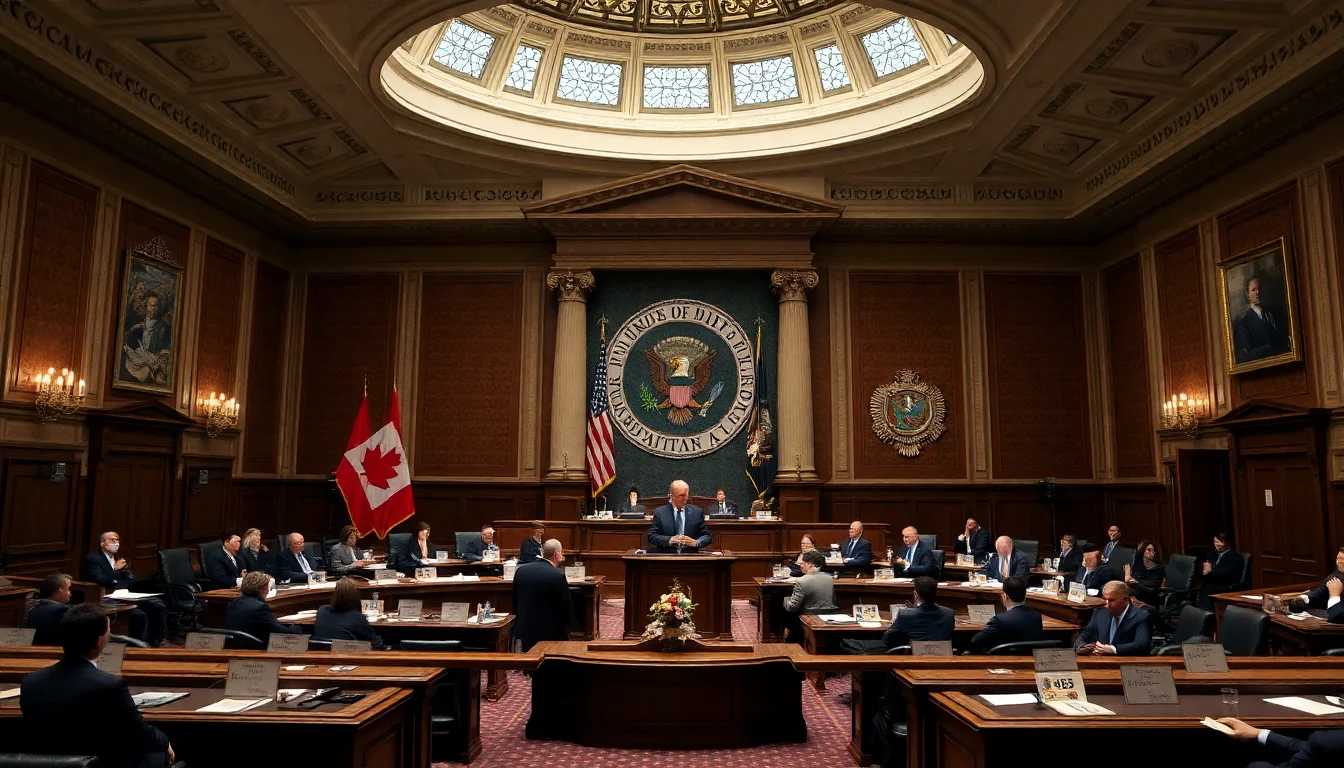
In a significant challenge to executive authority, the U.S. House of Representatives voted to rescind tariffs previously imposed on goods from Canada. This move, occurring amidst ongoing trade tensions and a broader economic recalibration, signals a potential shift in U.S. trade strategy and highlights legislative efforts to assert control over international commerce policy. The tariffs, initially enacted by the President, faced widespread criticism from businesses and lawmakers alike for disrupting supply chains and harming American consumers. The House's decision to roll back these measures underscores a growing bipartisan concern over the economic fallout and the efficacy of unilateral tariff actions, potentially paving the way for renewed negotiations and a more collaborative approach to bilateral trade relations.
🎵 Origins & History
The imposition of tariffs on Canada, a key trading partner, did not emerge from a vacuum but rather as an escalation within a broader U.S. trade policy shift. Following a period of strained bilateral trade discussions, an initial one-month delay was negotiated before the U.S. tariffs ultimately took effect. This action was met with swift retaliatory measures from Canadian Prime Minister Justin Trudeau, who announced equivalent tariffs on billions of dollars of American goods, threatening a full-blown trade war. Mexico, under President Claudia Sheinbaum, also signaled its intent to retaliate.
⚙️ How It Works
The mechanism by which the House rescinded the tariffs involved a legislative vote, typically through a resolution or a bill. This process requires a majority vote in the House of Representatives to pass. Once passed, it would then proceed to the Senate for consideration. If the Senate also approves the measure, it would be sent to the President's desk for signature. However, given the executive nature of the initial tariff imposition, a presidential veto is a significant possibility, which would then require a two-thirds majority in both chambers of Congress to override. The legislative action functions as a direct check on the President's unilateral trade authority, forcing a debate and vote on the economic merits and geopolitical implications of such trade barriers.
📊 Key Facts & Numbers
The economic impact of the tariffs was substantial, affecting billions of dollars in bilateral trade. The U.S. and Canada have maintained one of the world's largest and most integrated trading relationships. Studies by organizations like the International Monetary Fund estimated that such trade disputes could reduce global GDP by as much as 0.5% to 1% in the short term. The Congressional Budget Office projected that the tariffs would lead to a 0.2% increase in consumer prices for affected goods and a 0.1% decrease in U.S. real GDP.
👥 Key People & Organizations
Key figures in this legislative action include the Speaker of the House, who guides the legislative agenda, and influential committee chairs within the House Ways and Means Committee, responsible for tax and trade policy. Lawmakers from border states and those representing districts with significant manufacturing or agricultural sectors, heavily reliant on cross-border trade, were particularly vocal. Organizations such as the U.S. Chamber of Commerce and the National Association of Manufacturers actively lobbied Congress, advocating for the removal of tariffs due to their negative impact on their members. On the executive side, the President and his administration, particularly the United States Trade Representative's Office, were the primary architects of the tariff policy.
🌍 Cultural Impact & Influence
The decision to rescind tariffs on Canada carries significant cultural and economic resonance. For decades, the U.S. and Canada have maintained one of the world's largest and most integrated trading relationships, often characterized by a "special relationship." The imposition of tariffs disrupted this long-standing economic harmony, leading to public discourse about the nature of bilateral cooperation versus unilateral action. Businesses on both sides of the border, from automotive manufacturers to agricultural producers, expressed frustration over the uncertainty and increased costs. The legislative rebuke itself became a symbol of the ongoing tension between executive and legislative powers in shaping foreign policy and trade, influencing public perception of governmental effectiveness and inter-branch relations.
⚡ Current State & Latest Developments
As of early 2025, the situation remains fluid. The House's vote to rescind tariffs represents a significant development, but the ultimate fate of these measures hinges on Senate approval and the President's response. If the President vetoes the rescission, the focus will shift to whether Congress can muster the votes for an override. Concurrently, diplomatic channels between Washington and Ottawa remain active, with both governments seeking to de-escalate the trade conflict and find a more stable footing for their economic partnership. The ongoing negotiations and potential for further legislative action or executive maneuvering mean that the landscape of U.S.-Canada trade policy is subject to rapid change.
🤔 Controversies & Debates
The rescission of tariffs on Canada is a focal point of considerable debate. Proponents of the tariffs argued they were necessary to protect American industries and workers from unfair competition and to compel Canada to address perceived trade imbalances, particularly concerning agricultural and dairy sectors. Critics, including a majority in the House, countered that the tariffs harmed American consumers through higher prices, disrupted complex supply chains involving Canadian components, and invited damaging retaliatory measures that hurt U.S. exporters. Economists from institutions like the Peterson Institute for International Economics largely warned of the negative aggregate economic consequences of such broad-based tariffs.
🔮 Future Outlook & Predictions
Looking ahead, the future of U.S.-Canada trade policy is uncertain and depends heavily on the political dynamics between the executive and legislative branches, as well as the ongoing negotiations between the two countries. If the rescission is enacted, it could usher in a period of renewed cooperation and potentially a renegotiation of specific trade terms under the United States-Mexico-Canada Agreement (USMCA). Conversely, a sustained presidential push for tariffs could lead to prolonged trade friction, potentially impacting sectors beyond those initially targeted and further straining diplomatic relations. Experts predict that any resolution will likely involve a complex balancing act between nationalistic trade objectives and the pragmatic realities of deeply integrated North American supply chains.
💡 Practical Applications
The practical applications of this legislative action are primarily in the realm of trade policy and economic diplomacy. By rescinding tariffs, the House aims to restore predictability for businesses that rely on cross-border trade, facilitating smoother operations for manufacturers, importers, and exporters. This can lead to more stable pricing for consumers and a more robust environment for investment. Furthermore, the move could signal a broader shift towards multilateral trade agreements and away from unilateral tariff impositions, potentially influencing how the U.S. engages with other trading partners. The legislative process itself serves as a practical demonstration of checks and balances within the U.S. government's foreign economic policy-making.
Key Facts
- Category
- politics
- Type
- event