
Contents
Overview
The genesis of integrated development environments can be traced back to the early days of computing, where developers juggled disparate tools like text editors (e.g., vi), compilers (e.g., GCC), and debuggers (e.g., GDB) separately. The concept of bundling these into a single application gained traction in the 1980s, with early examples emerging for languages like Pascal and C. The Apple Macintosh platform saw early IDEs like Think Pascal and Think C in the late 1980s, which significantly improved the development experience. By the 1990s, with the rise of object-oriented programming and more complex software projects, IDEs like Borland Delphi and Visual Basic became mainstream, offering visual designers and integrated debugging. The advent of the internet and web technologies further fueled the demand for more powerful and versatile IDEs, leading to the development of tools like Eclipse and NetBeans in the early 2000s, which supported multiple languages and extensive plugin ecosystems.
⚙️ How It Works
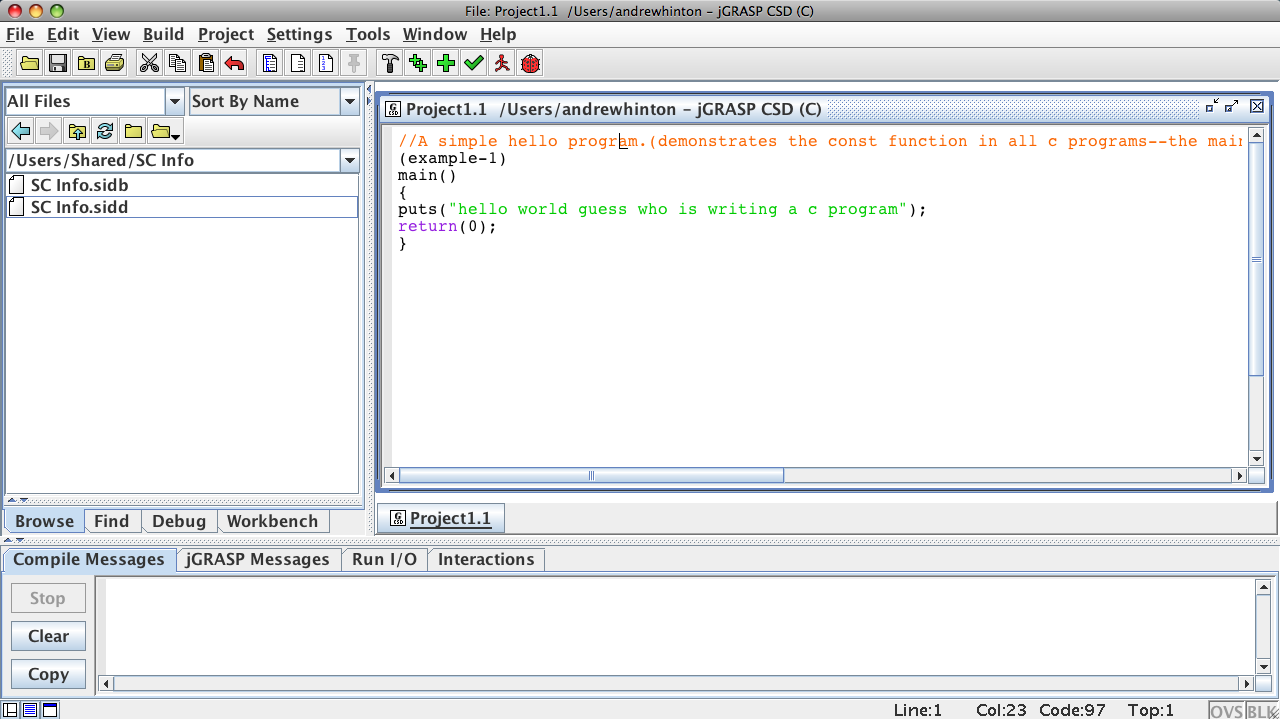
At its core, an IDE functions by providing a unified interface that orchestrates various development tasks. The code editor is the central component, offering features like syntax highlighting, intelligent code completion (often powered by language servers), and real-time error checking. Build automation tools, such as Maven or Gradle integrations, allow developers to compile, package, and manage project dependencies with a single click. The debugger is perhaps the most critical feature, enabling developers to step through code execution line by line, inspect variable values, and set breakpoints to identify and fix bugs. Many IDEs also integrate with version control systems like Git, allowing developers to commit, push, and pull changes directly from within the environment. Some IDEs, like Visual Studio Code, achieve their broad language support through a robust plugin architecture, allowing users to customize their development environment.
📊 Key Facts & Numbers
The global IDE market is projected to reach over $15 billion by 2027, a significant increase from its estimated $8 billion valuation in 2022, indicating robust growth. Over 27 million software developers worldwide actively use IDEs, with a substantial portion of them relying on free and open-source options like Visual Studio Code (downloaded over 100 million times) and Eclipse. Commercial IDEs like JetBrains IntelliJ IDEA and Microsoft Visual Studio command significant market share, with Visual Studio Enterprise subscriptions costing upwards of $250 per user per month. The average developer spends approximately 70% of their coding time within an IDE, highlighting its central role in their workflow. The number of available plugins for popular IDEs often exceeds tens of thousands, demonstrating the extensibility and customization potential.
👥 Key People & Organizations
Key figures in the evolution of IDEs include Bjarne Stroustrup, the creator of C++, whose work influenced the design of many C++ IDEs. Anders Hejlsberg, a lead architect behind Microsoft Visual Studio and TypeScript, has been instrumental in shaping modern development tools. Organizations like Microsoft with its Visual Studio suite, JetBrains with its popular line of language-specific IDEs (e.g., IntelliJ IDEA, PyCharm), and the Eclipse Foundation with its extensible Eclipse IDE have been pivotal in driving innovation. Companies like Google have developed IDEs tailored for their platforms, such as Android Studio for mobile development. The open-source community, through projects like Visual Studio Code (developed by Microsoft but open-source), has also played a massive role in making powerful IDEs accessible to all.
🌍 Cultural Impact & Influence
IDEs have profoundly reshaped the culture of software development, democratizing access to powerful tools and fostering collaborative workflows. The ability to quickly prototype, debug, and iterate within a single environment has accelerated the pace of innovation across countless industries, from mobile app development to game development and data science. Features like integrated testing and refactoring tools have raised the bar for code quality and maintainability. The widespread adoption of IDEs has also influenced programming language design, with new languages often developed with IDE support in mind from the outset. Furthermore, the concept of a 'developer experience' (DX) has become a critical factor for companies, with sophisticated IDE integrations often being a key selling point for platforms and frameworks.
⚡ Current State & Latest Developments
The current landscape of IDEs is characterized by an increasing focus on AI-powered features and cloud integration. Tools like GitHub Copilot and Tabnine are embedding AI-driven code completion and generation directly into IDEs, promising to further augment developer productivity. Cloud-based IDEs, such as Gitpod and GitHub Codespaces, are gaining traction, allowing developers to code from any machine with a web browser and offering pre-configured development environments. There's also a growing trend towards highly specialized IDEs tailored for specific domains, like machine learning or embedded systems. The ongoing evolution of programming languages and frameworks, such as Rust and Go, necessitates continuous updates and new IDE support to keep pace with developer needs.
🤔 Controversies & Debates
The debate around IDEs often centers on the trade-off between feature richness and performance, as well as the 'opinionated' nature of some environments. Critics argue that overly complex IDEs can be resource-intensive and may even hinder learning for novice programmers who become overly reliant on auto-completion. Another point of contention is the dominance of a few major players, raising concerns about vendor lock-in and the potential stifling of innovation in the IDE market. The effectiveness of AI-powered coding assistants within IDEs is also a subject of ongoing discussion, with questions about code originality, security implications, and the potential impact on junior developer roles. Furthermore, the choice between a lightweight editor with extensive plugins versus a fully integrated IDE remains a perennial discussion among developers.
🔮 Future Outlook & Predictions
The future of IDEs is likely to be heavily influenced by advancements in artificial intelligence and cloud computing. We can expect AI to play an even more significant role, moving beyond code completion to assist with debugging, code review, and even automated refactoring. Cloud-native IDEs will likely become the norm, offering seamless collaboration and access to powerful computing resources on demand. The line between IDEs and other development tools, such as project management software and CI/CD pipelines, will continue to blur, creating even more integrated workflows. There's also a potential for IDEs to become more context-aware, adapting their features and suggestions based on the specific project, team, and even individual developer's coding style. The rise of low-code/no-code platforms may also influence traditional IDE development, potentially leading to hybrid environments.
💡 Practical Applications
IDEs are indispensable tools across virtually every domain of software development. They are used for building web applications (e.g., using JavaScript with frameworks like React), developing mobile applications (e.g., Android Studio for Android, Xcode for iOS), creating desktop applications (e.g., using C# with Visual Studio), and crafting video games (e.g., Unity and Unreal Engine often integrate with IDEs). Data scientists utilize IDEs like Jupyter Notebook
Key Facts
- Category
- technology
- Type
- topic