
Contents
Overview
The historical narrative of the Iranian Plateau is deeply intertwined with the rise and fall of numerous ancient civilizations, stretching back to the Neolithic period. Evidence of early human settlement can be found in sites like Tepe Sialk. The region later became the cradle of the Elamite kingdom, a major power in ancient Mesopotamia and Persia. By the first millennium BCE, the plateau was dominated by the Medes and the Achaemenids, who established vast empires centered on this strategic territory. The Achaemenids, under rulers like Cyrus the Great and Darius the Great, built an extensive road network, including the Royal Road, facilitating communication and trade across their dominion. The Seleucids, Parthians, and Sasanians continued to shape the plateau's cultural and political identity, each leaving indelible marks on its architecture, art, and governance. The arrival of Islam in the region ushered in another transformative era, with Persian culture and language profoundly influencing Islamic civilization.
⚙️ Geological Formation
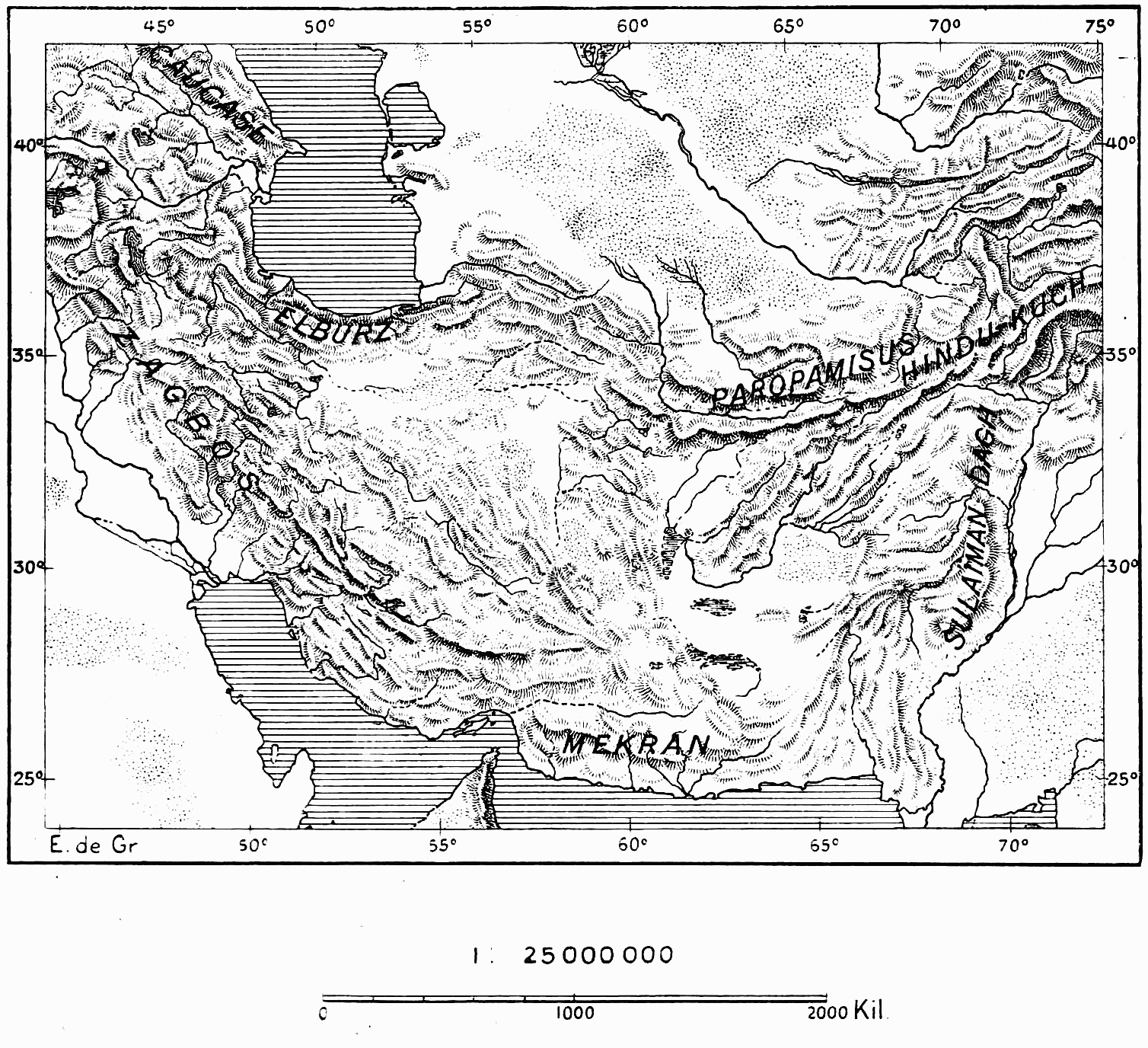
Geologically, the Iranian Plateau is a product of immense tectonic forces, primarily the collision between the Arabian and Eurasian plates. This ongoing convergence has led to the uplift of vast mountain ranges that encircle the plateau. The Zagros to the west and the Alborz to the north are the most prominent, acting as formidable natural barriers. The plateau itself is characterized by high average elevations. Its topography is diverse, featuring extensive salt deserts, such as the Dasht-e Kavir and Dasht-e Lut, interspersed with fertile valleys and mountain ranges. The arid to semi-arid climate is a direct consequence of its elevation and inland location, with limited rainfall primarily occurring in winter months.
📊 Key Facts & Numbers
The Iranian Plateau covers an immense area. The average elevation of the plateau is around 1,500 meters (4,900 feet). Within its boundaries lie some of the world's largest salt deserts, with the Dasht-e Lut alone spanning over 51,800 square kilometers (20,000 square miles). The region is also rich in mineral resources, including significant reserves of oil and natural gas, particularly in the Persian Gulf basin. The plateau's climate is characterized by extreme temperatures, with summer highs often exceeding 50°C (122°F) in desert regions and winter lows dropping below freezing in higher altitudes. Annual precipitation varies significantly, from less than 100 mm (4 inches) in arid zones to over 1,000 mm (40 inches) in mountainous areas.
👥 Key Cultures & Civilizations
The historical Iranian Plateau has been a crucible for numerous influential cultures and civilizations. The Elamites, flourishing from the 3rd millennium BCE, laid early foundations. Later, the Medes and Persians established powerful empires that defined the region for centuries. The Achaemenid Empire, founded by Cyrus the Great around 550 BCE, was one of the largest empires in ancient history, stretching from the Balkans to the Indus Valley. Its administrative innovations and cultural achievements, including the development of Zoroastrianism, had a lasting impact. The subsequent Parthian Empire and Sasanian Empire maintained Persian dominance, fostering advancements in science, art, and philosophy. The spread of Islam in the 7th century CE led to the assimilation of Persian culture into the broader Islamic world, with figures like Ferdowsi and Rumi becoming giants of Persian literature. Modern Iran, the primary inheritor of this legacy, continues to be a dominant cultural force.
🌍 Geographic & Political Scope
The geographical extent of the Iranian Plateau is vast and spans multiple modern nations, though it is most prominently associated with Iran. It also encompasses significant parts of Afghanistan, Pakistan, Turkmenistan, Uzbekistan, and Armenia. The plateau is bordered by the Caspian Sea to the north and the Persian Gulf and Strait of Hormuz to the south, making it a crucial transit zone for global trade and energy. Politically, the region has historically been a battleground and a bridge between empires, influencing the geopolitical dynamics of Western Asia and Central Asia. The diverse ethnic and linguistic groups inhabiting the plateau, including Persians, Azeris, Kurds, Baloch, and Pashtuns, contribute to its complex cultural mosaic. The arid climate and mountainous terrain have historically shaped settlement patterns, leading to the development of sophisticated irrigation systems like qanats.
⚡ Modern Significance
In the modern era, the Iranian Plateau remains a region of immense strategic and economic importance. Iran, the largest country on the plateau, is a major global player in the energy market, possessing some of the world's largest oil and natural gas reserves. The plateau's location makes it a critical corridor for transportation and trade routes connecting the Middle East, Central Asia, and South Asia. The region faces significant environmental challenges, including desertification, water scarcity, and air pollution, particularly in major urban centers like Tehran and Kabul. Despite these challenges, the plateau continues to be a hub of cultural exchange and historical continuity, with its ancient heritage influencing contemporary art, literature, and identity across the region. The ongoing geopolitical dynamics in the Middle East and Central Asia continue to be shaped by the plateau's strategic position and resource wealth.
🤔 Environmental Challenges
The arid and semi-arid climate of the Iranian Plateau presents significant environmental challenges. Desertification is a pervasive issue, exacerbated by factors such as overgrazing, unsustainable agricultural practices, and climate change. Water scarcity is another critical concern, with many rivers and underground water sources dwindling. The region's reliance on qanats and other traditional water management systems highlights the historical ingenuity in adapting to these conditions, but modern pressures strain these resources. Air pollution is a major problem in urban areas, driven by industrial emissions, vehicle exhaust, and dust storms from desert regions. Efforts to mitigate these issues include reforestation projects, improved water management strategies, and the development of renewable energy sources, though progress is often hampered by economic and political instability. The delicate ecological balance of the plateau is a constant concern for its inhabitants and policymakers.
🔮 Future Dynamics
The future of the Iranian Plateau will likely be shaped by a confluence of environmental, economic, and geopolitical factors. Climate change is projected to intensify water scarcity and desertification, potentially leading to increased migration and resource conflicts. The region's vast energy reserves will continue to play a significant role in global markets, but the transition to renewable energy sources may alter economic dynamics. Geopolitically, the plateau's location at the crossroads of major powers means it will remain a focal point for regional and international relations. The development of infrastructure, particularly transportation and communication networks, could foster greater economic integration and cultural exchange, but also presents opportunities for increased competition and tension. The resilience of its diverse populations and their ability to adapt to changing conditions will be crucial in navigating these future challenges.
💡 Historical Influence
The historical influence of the Iranian Plateau extends far beyond its geographical boundaries. The empires that flourished here, particularly the Achaemenid Empire, established administrative, legal, and cultural precedents that influenced subsequent civilizations across the ancient world, including Greece and Rome. The development and spread of [
Key Facts
- Category
- geography
- Type
- topic