
Contents
Overview
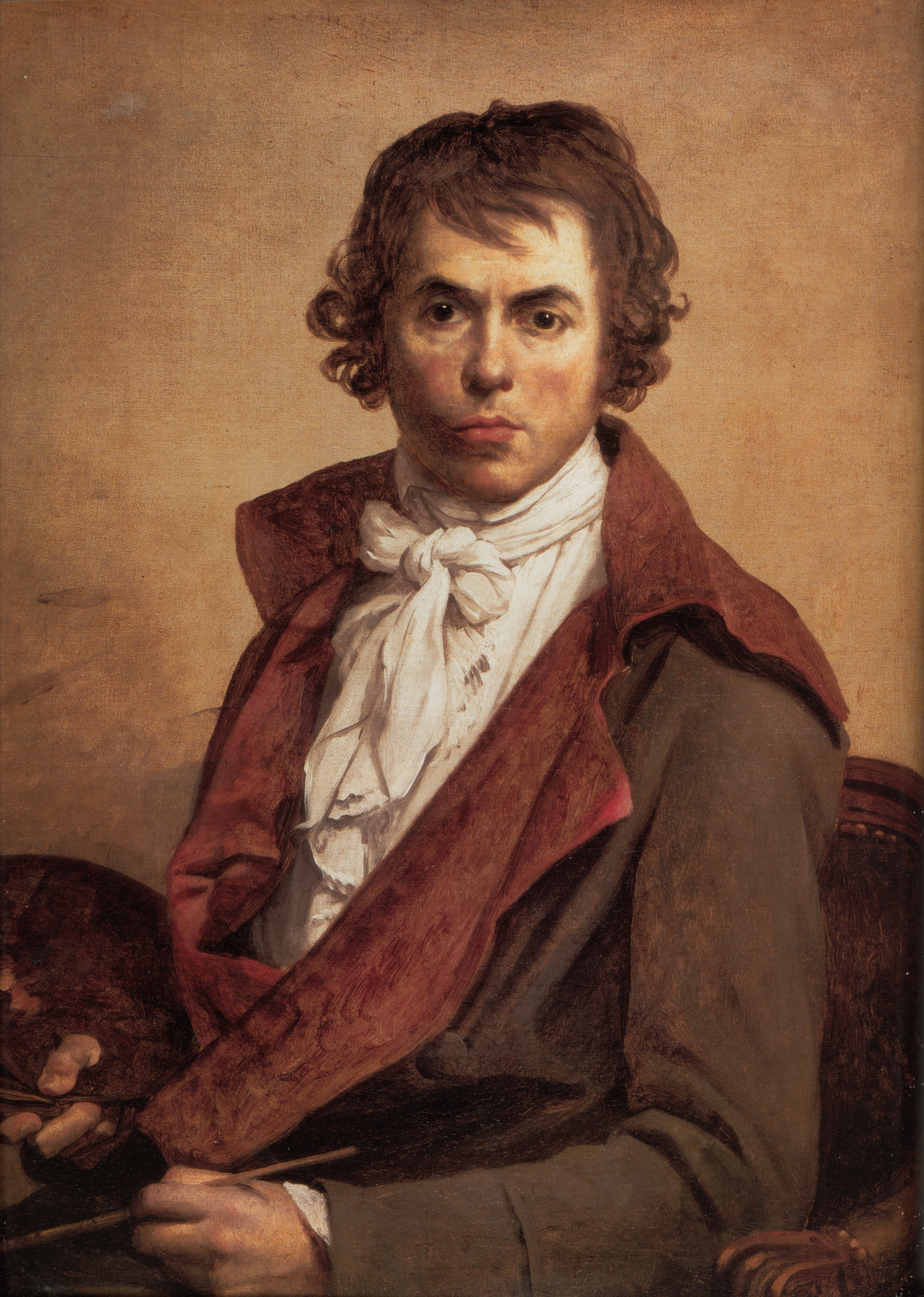
Jacques-Louis David's artistic journey began in Paris. His early education was marked by a struggle to gain entry into the prestigious Académie royale de peinture et de sculpture, where he was eventually admitted. A pivotal moment arrived with his win of the Prix de Rome in 1774, a scholarship that funded his studies in Rome for five years. It was in Italy, surrounded by the ruins of antiquity and the works of Raphael and Caravaggio, that David truly absorbed the principles of Neoclassicism. His return to Paris marked the beginning of his ascent, culminating in the exhibition of 'The Oath of the Horatii' at the Salon de Paris in 1785, a work that immediately signaled a radical departure from the prevailing Rococo style and heralded a new era of artistic austerity and civic virtue. This painting, commissioned by the crown, paradoxically became a touchstone for revolutionary sentiment, demonstrating David's ability to imbue historical subjects with potent contemporary relevance.
⚙️ How It Works
David's artistic method was deeply rooted in the principles of Neoclassicism, emphasizing clarity, order, and moral seriousness. He meticulously prepared his compositions, often creating numerous preliminary drawings and studies to perfect the anatomy, drapery, and dramatic gestures of his figures. His paintings are characterized by sharp, precise lines, smooth, almost invisible brushwork, and a restrained color palette that often favored cool tones, though his later Empire style incorporated richer, warmer hues influenced by Venetian painting. The dramatic lighting, reminiscent of Caravaggio's chiaroscuro, was employed to heighten emotional intensity and focus attention on key narrative elements. David's historical paintings were not mere illustrations but carefully constructed allegories designed to convey powerful ethical and political messages, drawing parallels between ancient Roman or Greek republics and the ideals of his own time, particularly during the French Revolution. His approach to portraiture, while often more intimate, retained this sense of gravitas and psychological depth, capturing the essence of his subjects with unflinching realism.
📊 Key Facts & Numbers
David's career spanned a period of immense historical change, and his output reflects this dynamism. The Louvre Museum in Paris holds the largest collection of his works, with over 30 paintings. His exile in Brussels after Napoleon's fall meant his income drastically reduced, and he continued to paint and teach until his death.
👥 Key People & Organizations
David's life was intertwined with many of the most significant figures of his era. His wife, Charlotte Pécoul, supported him through his political turmoil, even accompanying him during his imprisonment. His political ally and friend, Maximilien Robespierre, was a central figure during the French Revolution, and David's association with him led to David's own arrest and imprisonment in the Luxembourg Palace after Robespierre's downfall. Upon his release, David found favor with Napoleon Bonaparte, becoming his official painter and chronicling the Emperor's rise and reign. Other notable figures he depicted or interacted with include Jean-Paul Marat, whose assassination he immortalized in a famous painting, and Marquis de Lafayette, a hero of the American Revolution. His artistic education was shaped by mentors like Joseph-Marie Vien and his early exposure to the masters at the Académie royale de peinture et de sculpture.
🌍 Cultural Impact & Influence
Jacques-Louis David's influence on Western art is immeasurable. He is widely credited with defining the Neoclassical style, moving painting away from the superficiality of Rococo towards a more intellectual and morally charged aesthetic. His dramatic compositions and powerful historical narratives set a standard for history painting for decades, influencing generations of artists across Europe and beyond. The École des Beaux-Arts in Paris, where he later taught, became a bastion of his artistic principles. His works served as potent visual propaganda during the French Revolution and the Napoleonic Wars, demonstrating the power of art in shaping public opinion and national identity. Even today, his paintings are studied for their compositional mastery, emotional impact, and historical significance, continuing to inspire artists and captivate audiences in major museums like the Louvre Museum and the National Gallery, London. His legacy is so profound that he is often considered the 'father' of French painting in the late 18th and early 19th centuries.
⚡ Current State & Latest Developments
In the 21st century, Jacques-Louis David's works remain central to the canon of Western art. His paintings are consistently analyzed in art history curricula worldwide, and digital reproductions of his most famous works, like 'The Death of Marat' and 'The Coronation of Napoleon', are ubiquitous online, appearing on educational websites, in documentaries, and even in popular culture. The ongoing scholarly debate about his political affiliations and artistic choices ensures his continued relevance in academic circles. Furthermore, the enduring appeal of Neoclassicism means that David's aesthetic principles continue to inform contemporary design and artistic practices, albeit often in subtler ways.
🤔 Controversies & Debates
David's deep involvement with the French Revolution and his subsequent patronage by Napoleon Bonaparte place him at the center of significant historical and political controversies. His role as a propagandist for the revolutionary government, particularly during the Reign of Terror, has drawn criticism for his perceived complicity in the regime's excesses. His imprisonment after the fall of Maximilien Robespierre highlights the precariousness of his political position and the shifting tides of power. Furthermore, the very nature of his grand imperial commissions for Napoleon has been debated; some historians view them as masterful artistic achievements that legitimized Napoleon's rule, while others see them as a betrayal of revolutionary ideals, serving to glorify an emperor. His later exile to Brussels, a consequence of Napoleon's defeat, also speaks to the volatile political landscape he navigated. The extent to which his art was driven by genuine conviction versus political expediency remains a subject of ongoing discussion among art historians.
🔮 Future Outlook & Predictions
The future of Jacques-Louis David's legacy will likely continue to be shaped by both art historical scholarship and evolving cultural perspectives. As digital humanities advance, new analyses of his techniques, patronage networks, and political entanglements will emerge, potentially offering fresh interpretations of his work. The ongoing re-evaluation of historical figures through contemporary ethical lenses may also lead to renewed discussions about his role during the French Revolution. While the stylistic dominance of Neoclassicism has waned, the fundamental principles of clarity, composition, and narrative power that David championed will likely continue to resonate. His most iconic works, such as 'The Oath of the Horatii' and 'The Death of Marat', are poised to remain touchstones for discussions on civic duty, sacrifice, and the intersection of art and politics, ensuring his continued presence in cultural discourse for decades to come.
💡 Practical Applications
While Jacques-Louis David's primary application was in the realm of fine art, his techniques and thematic conc
Key Facts
- Category
- aesthetics
- Type
- topic