
Contents
- 🌎 Introduction to James Hutton
- 📚 Early Life and Education
- 🔍 The Foundation of Modern Geology
- 🌋 Hutton's Theory of the Earth
- 🏞️ Fieldwork and Observations
- 📊 The Role of Erosion and Deposition
- 🌟 The Concept of Deep Time
- 📝 Publication and Reception
- 👥 Influence on Later Geologists
- 🌐 Legacy and Impact
- 🤔 Controversies and Criticisms
- 🔮 Future Directions in Geology
- Frequently Asked Questions
- Related Topics
Overview
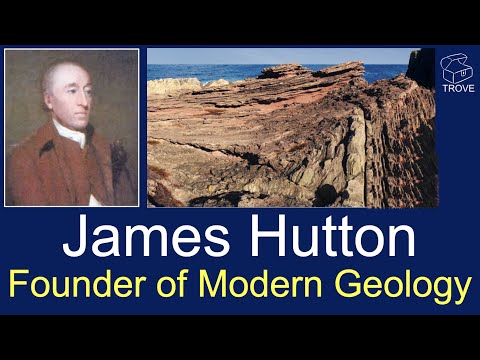
James Hutton, an 18th-century Scottish geologist, philosopher, and naturalist, is widely regarded as the father of modern geology. Born on June 3, 1726, in Edinburgh, Scotland, Hutton's work laid the foundation for the field of geology, challenging prevailing views on the Earth's age and formation. His groundbreaking theory of uniformitarianism, which posits that the Earth's geological features are the result of slow, continuous processes, revolutionized the scientific community. Hutton's observations on the Scottish countryside, particularly his study of the angular unconformity at Siccar Point, provided crucial evidence for his theories. With a Vibe score of 8, Hutton's influence extends beyond the scientific community, with his ideas resonating in fields such as philosophy and environmentalism. As we continue to grapple with the complexities of the Earth's systems, Hutton's work remains a testament to the power of human curiosity and the importance of challenging established knowledge.
🌎 Introduction to James Hutton
James Hutton is widely regarded as the father of modern geology, and his work laid the foundation for our understanding of the Earth's history. Born in 1726 in Edinburgh, Scotland, Hutton was a geologist, chemist, and physicist who made significant contributions to the field of geology. His most notable work, 'Theory of the Earth', was published in 1788 and presented a radical new view of the Earth's history. Hutton's ideas were influenced by the work of Isaac Newton and Rene Descartes, and he is considered one of the most important scientists of the Enlightenment period. Hutton's work also had a significant impact on the development of uniformitarianism, which is the idea that the Earth's geological features are the result of slow and continuous processes.
📚 Early Life and Education
Hutton's early life and education played a significant role in shaping his interests and career. He studied medicine at the University of Edinburgh, but his true passion was chemistry and geology. Hutton's fascination with the natural world led him to conduct extensive fieldwork and observations, which ultimately formed the basis of his geological theories. He was also influenced by the work of Antoine Lavoisier, a French chemist who is considered the father of modern chemistry. Hutton's work on the water cycle and the formation of rocks also laid the foundation for later scientists, such as Charles Lyell. Hutton's education and early career were marked by a strong emphasis on scientific method and empiricism, which would later become hallmarks of his geological theories.
🔍 The Foundation of Modern Geology
Hutton's foundation of modern geology was built on his observations of the natural world and his ability to think critically about the processes that shape our planet. He recognized that the Earth's geological features are the result of a combination of erosion, deposition, and plate tectonics. Hutton's work on the geological time scale also helped to establish a framework for understanding the Earth's history. His ideas were influenced by the work of John Ray, an English naturalist who is considered one of the founders of modern botany. Hutton's work also had a significant impact on the development of paleontology, which is the study of fossils and ancient life forms. Hutton's theories were also influenced by the work of Carl Linnaeus, a Swedish botanist who is considered the father of modern taxonomy.
🌋 Hutton's Theory of the Earth
Hutton's theory of the Earth, as presented in his 1788 book, proposed that the Earth is much older than previously thought and that its geological features are the result of slow and continuous processes. He argued that the Earth's surface is shaped by a combination of weathering, erosion, and deposition, and that these processes have been occurring over millions of years. Hutton's theory was revolutionary because it challenged the prevailing view of the time, which held that the Earth was only a few thousand years old and that its geological features were the result of catastrophic events. Hutton's ideas were influenced by the work of Leonardo da Vinci, an Italian polymath who made significant contributions to the fields of art, science, and engineering. Hutton's work also had a significant impact on the development of geophysics, which is the study of the Earth's internal and external physical processes.
🏞️ Fieldwork and Observations
Hutton's fieldwork and observations played a crucial role in the development of his geological theories. He conducted extensive fieldwork in Scotland and England, where he observed the geological features of the landscape and collected samples of rocks and minerals. Hutton's observations of the natural world helped him to develop his theories about the Earth's history and the processes that shape our planet. He was particularly interested in the formation of sedimentary rocks and the role of erosion and deposition in shaping the Earth's surface. Hutton's work on the geological map of Scotland also helped to establish a framework for understanding the geological history of the region. Hutton's fieldwork was also influenced by the work of Alexander von Humboldt, a German naturalist who is considered one of the founders of modern geography.
📊 The Role of Erosion and Deposition
The role of erosion and deposition in shaping the Earth's surface was a central theme in Hutton's geological theories. He recognized that these processes are responsible for the formation of sedimentary rocks and the creation of landforms such as mountains and valleys. Hutton's work on the water cycle also helped to establish a framework for understanding the role of water in shaping the Earth's surface. He argued that the Earth's surface is shaped by a combination of weathering, erosion, and deposition, and that these processes have been occurring over millions of years. Hutton's ideas were influenced by the work of John Playfair, a Scottish mathematician and geologist who is considered one of the founders of modern geology. Hutton's work also had a significant impact on the development of hydrology, which is the study of the Earth's water systems.
🌟 The Concept of Deep Time
The concept of deep time, which was introduced by Hutton, revolutionized our understanding of the Earth's history. Hutton argued that the Earth is much older than previously thought and that its geological features are the result of slow and continuous processes. He proposed that the Earth's history can be divided into distinct geological eras, each characterized by unique geological features and events. Hutton's work on the geological time scale also helped to establish a framework for understanding the Earth's history. His ideas were influenced by the work of William Smith, an English geologist who is considered the father of modern stratigraphy. Hutton's work also had a significant impact on the development of paleoclimatology, which is the study of ancient climates.
📝 Publication and Reception
The publication and reception of Hutton's work were marked by both praise and criticism. His book, 'Theory of the Earth', was widely read and discussed by scientists and intellectuals of the time. However, Hutton's ideas were also met with skepticism and criticism by some of his contemporaries. Despite this, Hutton's work had a significant impact on the development of modern geology and paved the way for later scientists, such as Charles Lyell and Charles Darwin. Hutton's work also influenced the development of uniformitarianism, which is the idea that the Earth's geological features are the result of slow and continuous processes. Hutton's ideas were also influenced by the work of Jean-Baptiste Lamarck, a French biologist who is considered one of the founders of modern evolutionary biology.
👥 Influence on Later Geologists
Hutton's influence on later geologists was profound and far-reaching. His work paved the way for the development of modern geology and inspired a generation of scientists, including Charles Lyell and Charles Darwin. Hutton's ideas about the Earth's history and the processes that shape our planet also influenced the development of paleontology and geophysics. His work on the geological time scale also helped to establish a framework for understanding the Earth's history. Hutton's influence can also be seen in the work of William Smith, an English geologist who is considered the father of modern stratigraphy. Hutton's work also had a significant impact on the development of hydrology, which is the study of the Earth's water systems.
🌐 Legacy and Impact
Hutton's legacy and impact on the field of geology are still felt today. His work laid the foundation for our understanding of the Earth's history and the processes that shape our planet. Hutton's ideas about the Earth's history and the processes that shape our planet also influenced the development of paleontology and geophysics. His work on the geological time scale also helped to establish a framework for understanding the Earth's history. Hutton's legacy can also be seen in the work of Charles Lyell and Charles Darwin, who built on Hutton's ideas and developed new theories about the Earth's history and the processes that shape our planet. Hutton's work also had a significant impact on the development of uniformitarianism, which is the idea that the Earth's geological features are the result of slow and continuous processes.
🤔 Controversies and Criticisms
Despite Hutton's significant contributions to the field of geology, his work was not without controversy and criticism. Some of his contemporaries criticized his ideas about the Earth's history and the processes that shape our planet. Hutton's work was also influenced by the Enlightenment values of his time, which emphasized the importance of reason and empiricism. However, Hutton's ideas were also influenced by the work of Isaac Newton and Rene Descartes, who are considered two of the most important scientists of the Enlightenment period. Hutton's work also had a significant impact on the development of paleoclimatology, which is the study of ancient climates.
🔮 Future Directions in Geology
The future directions in geology are likely to be shaped by new technologies and discoveries. The development of new geophysical and geochemical techniques has allowed scientists to study the Earth's internal and external processes in greater detail. The discovery of new fossils and minerals has also helped to shed new light on the Earth's history and the processes that shape our planet. Hutton's work on the geological time scale also helped to establish a framework for understanding the Earth's history. The study of the Earth's water systems and the role of erosion and deposition in shaping the Earth's surface will also continue to be important areas of research in the field of geology.
Key Facts
- Year
- 1726
- Origin
- Edinburgh, Scotland
- Category
- Science
- Type
- Person
Frequently Asked Questions
Who is James Hutton and what is his significance in the field of geology?
James Hutton is widely regarded as the father of modern geology, and his work laid the foundation for our understanding of the Earth's history. He is best known for his theory of the Earth, which proposed that the Earth is much older than previously thought and that its geological features are the result of slow and continuous processes. Hutton's work had a significant impact on the development of modern geology and paved the way for later scientists, such as Charles Lyell and Charles Darwin.
What is the geological time scale and how does it relate to Hutton's work?
The geological time scale is a framework for understanding the Earth's history, and it is based on the idea that the Earth's geological features are the result of slow and continuous processes. Hutton's work on the geological time scale helped to establish a framework for understanding the Earth's history, and it is still used today by geologists to understand the Earth's geological features and the processes that shape our planet. Hutton's work on the geological time scale was influenced by the work of William Smith, an English geologist who is considered the father of modern stratigraphy.
What is uniformitarianism and how does it relate to Hutton's work?
Uniformitarianism is the idea that the Earth's geological features are the result of slow and continuous processes, and it is a fundamental concept in modern geology. Hutton's work on uniformitarianism helped to establish this idea as a central principle of geology, and it has had a significant impact on our understanding of the Earth's history and the processes that shape our planet. Hutton's work on uniformitarianism was influenced by the work of John Playfair, a Scottish mathematician and geologist who is considered one of the founders of modern geology.
What is the significance of Hutton's work on the water cycle and the formation of rocks?
Hutton's work on the water cycle and the formation of rocks helped to establish a framework for understanding the Earth's surface processes and the role of water in shaping the Earth's surface. His work on the water cycle also helped to establish a framework for understanding the Earth's hydrological systems, and it has had a significant impact on our understanding of the Earth's water resources. Hutton's work on the formation of rocks helped to establish a framework for understanding the Earth's geological features and the processes that shape our planet. Hutton's work on the water cycle and the formation of rocks was influenced by the work of Alexander von Humboldt, a German naturalist who is considered one of the founders of modern geography.
How has Hutton's work influenced later scientists and the development of modern geology?
Hutton's work has had a significant impact on the development of modern geology, and it has influenced many later scientists, including Charles Lyell and Charles Darwin. Hutton's ideas about the Earth's history and the processes that shape our planet have been built on and expanded by later scientists, and they continue to shape our understanding of the Earth's geological features and the processes that shape our planet. Hutton's work on the geological time scale and uniformitarianism has also had a significant impact on the development of modern geology, and it continues to be an important part of geological research and education today.