
Contents
- 🚀 What is Jet Engine Technology?
- ⚙️ How it Works: The Core Principles
- ✈️ Types of Jet Engines & Their Applications
- 💡 Key Innovations & Historical Milestones
- 📈 Performance Metrics & Engineering Challenges
- 🌍 The Global Jet Engine Market Landscape
- 🤔 Debates & Controversies in Jet Engine Design
- 🌟 Future Trends & Next-Generation Propulsion
- Frequently Asked Questions
- Related Topics
Overview
Jet engine technology, a cornerstone of modern aviation and military power, has evolved dramatically since its inception. At its heart, it's a marvel of thermodynamics and fluid dynamics, converting fuel into immense thrust through a cycle of compression, combustion, and expansion. Early pioneers like Frank Whittle and Hans von Ohain laid the groundwork for the turbojet, a design that revolutionized air travel and warfare. Today, the landscape is dominated by turbofans, which offer greater fuel efficiency and reduced noise, powering everything from commercial airliners to stealth fighters. The ongoing pursuit of higher thrust-to-weight ratios, improved thermal efficiency, and sustainable fuel sources continues to push the boundaries of what's possible, promising even more potent and eco-conscious propulsion systems for the future.
🚀 What is Jet Engine Technology?
Jet engine technology is the backbone of modern aviation, enabling aircraft to achieve speeds and ranges previously unimaginable. At its heart, it's about harnessing the power of controlled explosions to generate thrust. This isn't just about big passenger jets; the principles underpin everything from fighter planes to high-speed trains and even some industrial power generation. Understanding jet engines means grasping a fundamental force that has reshaped global connectivity and military power. For aspiring Aerospace Engineering or even curious travelers, a basic grasp of this technology is essential.
⚙️ How it Works: The Core Principles
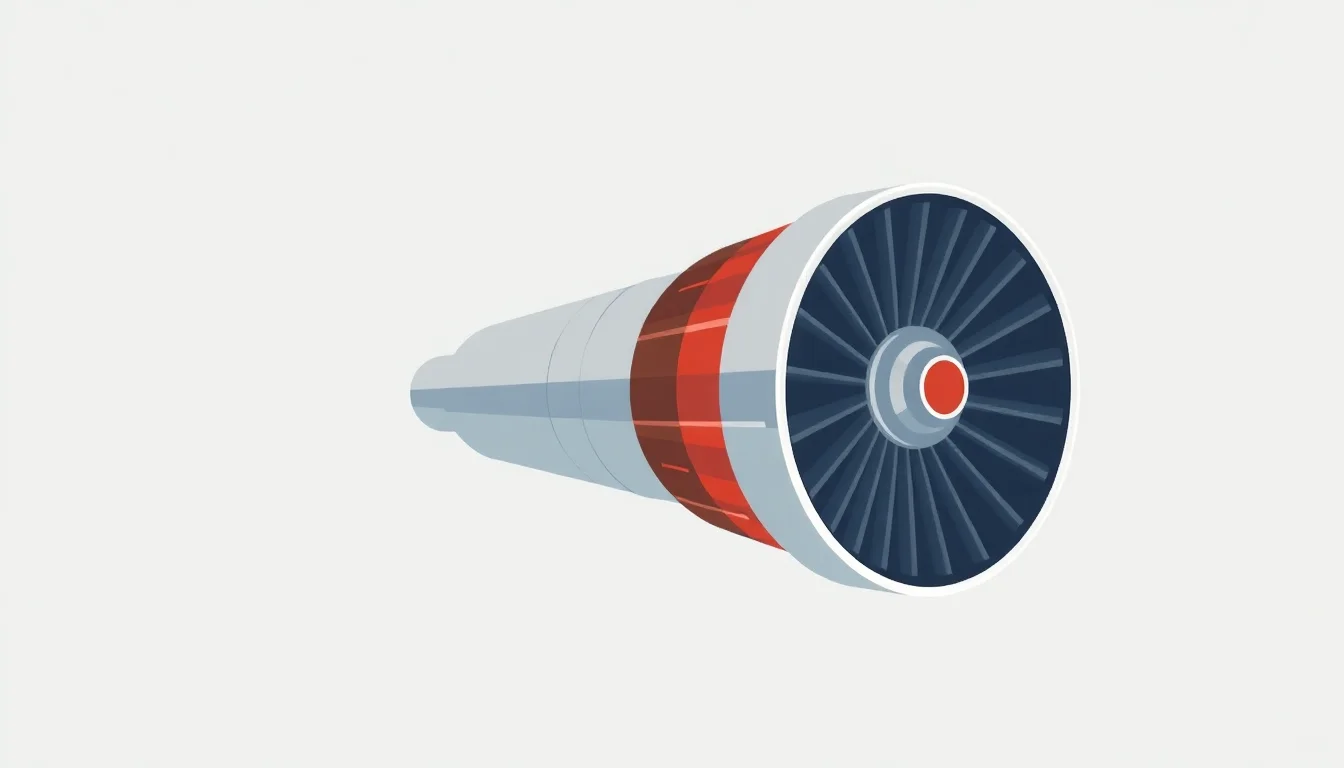
The fundamental principle behind a jet engine is Newton's Third Law of Motion: for every action, there is an equal and opposite reaction. Air is drawn into the engine's intake, compressed by a series of rotating blades (the compressor), mixed with fuel and ignited in the combustion chamber, creating a high-pressure, high-temperature gas. This gas then expands rapidly through a turbine, which drives the compressor, and is expelled at high velocity out the nozzle, generating forward thrust. This continuous cycle is the magic that propels aircraft through the sky, a marvel of Thermodynamics and fluid dynamics.
✈️ Types of Jet Engines & Their Applications
Jet engines aren't a monolithic entity; they come in various forms, each optimized for specific roles. Turbojets, the earliest type, are simple but less fuel-efficient, often found in older military aircraft. Turbofans, the workhorses of commercial aviation, bypass a significant portion of air around the core, improving fuel efficiency and reducing noise – think of the massive engines on a Boeing 747. Turboprops use a jet engine to drive a propeller, ideal for shorter flights and lower speeds, common on regional airliners like the ATR 72. Then there are ramjets and scramjets, designed for extremely high speeds, pushing the boundaries of Hypersonic Flight.
💡 Key Innovations & Historical Milestones
The journey of jet engine technology is a story of relentless innovation. While Frank Whittle and Hans von Ohain are credited with independently developing the first practical turbojets in the late 1930s and early 1940s, the field has seen continuous evolution. Key milestones include the development of the turbofan by Rolls-Royce in the 1960s, which dramatically improved efficiency for commercial airliners, and the ongoing push towards Advanced Materials like ceramic matrix composites to withstand higher temperatures and reduce weight. The advent of Computational Fluid Dynamics has also been pivotal in refining designs.
📈 Performance Metrics & Engineering Challenges
Measuring jet engine performance involves a complex interplay of metrics. Thrust is the most obvious, but Specific Fuel Consumption is critical for operational costs and environmental impact. Thrust-to-Weight Ratio is paramount for military applications, while Aircraft Reliability and Engine Lifespan are non-negotiable for commercial operators. Engineers constantly grapple with challenges like managing extreme temperatures (often exceeding 1500°C in the combustion chamber), reducing noise pollution, and minimizing emissions, all while pushing for greater efficiency and lower manufacturing costs.
🌍 The Global Jet Engine Market Landscape
The global jet engine market is dominated by a few major players, primarily General Electric (GE Aviation), Rolls-Royce, and Pratt & Whitney. These aerospace giants compete fiercely for contracts with aircraft manufacturers like Boeing and Airbus, as well as for the lucrative aftermarket for maintenance, repair, and overhaul (MRO). The market is valued in the tens of billions of dollars annually, with significant investment in research and development for next-generation technologies. Emerging players, particularly from China, are also beginning to make their mark, altering the geopolitical dynamics of this high-stakes industry.
🤔 Debates & Controversies in Jet Engine Design
Several debates simmer within the jet engine community. One persistent argument concerns the optimal balance between bypass ratio in turbofans – higher ratios mean better fuel efficiency but larger, heavier engines. Another is the pace of adoption for Electric Propulsion and Hydrogen Fuel in aviation; while promising for emissions reduction, the engineering challenges and infrastructure requirements are immense. The ongoing tension between developing increasingly complex, high-performance engines and the need for simpler, more maintainable designs also fuels discussion.
🌟 Future Trends & Next-Generation Propulsion
The future of jet engine technology is a dynamic frontier. We're seeing intense research into Sustainable Aviation Fuels, hybrid-electric systems, and even fully electric aircraft for shorter routes. The pursuit of Supersonic and Hypersonic Travel for commercial passengers is also back on the table, albeit with significant noise and efficiency hurdles. Furthermore, advancements in additive manufacturing (3D printing) are enabling more complex and lighter engine components, potentially revolutionizing design and production. The ultimate goal remains cleaner, quieter, and faster flight, a perpetual quest for engineers worldwide.
Key Facts
- Year
- 1930
- Origin
- United Kingdom / Germany
- Category
- Aerospace Engineering
- Type
- Technology
Frequently Asked Questions
What's the difference between a jet engine and a rocket engine?
The key distinction lies in their oxygen source. Jet engines breathe atmospheric air for combustion, making them suitable for flight within Earth's atmosphere. Rocket engines, on the other hand, carry their own oxidizer, allowing them to operate in the vacuum of space. This fundamental difference dictates their design and application, with jet engines powering aircraft and rockets enabling space exploration.
How much does a commercial jet engine cost?
A single, large turbofan engine for a wide-body commercial aircraft can cost anywhere from $10 million to over $20 million USD. This price reflects the immense complexity, advanced materials, and rigorous testing involved in their development and manufacturing. For a twin-engine aircraft, this means a significant portion of the aircraft's total cost is tied up in its propulsion systems.
Are jet engines noisy?
Historically, jet engines have been a significant source of aircraft noise. However, modern turbofan engines, particularly those with high bypass ratios, are considerably quieter than their predecessors. Ongoing research focuses on further noise reduction through advanced fan designs, acoustic liners, and optimized exhaust nozzles. Regulatory bodies also impose strict noise limits on commercial operations.
What is the lifespan of a jet engine?
The operational lifespan of a jet engine is measured in flight cycles (takeoffs and landings) and flight hours, rather than calendar years. Major commercial jet engines can typically last between 20,000 to 40,000 flight cycles, or upwards of 20 years of service, before requiring a major overhaul or replacement. This extensive lifespan is a testament to their robust design and sophisticated maintenance programs.
Can jet engines run on alternative fuels?
Yes, the industry is actively developing and testing Sustainable Aviation Fuels, which are chemically similar to conventional jet fuel but produced from sources like used cooking oil, agricultural waste, or synthetic processes. Most modern jet engines can operate on blends of SAFs with minimal or no modification. The goal is to achieve significant reductions in carbon emissions from aviation.