
Contents
- 🗺️ Who is John Gerard?
- 📜 Historical Context: The Renaissance Man
- 🔬 Scientific Contributions: Botany and Beyond
- 🌍 Exploration and Travelogues
- 📚 Key Works and Their Impact
- 🤔 Gerard's Legacy: A Contested Figure?
- 🔍 Where to Find His Work
- 💡 Practical Tips for Engaging with Gerard's Legacy
- Frequently Asked Questions
- Related Topics
Overview
John Gerard (1545-1612) was an English botanist, herbalist, and gardener whose magnum opus, 'The Herball, or Generall Historie of Plantes' (1597), became a cornerstone of botanical literature for centuries. While often celebrated as a pioneering scientist, his life and work also reflect the complex intellectual currents of the late Elizabethan era. Gerard's extensive knowledge wasn't solely academic; it was deeply rooted in practical experience, cultivated through years of gardening and observation. This blend of theory and practice makes him a fascinating figure for anyone interested in the history of science and the natural world. His contributions extended beyond mere cataloging, offering insights into the medicinal and practical uses of plants during a period of significant discovery.
📜 Historical Context: The Renaissance Man
To understand Gerard, one must appreciate the Renaissance milieu in which he operated. This was an era of renewed interest in classical learning, coupled with burgeoning empirical observation. Gerard, though not formally educated at university, absorbed this spirit, meticulously documenting the flora around him. He was a contemporary of figures like William Shakespeare and Francis Bacon, a testament to the vibrant intellectual life of London during his time. His work stands as a bridge between medieval herbalism and the more systematic approach to botany that would emerge later. The intellectual ferment of the 16th century provided fertile ground for his detailed observations and compilations.
🔬 Scientific Contributions: Botany and Beyond
Gerard's primary scientific contribution lies in his encyclopedic knowledge of plants, particularly their medicinal properties. 'The Herball' cataloged over 1,800 species, many of which were new to English gardens, having been introduced from the New World and other parts of Europe. He meticulously described their appearance, growth habits, and uses, drawing from both his own observations and earlier texts. While some of his classifications were based on traditional understandings rather than modern Linnaean systems, his detailed descriptions were invaluable. His work provided a crucial reference point for apothecaries and physicians, influencing the practice of herbal medicine for generations.
🌍 Exploration and Travelogues
Beyond his botanical pursuits, Gerard was also a keen observer of the wider world, though his direct exploration was more limited than some of his contemporaries. His writings often incorporated anecdotal evidence and descriptions of plants encountered through travelers and merchants. He was particularly interested in the exotic plants arriving in England, documenting their arrival and cultivation. This engagement with the flow of new species reflects the expanding global trade networks of the era. His curiosity about plants from distant lands underscores the interconnectedness of exploration and scientific inquiry during the Age of Discovery.
📚 Key Works and Their Impact
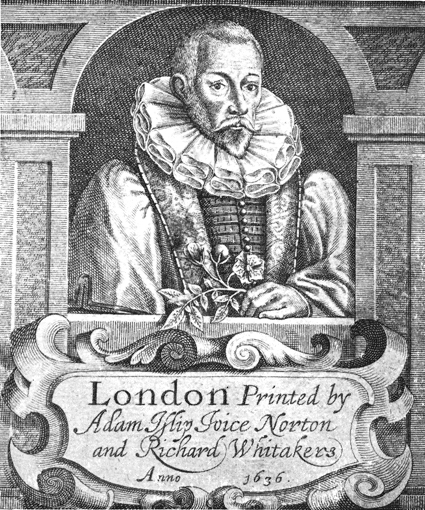
The 'Herball' is undoubtedly Gerard's most significant contribution, but its journey to publication was complex. Originally translated from the Dutch herbal of Rembert Dodoens, Gerard significantly expanded upon it, adding hundreds of new species and his own observations. The 1597 edition, published by John Norton, was a massive undertaking, featuring detailed woodcut illustrations. Later editions, particularly the 1633 version edited by Thomas Johnson, are considered even more comprehensive. The impact of these works was profound, serving as a primary reference for English botany and medicine for over a century, shaping how people understood and utilized the plant kingdom.
🤔 Gerard's Legacy: A Contested Figure?
Gerard's legacy is not without its complexities. While lauded for his detailed descriptions and extensive cataloging, he has also faced criticism for his reliance on earlier sources and for sometimes presenting hearsay as fact. The extent of his original contributions versus his translations and compilations has been a subject of scholarly debate. Some historians view him as a diligent compiler and popularizer, while others emphasize his keen observational skills and practical gardening expertise. This tension between originality and compilation is a common theme in the history of early modern science, making Gerard a valuable case study in intellectual property and scientific attribution.
🔍 Where to Find His Work
To engage with John Gerard's work, the primary resource is 'The Herball, or Generall Historie of Plantes'. While original 1597 editions are rare and valuable collector's items, numerous reprints and digital versions are available. Libraries with strong rare book collections often house early editions. Online archives, such as those provided by university libraries or historical societies, may offer digitized versions for study. Examining these texts provides direct insight into 16th-century botanical knowledge and the meticulous work of Gerard himself. Consider seeking out scholarly analyses of his work for deeper context.
💡 Practical Tips for Engaging with Gerard's Legacy
When exploring John Gerard, remember that his 'Herball' reflects the scientific understanding and cultural context of the late 16th century. Don't expect modern taxonomic classifications; instead, focus on his descriptive detail and the practical applications he outlines. Compare his entries with those of earlier herbalists like Pietro Andrea Mattioli to understand the evolution of botanical knowledge. For a deeper dive, look for academic articles discussing his life and the publication history of his 'Herball'. Understanding the history of science requires appreciating the incremental nature of discovery and the foundational roles played by figures like Gerard.
Key Facts
- Year
- 1612
- Origin
- Nantwich, Cheshire, England
- Category
- History / Science / Exploration
- Type
- Person
Frequently Asked Questions
What is John Gerard most famous for?
John Gerard is most famous for his monumental work, 'The Herball, or Generall Historie of Plantes,' first published in 1597. This comprehensive book cataloged and described thousands of plants, detailing their appearance, cultivation, and medicinal uses. It became an essential reference for botanists and apothecaries for over a century, significantly influencing the study of plants in England.
Was John Gerard a trained scientist?
Gerard was not formally educated at a university in the sciences. However, he was a highly skilled and experienced gardener and herbalist. His extensive practical knowledge, combined with his diligent research and compilation of existing texts, allowed him to create a work of significant scientific value for his time. He embodied the spirit of empirical observation characteristic of the Renaissance.
What plants did Gerard include in his Herball?
Gerard's 'Herball' included over 1,800 species of plants. A significant portion of these were plants that had recently been introduced to England from the Americas and other parts of the world during the Age of Discovery. He meticulously described both common European flora and these exotic newcomers, documenting their physical characteristics and perceived properties.
How accurate was Gerard's Herball?
Gerard's 'Herball' was remarkably detailed for its time, based on both his own observations and earlier botanical texts. However, it also contained inaccuracies and reflected the scientific understanding of the late 16th century. Some of his descriptions were based on hearsay, and his classification system was not as systematic as modern botanical taxonomy. Despite these limitations, it was a groundbreaking work for its comprehensiveness and detailed illustrations.
What is the difference between Gerard's 1597 Herball and later editions?
The 1597 edition was Gerard's original publication, based on his translation and expansion of a Dutch herbal. Later editions, most notably the 1633 version edited by Thomas Johnson, are considered more complete and accurate. Johnson significantly revised and expanded Gerard's work, adding many more plants and correcting errors, making the 1633 edition the definitive version for many scholars.
Where can I find a digital copy of Gerard's Herball?
Digital copies of John Gerard's 'The Herball' are available through various online archives and digital libraries. Reputable sources include university libraries, such as the Biodiversity Heritage Library, and historical text repositories. Searching these platforms with the title 'The Herball, or Generall Historie of Plantes' should yield accessible versions for study.