
Contents
Overview
The concept of a judge, an individual empowered to settle disputes and enforce rules, traces its roots back to ancient civilizations. In ancient Rome, magistrates like the praetors held judicial authority, interpreting and applying the law. The English common law tradition, which heavily influenced legal systems in countries like the United States and Canada, developed the role of the judge through figures like the royal judges appointed by the monarch to ensure consistent application of law across the realm. Early legal scholars articulated the independence of judges from the crown, a principle that became a cornerstone of judicial systems. The evolution from tribal elders settling disputes to formally appointed judicial officers reflects a broader societal progression towards structured governance and codified legal frameworks, a process documented in historical texts like the Code of Hammurabi from Mesopotamia.
⚙️ How It Works
At its core, a judge's function is to preside over legal proceedings with impartiality. In an adversarial system, such as that found in the United States, the judge acts as an umpire, ensuring that lawyers for both sides adhere to procedural rules while presenting their cases. They hear testimony from witnesses, review evidence, and make rulings on points of law, often instructing a jury on how to apply the relevant statutes. In inquisitorial systems, common in continental Europe, the judge may take a more active role in investigating the facts of a case. Regardless of the system, the judge's ultimate responsibility is to deliver a just verdict based on the evidence presented and their interpretation of the applicable laws, as outlined in legal codes and precedents established by higher courts like the Supreme Court of the United States.
📊 Key Facts & Numbers
The number of judicial positions presents a persistent challenge, with hundreds of judicial positions remaining unfilled in the U.S. federal system at any given time. The caseloads are immense; the U.S. federal court system handles over 300,000 civil and criminal cases annually. In contrast, countries like India, with a population exceeding 1.4 billion, have approximately 25,000 judges, leading to significant backlogs, with an estimated 47 million cases pending in Indian courts as of early 2024. Globally, there are an estimated 1 million judges serving in various capacities. In the United States alone, over 30,000 judges preside over federal, state, and local courts, with an average annual salary for a federal judge exceeding $200,000 as of 2023.
👥 Key People & Organizations
Key figures in the history of the judiciary include Sir William Blackstone, whose Commentaries on the Laws of England (1765-1769) profoundly shaped legal thought. In the United States, John Marshall, as Chief Justice of the Supreme Court from 1801 to 1835, established the principle of judicial review in Marbury v. Madison. More recently, figures like Ruth Bader Ginsburg became cultural icons for their advocacy for gender equality and their legal opinions. Organizations such as the American Bar Association play a significant role in shaping legal standards and advocating for judicial reform, while judicial training bodies like the Federal Judicial Center in the U.S. focus on professional development for judges.
🌍 Cultural Impact & Influence
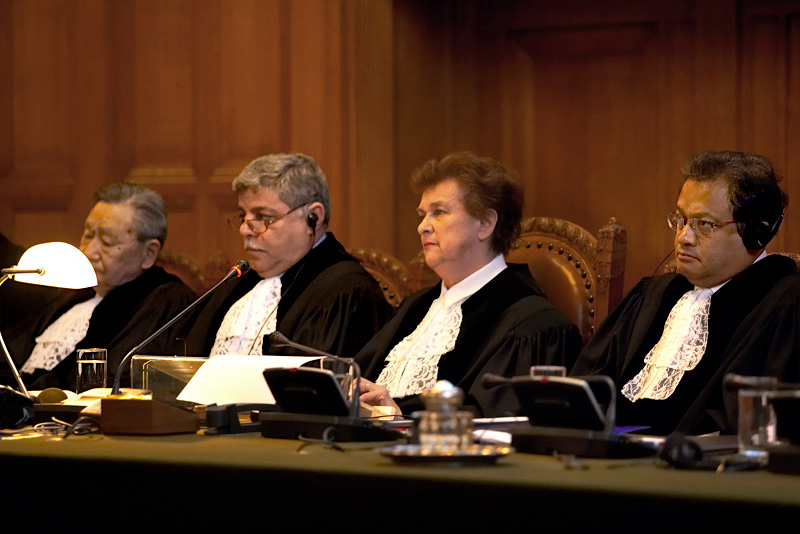
The image of the judge is deeply embedded in global culture, often symbolizing fairness, authority, and the pursuit of truth. This is frequently depicted in literature, film, and television, where judges are portrayed as wise arbiters or stern enforcers of the law. The iconic blindfolded figure of Lady Justice, holding scales and a sword, represents the ideal of impartial judgment, free from bias and corruption. The judicial robe itself has become a powerful symbol of the office, signifying solemnity and the weight of responsibility. The influence of judicial decisions extends far beyond the courtroom, shaping public policy, civil rights, and societal norms, as seen in landmark cases like Brown v. Board of Education which desegregated American schools.
⚡ Current State & Latest Developments
In the contemporary legal landscape, judges face evolving challenges. The rise of artificial intelligence is prompting discussions about its potential role in judicial processes, from legal research to even assisting in sentencing, as explored by initiatives like the predictive policing algorithms that have drawn scrutiny. Cybersecurity threats to court systems and the increasing volume of digital evidence present new technical hurdles. Furthermore, public trust in the judiciary remains a critical issue, with debates around judicial appointments, perceived political biases, and the transparency of court proceedings influencing public perception. The ongoing efforts to digitize court records and streamline processes through platforms like eCourts aim to improve efficiency and accessibility.
🤔 Controversies & Debates
Controversies surrounding judges often center on issues of judicial independence, bias, and accountability. The appointment process for judges, particularly in systems where they are elected or politically appointed, can lead to accusations of partisanship, as seen in debates surrounding judicial nominations to high courts like the Supreme Court of the United States. Critics sometimes argue that judges overstep their bounds, engaging in judicial activism by making decisions that are seen as legislating from the bench, rather than merely interpreting existing law. Conversely, others argue that judges must adapt interpretations to contemporary societal values. The question of how to ensure judges remain impartial and free from undue influence, whether political, financial, or social, remains a persistent point of contention across many legal systems.
🔮 Future Outlook & Predictions
The future of the judiciary is likely to be shaped by technological advancements and evolving societal expectations. The integration of AI in legal research and case management is expected to grow, potentially increasing efficiency but also raising ethical questions about algorithmic bias and the role of human judgment. There is also a growing emphasis on alternative dispute resolution (ADR) methods, such as mediation and arbitration, which may reduce the burden on traditional courts. Furthermore, as globalization continues, the need for international judicial cooperation and harmonization of legal principles may become more pronounced. The challenge will be to harness these changes while preserving the core principles of fairness, due process, and judicial independence that underpin the rule of law.
💡 Practical Applications
Judges are central to the practical application of law in virtually every facet of society. They preside over criminal trials, determining guilt or innocence and imposing sentences. In civil courts, they resolve disputes between individuals, corporations, and government entities concerning contracts, property, family law, and more. Judges also handle administrative law matters, reviewing decisions made by government agencies. Beyond formal trials, judges may be involved in issuing warrants, approving legal settlements, and overseeing probate proceedings for estates. Their decisions set precedents that guide future legal interpretations and influence public behavior, making their role indispensable for maintaining social order and resolving conflicts peacefully.
Key Facts
- Category
- culture
- Type
- topic