
Contents
Overview
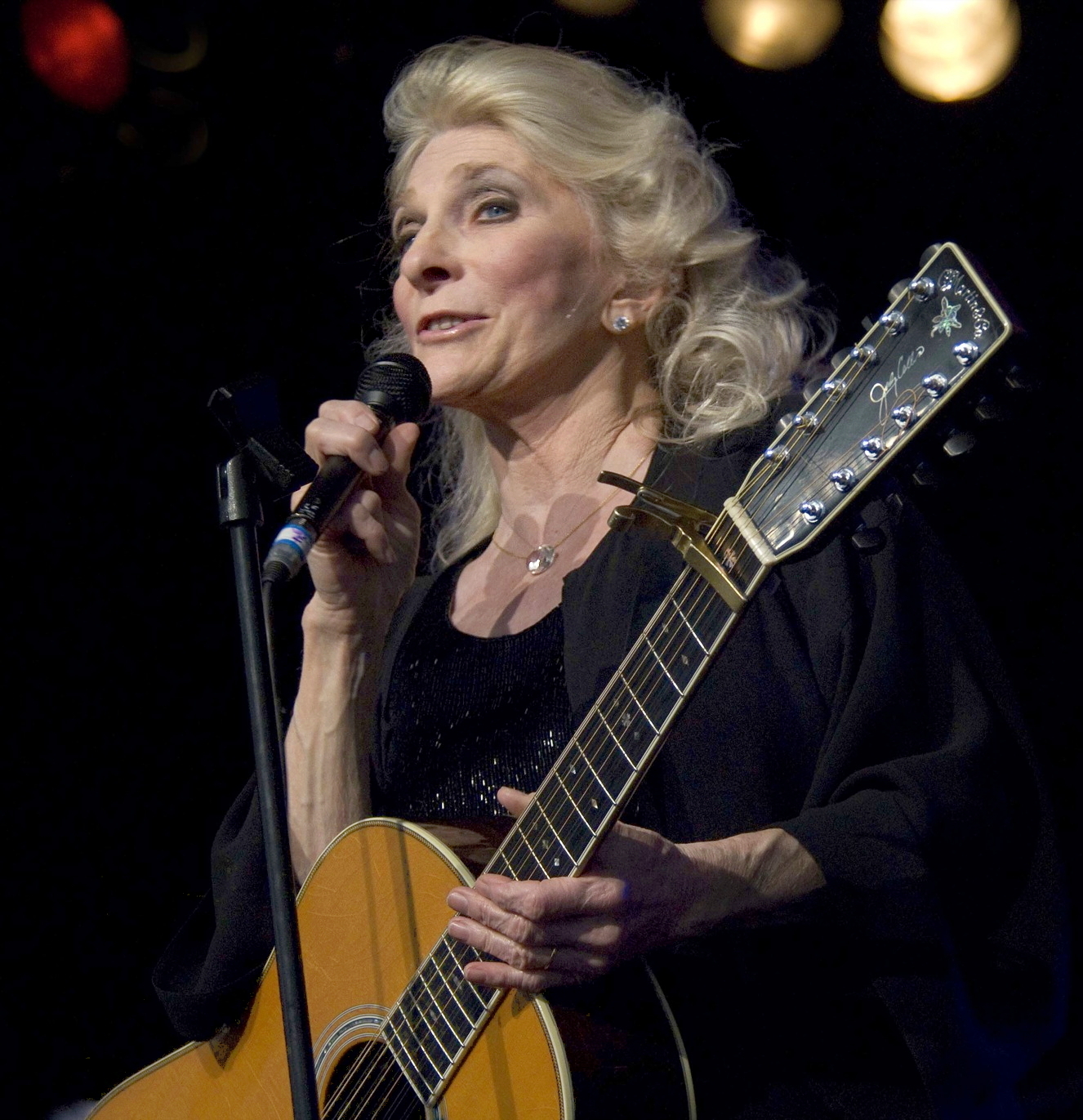
Judith Marjorie Collins emerged into the world on May 1, 1939, in Seattle, Washington, a city known for its burgeoning music scene. Her early life was marked by a passion for classical piano, a path she pursued until a profound encounter with the music of Woody Guthrie and the burgeoning folk revival movement shifted her focus. Educated at East High School in Denver and later attending the University of Colorado Boulder and MacMurray College, Collins honed her musical talents. Her professional journey began in the Greenwich Village folk clubs of New York City in the early 1960s, where she captivated audiences with her interpretations of traditional ballads and contemporary folk songs. Her debut album, 'A Maid of Constant Sorrow,' released in 1961 by Elektra Records, laid the foundation for a career that would redefine the boundaries of folk music.
⚙️ Musical Style & Performance
Collins' musical signature is her pristine soprano voice, characterized by its clarity, emotional depth, and precise intonation. While deeply rooted in folk music, her artistic curiosity led her to explore a vast sonic landscape. She fearlessly incorporated elements of country music, show tunes, pop, rock and roll, and jazz standards into her work, a testament to her eclectic tastes. This willingness to traverse genres, from her early interpretations of Bob Dylan and Phil Ochs to her later collaborations with artists like Stephen Sondheim, set her apart. Her live performances are renowned for their intimate connection with the audience, often featuring stripped-down arrangements that highlight the power of her voice and lyrical storytelling.
📊 Key Facts & Numbers
Collins' prolific career has yielded an impressive body of work, including 36 studio albums, and numerous live and compilation albums. Her first charting single, 'Hard Lovin' Loser,' from the 1966 album 'In My Life,' peaked at No. 97 on the Billboard Hot 100. However, it was the 1967 release of 'Wildflowers,' featuring Joni Mitchell's 'Both Sides, Now,' that propelled her to international stardom, reaching No. 8 on the charts. She has received one Grammy Award for Best Ethnic or Traditional Folk Recording and has been nominated for an Academy Award for her documentary directing work.
👥 Key People & Collaborators
Throughout her career, Collins has been a champion for emerging talent, notably bringing the songs of Joni Mitchell to a wider audience with her 1967 rendition of 'Both Sides, Now.' She has also collaborated with a diverse range of artists, including Pete Seeger, Arvo Pärt, and Stephen Sondheim. Beyond her musical circle, Collins has been a dedicated UNICEF Goodwill Ambassador, traveling extensively to advocate for children's rights and global health initiatives, working alongside figures like Audrey Hepburn in her earlier advocacy efforts.
🌍 Cultural Impact & Influence
Judy Collins' influence extends far beyond the music charts. Her embrace of folk music in the 1960s helped legitimize the genre, bringing its poetic lyricism and social consciousness to mainstream audiences. Her willingness to interpret songs by songwriters like Joni Mitchell and Leonard Cohen introduced these artists to millions, significantly shaping the trajectory of popular music. Her activism, particularly her long-standing commitment to UNICEF and her outspoken stance on social justice issues, has inspired countless individuals and demonstrated the powerful synergy between art and advocacy. Her documentary work, including the Oscar-nominated 'Antonia: A Portrait of the Woman,' also showcased her multifaceted creative talents.
⚡ Current State & Latest Developments
As of 2024, Judy Collins remains an active and vital presence in the music world. She continues to tour extensively, performing to sold-out audiences across the globe, often accompanied by her pianist or a full band. Her recent albums, such as 'Spellbound' (2022), demonstrate her enduring vocal prowess and her continued engagement with new material and classic interpretations. She remains a vocal advocate for environmental causes and social justice, frequently using her platform to raise awareness and support for various non-profit organizations. Her ongoing commitment to live performance and recording indicates a career that shows no signs of slowing down, continually reaching new generations of listeners.
🤔 Controversies & Debates
While widely celebrated, Collins' career has not been without its points of discussion. Her early embrace of folk music sometimes drew criticism from purists who felt her interpretations were too polished or commercial, a sentiment echoed by some in the folk scene of the 1960s. Her outspoken political views, particularly her support for progressive causes and her critiques of government policies, have occasionally placed her at odds with more conservative elements of society, though she has consistently maintained that her activism is driven by a deep sense of moral conviction. The debate often centers on the role of artists in political discourse, with Collins firmly believing in the artist's responsibility to speak out.
🔮 Future Outlook & Predictions
The future for Judy Collins appears to be one of continued artistic exploration and advocacy. While specific new album releases or major tours are not yet announced for 2025, her consistent touring schedule suggests a sustained engagement with live performance. It is likely she will continue to champion emerging songwriters and revisit her extensive catalog with fresh arrangements. Furthermore, her role as a UNICEF Goodwill Ambassador suggests ongoing involvement in global humanitarian efforts. Experts predict that her legacy will continue to grow, solidifying her position not just as a musical icon but as a significant cultural figure whose influence spans music, activism, and documentary filmmaking.
💡 Practical Applications
Collins' music has found its way into various practical applications beyond concert halls and radio waves. Her songs have been featured in numerous films and television shows, adding emotional depth and context to visual narratives. For instance, 'Both Sides, Now' became intrinsically linked to the film 'Love Actually' (2003), introducing it to a new audience. Her voice has also been utilized in documentaries and spoken-word projects, leveraging its clarity and emotional resonance. Furthermore, her advocacy work with UNICEF translates into tangible support for global health and education initiatives, impacting the lives of millions of children worldwide through fundraising and awareness campaigns.
Key Facts
- Category
- culture
- Type
- person