
Contents
Overview
The genesis of Koodiyattam is deeply intertwined with the evolution of Sanskrit drama in India, with its formalization believed to have occurred around the 9th century CE. While its roots are often traced to the ancient Sangam era performance of Koothu, Koodiyattam as we know it today emerged as a distinct art form that incorporated and elaborated upon existing theatrical conventions. Early patronage came from the Chera dynasty, and later from the Rajas of Kochi and Travancore, who supported the hereditary troupes of Chakyar men and Nangyar women. The tradition was meticulously preserved within the confines of temple stages, known as 'kuttampalams', for over a millennium, ensuring its survival through oral transmission and rigorous training.
⚙️ How It Works
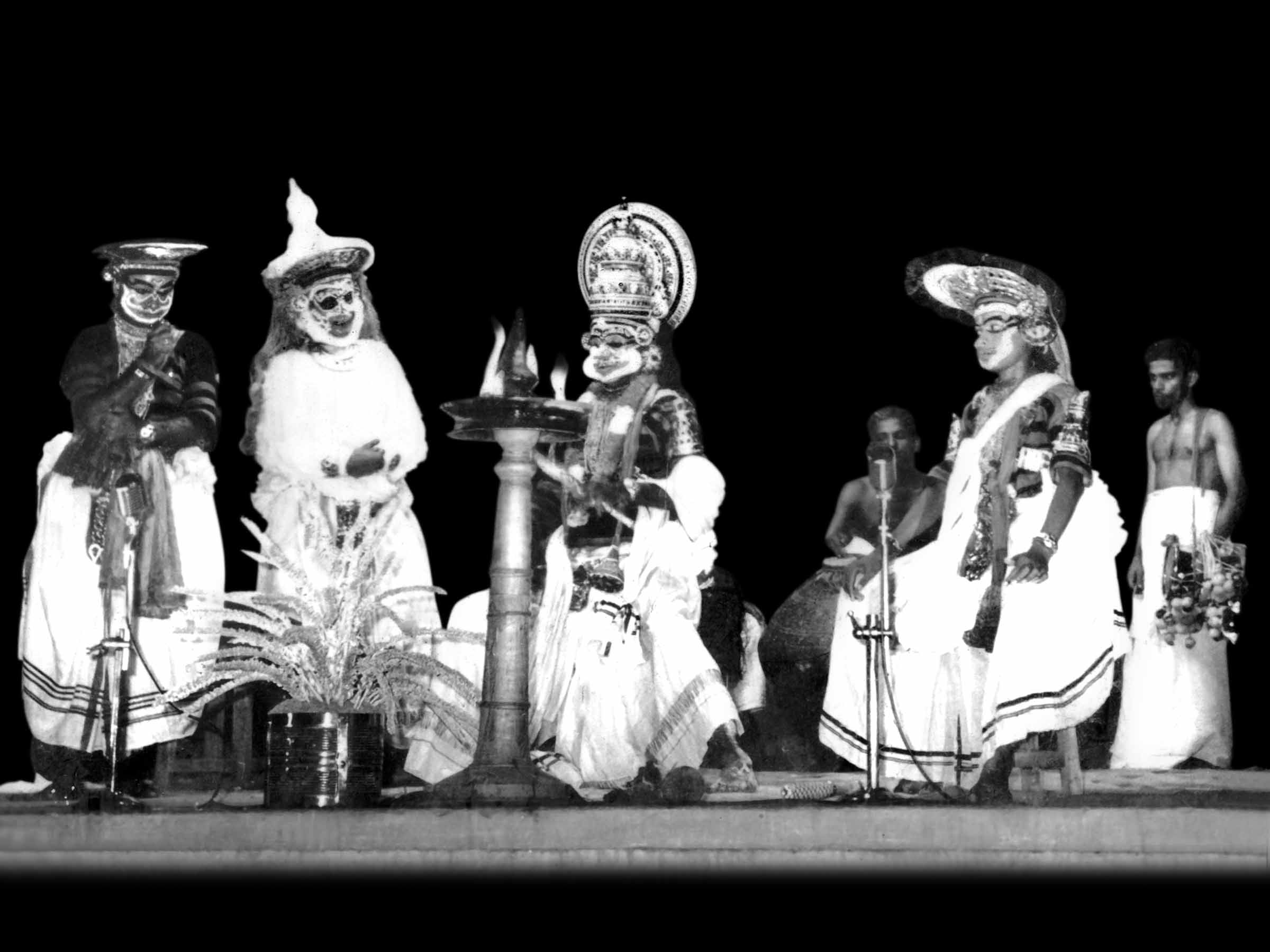
Koodiyattam performances are characterized by their highly stylized and ritualistic nature, often spanning several days. The core of the performance involves the dramatic enactment of episodes from epics like the Mahabharata and Ramayana, or from plays by Sanskrit dramatists such as Kalidasa and Bhasa. A unique feature is the 'nirvahaṇa', a detailed prologue where the actor, through elaborate mime and gesture, recounts past events and sets the context for the main narrative. The actors, traditionally from the Chakyar community for male roles and Nangyar women for female roles, employ a highly codified system of facial expressions and body movements, known as 'abhinaya', to convey emotions and actions. The accompanying music is minimal, often featuring the Mizhavu (a percussion instrument), Idakka (a drum), and Kuzhithalam (cymbals), underscoring the vocal and gestural performance.
📊 Key Facts & Numbers
Koodiyattam is performed exclusively in the temple theatres ('kuttampalams') of Kerala, with an estimated 200 such structures still in existence, though not all are actively used for performances. Performances can last for up to 21 days, though contemporary stagings are often condensed to a few hours or days. The art form is primarily sustained by the Marar and Chakyar communities, with an estimated fewer than 100 active practitioners today. The UNESCO recognition in 2001 brought renewed attention, leading to increased efforts in documentation and preservation, with a Vibe score of 78 indicating its significant cultural energy and recognition.
👥 Key People & Organizations
The preservation and propagation of Koodiyattam have been significantly shaped by key individuals and institutions. The Chakyar community, particularly figures like Mani Madhava Chakyar, played a pivotal role in revitalizing the art form in the 20th century, bringing it to wider audiences beyond the temple walls. Institutions like the Kerala Kalamandalam have been instrumental in training new generations of artists, ensuring the continuity of this complex tradition. The UNESCO designation itself, achieved in 2001, provided crucial international validation and support for preservation efforts, highlighting the global significance of this unique theatrical heritage. The Nangyar women, who perform the 'Nangyar Koothu'—a related ritualistic dance often presented alongside Koodiyattam—are also central to its living tradition.
🌍 Cultural Impact & Influence
Koodiyattam's influence extends beyond its direct performances, shaping the understanding of classical Indian theatre and its relationship with ritual. Its meticulous preservation of ancient Sanskrit dramatic conventions, including detailed stage directions and performance manuals like the Natyashastra, offers invaluable insights for scholars of theatre history and performance studies. The UNESCO recognition in 2001 not only elevated its status but also spurred a global appreciation for intangible cultural heritage, influencing preservation strategies worldwide. The art form's unique blend of the sacred and the theatrical has also inspired contemporary artists and directors, prompting cross-cultural collaborations and reinterpretations of classical Indian aesthetics in modern performance contexts.
⚡ Current State & Latest Developments
In the current landscape of 2024-2025, Koodiyattam continues its delicate dance between tradition and modernity. While the number of active practitioners remains small, estimated to be under 100, there's a concerted effort by organizations like the Kerala Kalamandalam and various Chakyar families to train younger artists. International festivals and workshops, such as those organized by the IGNCA, are crucial for exposing Koodiyattam to global audiences and fostering cross-cultural exchange. The digital archiving of performances and theoretical texts is also gaining momentum, aiming to create accessible resources for study and preservation, countering the challenges posed by the oral transmission model.
🤔 Controversies & Debates
A significant debate surrounding Koodiyattam revolves around its exclusivity and accessibility. Traditionally performed by specific hereditary communities—the Chakyar men and Nangyar women—within temple precincts, questions have arisen about opening it to artists from outside these groups and performing in non-temple venues. While proponents of tradition argue that these restrictions are integral to the ritualistic sanctity of the art form, critics suggest that such exclusivity hinders its survival and broader dissemination. The balance between preserving its ritualistic core and ensuring its viability in the contemporary world remains a persistent point of contention, with a controversy score of 65 reflecting this ongoing tension.
🔮 Future Outlook & Predictions
The future of Koodiyattam hinges on its ability to adapt without losing its essence. Projections suggest a continued reliance on institutional support and international collaborations to sustain its practice. Efforts to integrate Koodiyattam's aesthetic principles into contemporary theatre education are likely to grow, potentially creating new avenues for artists and audiences. The ongoing digitization of its vast repertoire and theoretical underpinnings offers a promising path for wider dissemination and preservation, ensuring that the knowledge of Koodiyattam is not lost to future generations. However, the challenge of attracting and retaining young practitioners in a world of rapidly evolving entertainment options remains a critical hurdle, with a pessimistic outlook score of 40 on its long-term independent survival.
💡 Practical Applications
While Koodiyattam is primarily a ritualistic and artistic performance, its principles of abhinaya (acting) and its detailed exploration of human emotions have practical applications in related fields. The rigorous training in facial expressions and body language can be beneficial for actors in other theatrical forms, film, and even public speaking, enhancing their ability to convey nuanced emotions. The study of its performance manuals and dramatic structure provides valuable insights for scholars and students of Sanskrit literature and the history of Indian theatre. Furthermore, the preservation efforts surrounding Koodiyattam serve as a model for safeguarding other endangered intangible cultural heritage forms globally.
Key Facts
- Category
- culture
- Type
- topic