
Contents
Overview
Legendary creatures populate the collective imagination, blurring the lines between natural history and pure fantasy. From the monstrous Cyclops of ancient Greek epics to the elusive unicorn of medieval bestiaries, these entities persist vibrantly in folklore and mythology. They can be born from garbled travelers' tales, like the Vegetable Lamb of Tartary, or emerge fully formed from the deepest wells of cultural archetypes, such as the ubiquitous dragon. Their enduring presence across cultures and centuries speaks to a fundamental human need to explain the unknown, embody fears, and celebrate the wondrous, making them a cornerstone of global storytelling traditions.
🎵 Origins & History
Ancient Mesopotamian myths featured beings like the Mushhushshu, a serpentine dragon-like beast. Classical antiquity further codified these beings, with Homer describing the Cyclops and Hesiod detailing the Chimera in their epics, while Aristotle's On the Generation of Animals included accounts of creatures like the Hippogriff, often presented as natural history. Medieval bestiaries, such as the Physiologus, expanded this catalog with creatures like the unicorn and Basilisk, often imbuing them with moral or allegorical significance, solidifying their place in Western folklore.
⚙️ How It Works
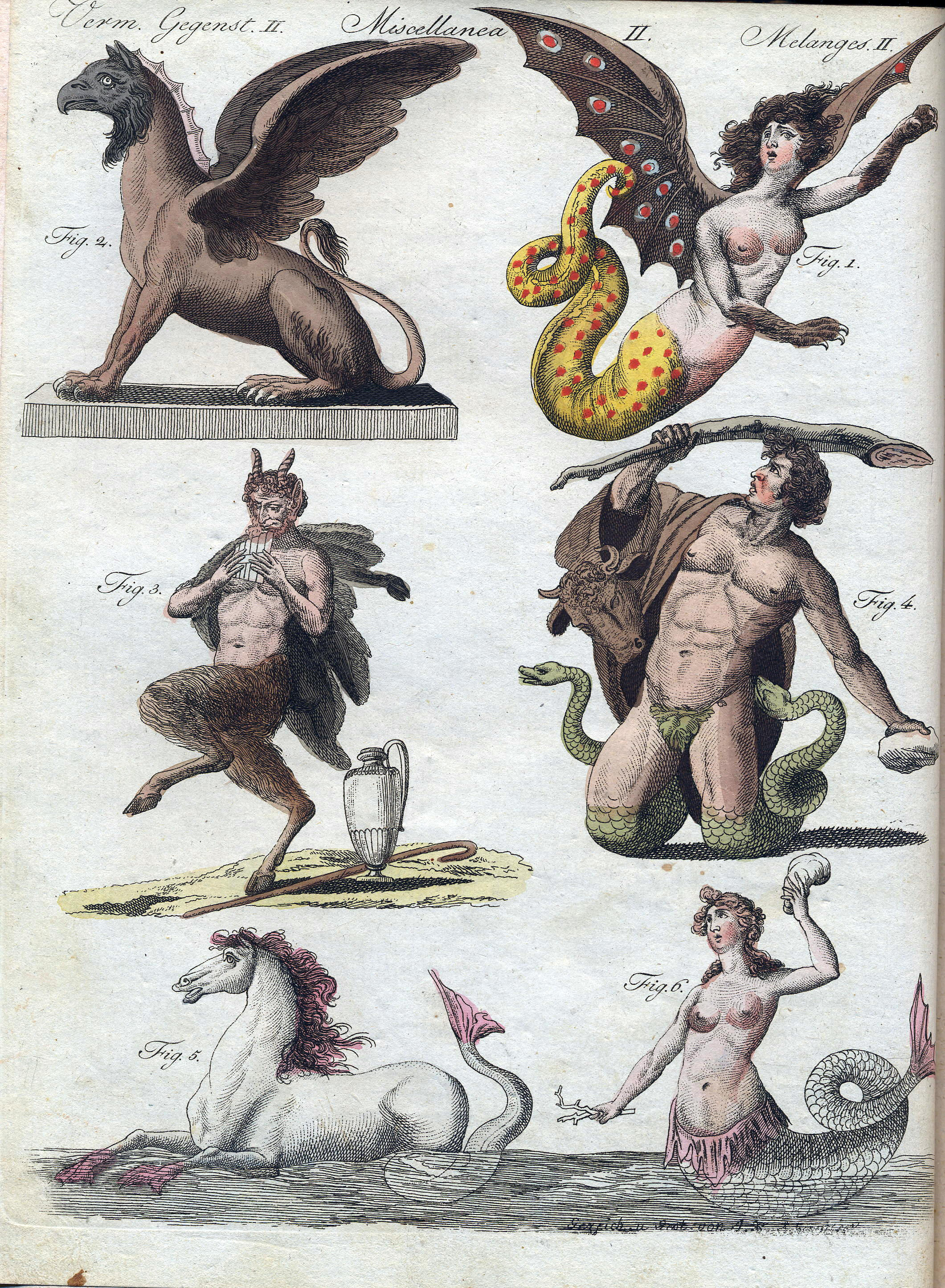
Legendary creatures function as narrative devices and cultural touchstones, embodying a range of concepts. They often serve as antagonists for heroes to overcome, symbolizing chaos or primal forces that must be subdued for order to prevail, as seen with Heracles and the Lernaean Hydra. Conversely, some creatures, like the Phoenix, represent rebirth and immortality, offering hope and spiritual guidance. Their physical forms are frequently composite, blending features of known animals (e.g., the Griffin's eagle and lion parts) or incorporating human elements (e.g., the Centaur or Mermaid), which allows them to embody complex, often contradictory, ideas or fears. The 'how it works' is less about biological mechanics and more about symbolic resonance within a given culture's belief system.
📊 Key Facts & Numbers
While scientific proof remains elusive, the cultural footprint of legendary creatures is immense. The unicorn has been the subject of over 500 notable artistic depictions since the Renaissance alone. The Vampire myth, popularized by Bram Stoker's 1897 novel, has inspired over 200 films and countless books. The global market for fantasy literature, heavily featuring such creatures, was valued at over $15 billion in 2023, demonstrating their continued economic relevance.
👥 Key People & Organizations
Key figures in the study and dissemination of legendary creatures include ancient scholars like Pliny the Elder, whose Natural History compiled many ancient accounts, and medieval writers such as Isidore of Seville, who further cataloged mythical beasts. In modern times, folklorists like Stith Thompson and Carl Jung analyzed their archetypal significance. Organizations like the Folklore Society (founded 1878) dedicate resources to studying these narratives. Authors like J.R.R. Tolkien and George R.R. Martin have significantly shaped contemporary perceptions through their influential fantasy novels, while institutions like the British Museum house artifacts depicting these beings.
🌍 Cultural Impact & Influence
Legendary creatures have profoundly shaped global culture, influencing art, literature, religion, and even language. They provide archetypes for heroism, villainy, and the sublime, appearing in everything from ancient cave paintings to modern blockbuster films like How to Train Your Dragon. The concept of the dragon as a hoard-guarding antagonist is a staple in fantasy gaming, particularly in Dungeons & Dragons. Phrases like 'sea serpent' or 'kraken' have entered common parlance to describe large, mysterious marine phenomena. Their symbolic power is so potent that they are often invoked in political cartoons or as metaphors for overwhelming challenges or elusive goals, demonstrating their persistent cultural resonance.
⚡ Current State & Latest Developments
In 2024, legendary creatures continue to thrive, fueled by digital media and globalized storytelling. Online communities on platforms like Reddit (e.g., r/mythology) and Tumblr dedicate vast spaces to discussing, illustrating, and creating new interpretations of these beings. Video games such as The Witcher 3: Wild Hunt and Elden Ring feature meticulously designed mythical beasts, driving renewed interest. AI-generated art tools are also enabling rapid creation and dissemination of novel legendary creature concepts, leading to viral trends and new visual folklore. The ongoing exploration of cryptozoology, while pseudoscientific, also keeps the idea of undiscovered creatures alive in popular consciousness.
🤔 Controversies & Debates
The primary controversy surrounding legendary creatures is their very definition: where does folklore end and potential, undiscovered reality begin? Cryptozoologists argue that creatures like the Bigfoot or Loch Ness Monster might be real, challenging the purely mythological classification. Conversely, skeptics, including scientists and folklorists, maintain that such claims lack credible evidence and are products of misidentification, hoaxes, or wishful thinking. The debate intensifies when these creatures are presented as factual in popular media, potentially misleading audiences about scientific methodology and the nature of evidence. The line between 'legendary' and 'cryptid' remains a point of contention.
🔮 Future Outlook & Predictions
The future of legendary creatures appears secure, likely evolving alongside technological and cultural shifts. Expect increased integration with virtual reality and augmented reality experiences, allowing users to interact with mythical beasts in immersive digital environments. AI will continue to be a powerful tool for generating novel creature designs and narratives, potentially creating new modern myths. As humanity explores space, the concept of 'alien life' may begin to intersect with traditional legendary creature archetypes, offering new interpretations of the monstrous or the wondrous. The enduring human fascination with the unknown guarantees their continued presence in our stories.
💡 Practical Applications
Legendary creatures have numerous practical applications, primarily in entertainment and education. They are central to the fantasy genre in literature, film, and gaming, driving multi-billion dollar industries. In education, they serve as engaging entry points for teaching mythology, history, and cultural studies, helping students understand the values and fears of different societies. For example, studying the dragon across cultures can reveal insights into ancient Chinese cosmology versus European medieval lore. They also inspire product design, from themed merchandise to architectural motifs, and even influence branding for companies seeking to evoke power, mystery, or uniqueness.
Key Facts
- Category
- culture
- Type
- concept