
Contents
Overview
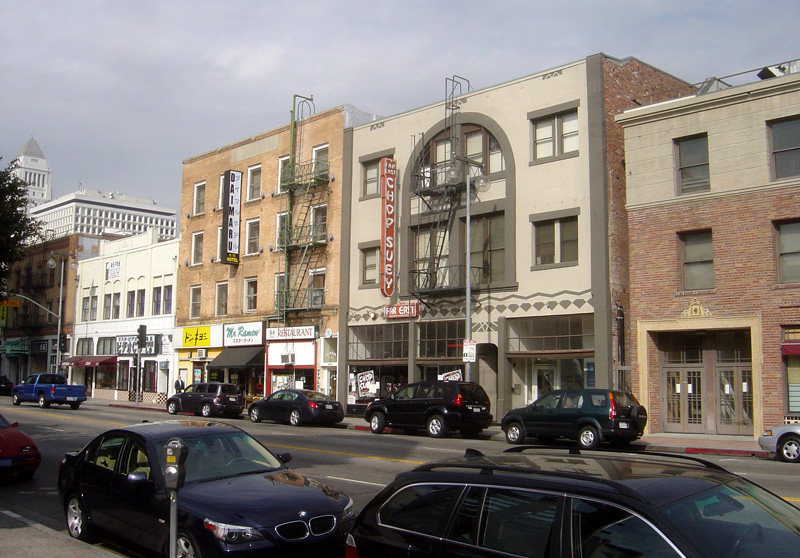
The genesis of Little Tokyo can be traced back to the late 1880s, as Japanese immigrants, often facing discrimination in other areas, began to congregate in the eastern section of Downtown Los Angeles. By the early 20th century, this area solidified into a distinct ethnic enclave, characterized by businesses catering to the Japanese American community, such as grocery stores, restaurants, and import shops. The district's growth was significantly impacted by the forced incarceration of Japanese Americans during World War II, leading to a temporary exodus and the repurposing of many businesses. However, post-war, many returned, and efforts to rebuild and preserve the community's heritage began. Charles Ishimoto played roles in early community development, while organizations like the Japanese American National Museum (JANM), founded in 1985, became central to documenting and celebrating this history. The district was officially recognized as a National Historic Landmark District in 1995, solidifying its status as a vital historical site.
⚙️ How It Works
Little Tokyo functions as a living museum and a thriving commercial district, meticulously balancing its historical integrity with the demands of a modern urban environment. Its operational framework relies on a complex interplay of community organizations, local government initiatives, and private enterprise. The Little Tokyo Service Center (LTSC) acts as a crucial non-profit entity, providing social services, affordable housing, and community development programs that are vital for the district's residents and businesses. Historic Little Tokyo, Inc. works on preservation and promotion, while the Los Angeles City Council and various city planning departments influence zoning, development, and public space management. The district's economic engine is driven by a diverse array of businesses, from traditional eateries and markets like Marukai Market to contemporary art galleries and retail spaces, all contributing to its unique economic ecosystem.
📊 Key Facts & Numbers
Little Tokyo spans approximately 137 acres, making it the largest of the three official Japantowns in the United States. It is home to an estimated 3,000 residents, though its daily population swells significantly with commuters and visitors. Over 70 businesses operate within the district, with a substantial portion being Japanese or Japanese-American owned. The Japanese American National Museum alone attracts over 100,000 visitors annually. The district hosts numerous cultural events throughout the year, including the Nisei Week Japanese Festival, which draws tens of thousands of attendees. Approximately 40% of the businesses in Little Tokyo are non-profit organizations, highlighting the community-centric nature of the area. The median rent for a one-bedroom apartment in the surrounding downtown area can exceed $2,500 per month, a figure that underscores the economic pressures on the district.
👥 Key People & Organizations
Key individuals and organizations have been instrumental in shaping Little Tokyo. Charles Ishimoto, an early community leader, helped establish businesses and foster a sense of community. The Little Tokyo Service Center (LTSC) has become the backbone of social services and community development. The Japanese American National Museum (JANM) serves as a critical institution for preserving and interpreting Japanese American history. Historic Little Tokyo, Inc. (HLT) works to protect the district's heritage. Prominent businesses like Mitsuwa Marketplace and Kinokuniya Bookstore are anchors for the community and draw significant foot traffic.
🌍 Cultural Impact & Influence
Little Tokyo's cultural impact extends far beyond its geographical boundaries, serving as a vital touchstone for Japanese American identity across North America. It has been a primary site for the preservation and celebration of Japanese culture, influencing everything from cuisine and fashion to art and literature. The district's resilience in the face of historical adversity, particularly the internment of Japanese Americans during World War II, has made it a symbol of perseverance and cultural survival. Events like the Nisei Week Japanese Festival, a tradition dating back to 1934, have become iconic cultural celebrations, influencing similar festivals nationwide. The architectural styles and streetscapes within Little Tokyo have inspired urban planners and designers, while its culinary offerings have contributed significantly to the broader Los Angeles food scene, popularizing dishes like ramen and sushi. The district's narrative is a crucial chapter in the broader story of Asian American history in the United States.
⚡ Current State & Latest Developments
In recent years, Little Tokyo has been navigating a complex period of evolution, marked by both revitalization efforts and persistent challenges. The completion of the Grand Central Market renovation and the influx of new residential developments in surrounding downtown areas have increased foot traffic and economic activity, but also raised concerns about affordability and gentrification. The Little Tokyo Service Center continues to be at the forefront of advocating for affordable housing and community preservation, recently launching initiatives to support local businesses impacted by economic shifts. The district is also seeing a resurgence in cultural programming, with the Japanese American National Museum expanding its exhibits and outreach, and smaller galleries and performance spaces hosting contemporary Japanese and Japanese American artists. The ongoing development of the Metro Regional Connector transit project has also brought both potential benefits and disruptions to the area, with stations opening in close proximity.
🤔 Controversies & Debates
The most persistent controversy surrounding Little Tokyo revolves around the tension between preservation and development, often framed as gentrification. Critics argue that rising property values and rents, driven by new developments and increased tourism, threaten the displacement of long-standing residents and small businesses that form the district's core identity. The Little Tokyo Service Center and community activists frequently voice concerns about the potential loss of affordable housing and the erosion of the district's unique cultural character. Debates also arise regarding the authenticity of businesses, with some questioning whether newer establishments truly represent the historical Japanese American experience or are merely capitalizing on its aesthetic. The historical trauma of the internment of Japanese Americans also casts a long shadow, with ongoing discussions about how best to memorialize this period and ensure such injustices are never repeated.
🔮 Future Outlook & Predictions
The future of Little Tokyo hinges on its ability to strike a delicate balance between preserving its rich heritage and adapting to the dynamic urban landscape of Los Angeles. Projections suggest continued pressure from development, making the role of organizations like the Little Tokyo Service Center and Historic Little Tokyo, Inc. even more critical in advocating for community needs and affordable housing. There is a growing emphasis on fostering intergenerational connections, ensuring that younger Japanese Americans remain engaged with the district's history and future. Furthermore, the district may see an expansion of its cultural o
💡 Practical Applications
Little Tokyo functions as a living museum and a thriving commercial district, meticulously balancing its historical integrity with the demands of a modern urban environment. Its operational framework relies on a complex interplay of community organizations, local government initiatives, and private enterprise. The Little Tokyo Service Center (LTSC) acts as a crucial non-profit entity, providing social services, affordable housing, and community development programs that are vital for the district's residents and businesses. Historic Little Tokyo, Inc. works on preservation and promotion, while the Los Angeles City Council and various city planning departments influence zoning, development, and public space management. The district's economic engine is driven by a diverse array of businesses, from traditional eateries and markets like Marukai Market to contemporary art galleries and retail spaces, all contributing to its unique economic ecosystem.
Key Facts
- Category
- culture
- Type
- topic