
Contents
Overview
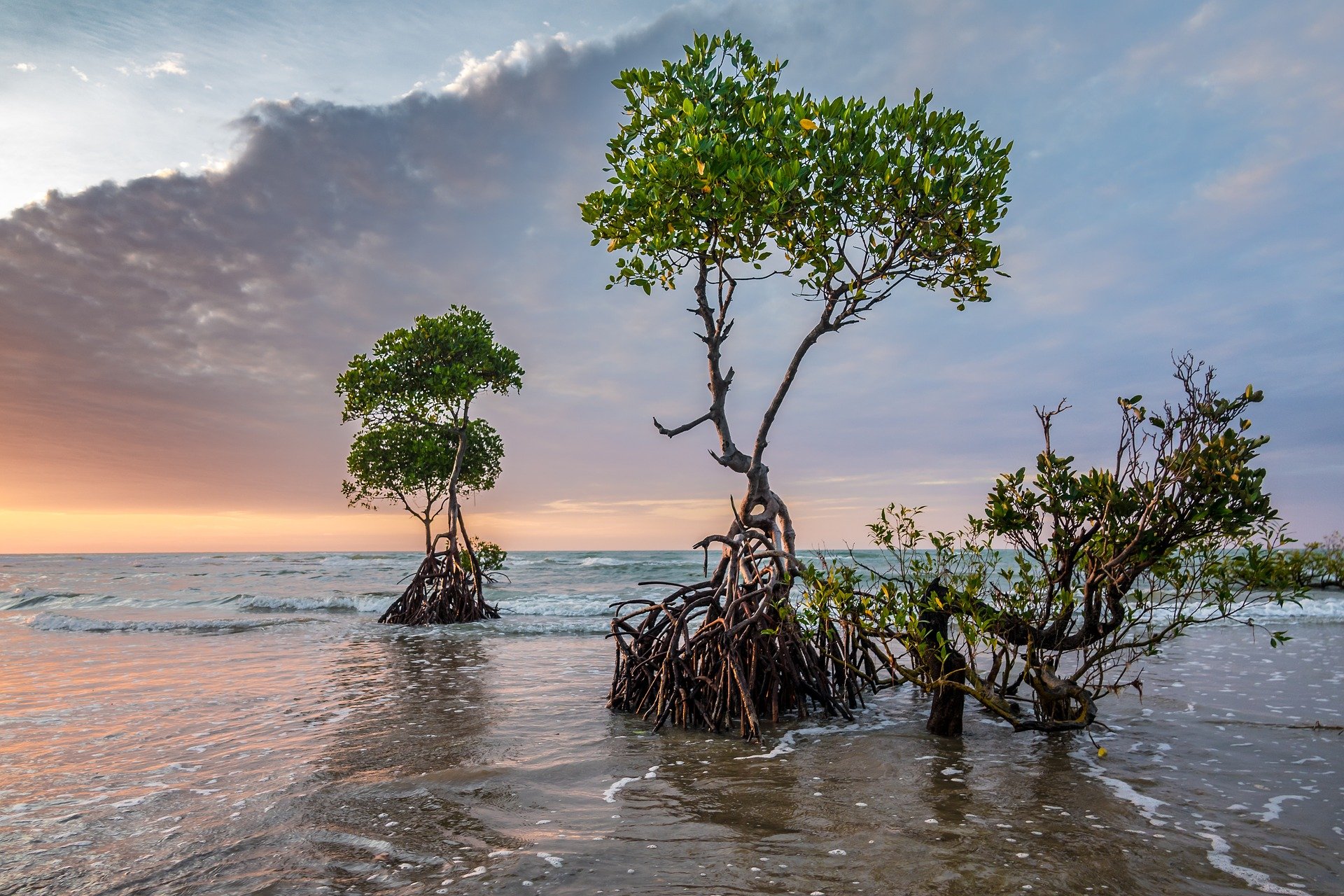
Mangrove forests, also known as mangals, are unique and highly productive wetland ecosystems found in tropical and subtropical intertidal zones. These dense thickets are characterized by specialized trees and shrubs, numbering around 80 distinct species, that have evolved remarkable adaptations to survive in saline, waterlogged, and low-oxygen soils. Their intricate root systems, often appearing as stilt-like structures, are crucial for stabilizing coastlines by slowing tidal waters, trapping sediments, and mitigating erosion. Beyond their physical defenses, mangroves serve as vital nurseries and habitats for an astonishing array of marine and terrestrial life, supporting biodiversity and complex food webs. They act as critical interfaces between terrestrial, marine, and atmospheric systems, playing a significant role in nutrient cycling and carbon sequestration, making them indispensable for coastal health and global climate regulation. Despite their ecological importance, these vital ecosystems face severe threats from human development and climate change.
🎵 Origins & History
The evolutionary journey of mangrove forests stretches back tens of millions of years. Early angiosperms began colonizing coastal fringes, gradually adapting to the harsh conditions of tidal inundation and salinity. Over millennia, distinct lineages like the Rhizophoraceae (red mangroves) and Avicenniaceae (black mangroves) emerged, each developing unique survival strategies. These forests are not a single taxonomic group but rather a collection of unrelated plant families that converged on similar adaptations due to environmental pressures. Early human interactions with mangroves were likely pragmatic, utilizing their resources for timber, fuel, and fishing grounds. However, systematic scientific study of these complex ecosystems gained momentum in the 20th century, spurred by growing awareness of their ecological significance, notably through the work of ecologists like E.S. Pospelova and later, global conservation efforts championed by organizations like the IUCN.
⚙️ How It Works
Mangrove forests function as highly specialized ecological engines, driven by the unique physiology of their constituent trees. These plants possess remarkable adaptations: pneumatophores (aerial roots) allow gas exchange in anoxic soils, viviparous seeds (propagules) germinate while still attached to the parent tree, enabling immediate establishment in suitable substrates, and salt tolerance is achieved through various mechanisms, including salt exclusion at the roots or salt excretion from leaves. The dense root networks, such as the prop roots of red mangroves, dissipate wave energy, effectively buffering coastlines from storm surges and reducing erosion. This sediment trapping also builds new land over time. Furthermore, the detritus from decaying mangrove leaves forms the base of a rich food web, supporting a diverse array of invertebrates, fish, crustaceans, and birds, making them critical nurseries for many commercially important species. The high productivity and complex structure of these forests also make them exceptional carbon sinks, sequestering significant amounts of carbon in their biomass and soils.
📊 Key Facts & Numbers
Globally, mangrove forests cover an estimated 137,000 to 152,000 square kilometers, though estimates vary. Southeast Asia harbors the largest proportion, accounting for roughly 40% of the world's total mangrove area. Brazil boasts the largest single national mangrove area, with over 13,000 square kilometers. These ecosystems are incredibly productive, with net primary productivity rates often exceeding those of terrestrial forests, sometimes reaching up to 20 tons of dry matter per hectare per year. Economically, mangroves provide services valued at billions of dollars annually, including coastal protection, fisheries support, and tourism. However, between 1980 and 2020, an estimated 35% of the world's mangroves were lost, a rate significantly higher than that of tropical rainforests. For instance, between 1996 and 2010, Vietnam lost approximately 12% of its mangrove cover.
👥 Key People & Organizations
Pioneering ecologists like Peter J. Hogarth and Daniel M. Alongi have been instrumental in advancing our scientific understanding of mangrove ecology, publishing seminal works that detail their physiology, biogeochemistry, and ecological roles. Organizations such as the Mangrove Action Project (MAP) and the WWF are at the forefront of conservation and restoration efforts, working with local communities and governments across dozens of countries. The International Society for Mangrove Ecosystems (ISME) serves as a global hub for researchers and practitioners. In Iran, the mangrove forests of Qeshm Island are recognized as a significant biosphere reserve, highlighting national efforts in protected area management. Figures like Klaus Rützler, who extensively studied Caribbean mangroves, have also contributed vital baseline data.
🌍 Cultural Impact & Influence
Mangrove forests have woven themselves into the cultural fabric of coastal communities for millennia. Indigenous peoples in regions like the Amazon River Delta and Southeast Asia have long relied on mangroves for sustenance, building materials, and traditional medicine, developing intricate knowledge systems passed down through generations. In literature and art, mangroves often symbolize resilience, mystery, and the untamed power of nature. The unique visual aesthetic of their tangled roots and brackish waters has inspired countless artists and photographers. Furthermore, the role of mangroves in supporting fisheries has profound cultural and economic implications, shaping diets and livelihoods in coastal populations worldwide. Their importance in indigenous cosmologies and folklore, often viewed as sacred or spirit-filled places, underscores their deep cultural resonance beyond mere ecological function.
⚡ Current State & Latest Developments
The current state of mangrove forests is precarious, marked by ongoing degradation and ambitious restoration initiatives. While global losses have slowed in some regions due to increased conservation awareness and restoration projects, significant threats persist. Aquaculture expansion, particularly for shrimp farming, remains a major driver of deforestation in countries like Ecuador and Thailand. Urban development and port construction continue to encroach on coastal habitats. Climate change exacerbates these pressures through sea-level rise, increased storm intensity, and altered precipitation patterns, which can outpace the mangroves' ability to migrate inland. However, there's a growing global movement for mangrove restoration, with projects in countries like the Philippines, India, and Kenya aiming to replant and protect these vital ecosystems. The COP26 summit in Glasgow (2021) saw increased international commitments to nature-based solutions, including mangrove conservation and restoration, signaling a potential shift in global policy.
🤔 Controversies & Debates
The primary controversy surrounding mangrove forests centers on the balance between conservation and economic development. While their ecological and economic service values are increasingly recognized, the pressure to convert mangrove lands for aquaculture, agriculture, urban expansion, and tourism infrastructure remains intense. Critics of strict conservation measures argue they can hinder local economic growth and livelihoods, particularly in developing nations. Conversely, conservationists highlight the long-term economic and ecological costs of mangrove destruction, including increased vulnerability to natural disasters and the loss of critical fisheries. Debates also arise over the effectiveness and sustainability of different restoration techniques, with some projects criticized for using inappropriate species or failing to address the underlying causes of degradation. The role of carbon markets in incentivizing mangrove conservation, often termed 'blue carbon', is also a subject of ongoing discussion regarding equitable benefit sharing and robust verification.
🔮 Future Outlook & Predictions
The future of mangrove forests hinges on our ability to mitigate climate change and implement effective conservation and restoration strategies. Projections suggest that under moderate to high emissions scenarios, a significant portion of existing mangrove habitats could be lost to sea-level rise by the end of the century, particularly those with limited inland migration pathways. However, aggressive climate action and targeted restoration efforts could stabilize or even expand mangrove cover in some areas. Innovations in remote sensing and AI are improving monitoring capabilities, allowing for faster detection of deforestation and more efficient planning of restoration sites. The concept of 'managed retreat' and creating 'coastal buffer zones' may become more prevalent, allowing mangroves space to migrate inland as sea levels rise. The success of 'blue carbon' initiatives will also play a crucial role in providing financial incentives for mangrove p
Key Facts
- Category
- nature
- Type
- topic