
Contents
Overview
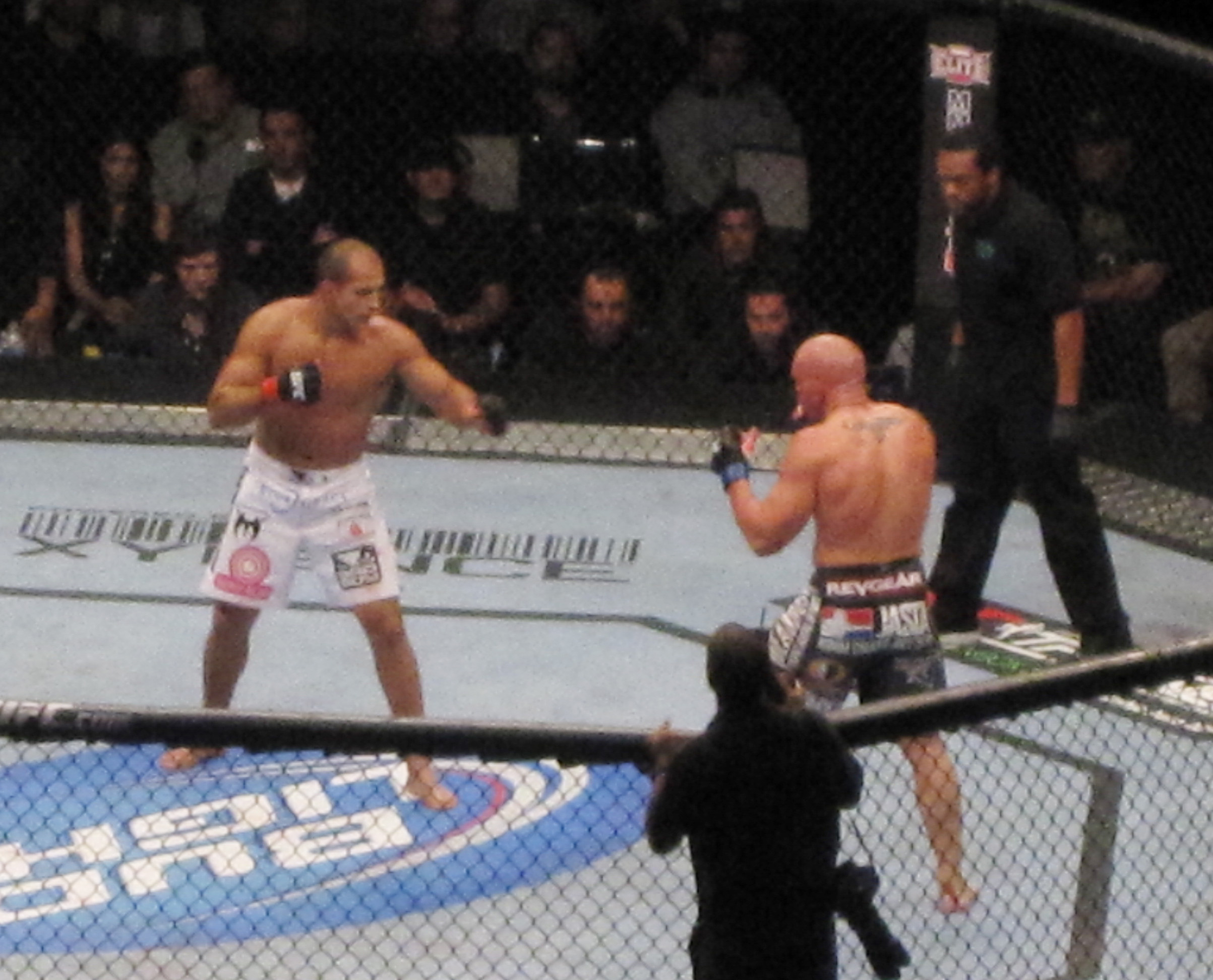
Mixed Martial Arts (MMA) is a full-contact combat sport that fuses striking and grappling techniques from a diverse array of martial arts disciplines. Its roots trace back to early 20th-century inter-stylistic contests in Japan and Brazil's 'vale tudo' tradition, which saw practitioners of judo, Brazilian jiu-jitsu, Muay Thai, and capoeira clash in often brutal fashion. Modern MMA, however, truly coalesced in the 1990s with the advent of organizations like the Ultimate Fighting Championship (UFC) and Pride Fighting Championships, which standardized rulesets and brought the sport to a mainstream audience. Today, MMA is a multi-billion dollar global industry, boasting massive pay-per-view events, dedicated training facilities, and a legion of devoted fans who are captivated by its blend of athleticism, strategy, and raw human drama. The sport continues to evolve, with new techniques and training methodologies constantly emerging, pushing the boundaries of human physical and mental performance.
🎵 Origins & History
The lineage of mixed martial arts is a tangled, fascinating web stretching back to the early 20th century, with disparate threads weaving together across continents. In Japan, the seeds were sown with various inter-stylistic contests. Simultaneously, Brazil cultivated its own brutal tradition known as 'vale tudo' (anything goes), where styles like judo, Brazilian jiu-jitsu, and Muay Thai collided. These disparate historical threads would eventually converge, laying the groundwork for the modern sport.
⚙️ How It Works
At its core, MMA is a dynamic synthesis of striking and grappling, demanding a comprehensive skillset from its athletes. Fights are typically contested in rounds, with bouts won by knockout (KO), technical knockout (TKO), submission, or decision. Striking encompasses punches, kicks, elbows, and knees, drawing heavily from disciplines like boxing, kickboxing, and Muay Thai. Grappling, on the other hand, involves takedowns, throws, joint locks, and chokeholds, with techniques borrowed from Brazilian jiu-jitsu, wrestling, judo, and Sambo. The strategic interplay between these two facets is what defines MMA; a fighter must be adept at both defending against and executing techniques from both realms to achieve victory. The unified ruleset, largely established by the Unified Rules of Mixed Martial Arts, dictates legal and illegal techniques, ensuring a degree of safety and standardization across major promotions like the UFC.
📊 Key Facts & Numbers
The global MMA market is a colossal entity. The UFC, the sport's dominant promotion, consistently draws massive crowds. Pay-per-view buys are a critical revenue stream. The sport's popularity is reflected in its digital footprint, with MMA-related content on YouTube garnering billions of views annually. The average MMA bout lasts approximately 15 minutes, spread across three 5-minute rounds, though championship fights often extend to five rounds.
👥 Key People & Organizations
The modern landscape of MMA is largely shaped by a few key individuals and organizations. The UFC, founded in 1993, has become the undisputed leader in the sport, transforming it from a niche spectacle into a mainstream entertainment juggernaut. Dana White, the current president of the UFC, has been instrumental in its growth and marketing. Kazushi Sakuraba, often dubbed 'The Gracie Hunter,' became a legendary figure in Pride FC for his victories over members of the Gracie family. Khabib Nurmagomedov, a dominant undefeated lightweight champion, and Conor McGregor, a charismatic superstar known for his knockout power and trash talk, are two of the sport's biggest modern draws. Other significant promotions include Bellator MMA and ONE Championship, which compete for talent and audience share.
🌍 Cultural Impact & Influence
MMA's cultural footprint extends far beyond the octagon, permeating popular culture and influencing other domains. The sport's raw intensity and athletic prowess have inspired countless video games. Hollywood has also embraced MMA, with films like 'Warrior' and 'Southpaw' exploring the lives and struggles of fictional fighters, bringing the sport's drama to a wider audience. The disciplined training regimens and mental fortitude required for MMA have even found parallels in business and personal development, with concepts like 'grit' and 'resilience' often associated with the sport's practitioners. Furthermore, MMA has fostered a global community, connecting fans from diverse backgrounds through shared passion for the sport's unique blend of combat and athleticism.
⚡ Current State & Latest Developments
The MMA world is in a constant state of flux, with new talent emerging and established stars navigating evolving career paths. In 2024, the UFC continues its global expansion, with major events planned across North America, Europe, and Asia. Fighters like Islam Makhachev, the current lightweight champion, are solidifying their legacies, while rising stars such as Sean O'Malley are capturing the attention of a new generation of fans. The landscape of fighter pay and representation remains a hot topic, with ongoing discussions about how to better compensate athletes and ensure their long-term well-being. The integration of new training technologies and sports science is also pushing the boundaries of athletic performance, promising even more dynamic and skilled performances in the years to come. The recent acquisition of the UFC by Endeavor Group Holdings has also signaled a new era of corporate strategy and potential growth for the sport.
🤔 Controversies & Debates
MMA is no stranger to controversy, a fact that has often fueled its popularity as much as it has drawn criticism. Concerns about fighter safety and the long-term health consequences of repeated head trauma remain paramount, with debates surrounding the efficacy of current safety protocols and the sport's potential impact on brain health. The issue of fighter pay is another persistent point of contention; many fighters argue that they are undercompensated relative to the immense revenue generated by the sport, particularly within the UFC. Allegations of judging errors and controversial referee decisions also frequently spark fan outrage and debate, highlighting the subjective nature of scoring in combat sports. Furthermore, the sport's origins in 'vale tudo' and its early, more brutal iterations have led to ongoing discussions about its perceived violence and its place in mainstream entertainment.
🔮 Future Outlook & Predictions
The future of MMA appears poised for continued growth and evolution, driven by technological advancements and a broadening global appeal. We can anticipate further innovation in training methodologies, potentially incorporating virtual reality and augmented reality for skill development and fan engagement. The financial model of MMA is also likely to evolve, with potential shifts in fighter compensation structures and the exploration of new revenue streams beyond traditional pay-per-view. As the sport gains traction in new markets, particularly in Asia and Africa, we may see a diversification of fighting styles and a rise of new international stars. The ongoing debate surrounding fighter safety will undoubtedly lead to stricter regulations and potentially new protective equipment, aiming to mitigate the risks associated with the sport. Ultimately, MMA is likely to become even more integrated into the global entertainment landscape, blurring the lines between sport, performance, and spectacle.
💡 Practical Applications
While primarily a spectator sport, MMA's principles and techniques have found numerous practical applications. For individuals seeking self-defense skills, MMA training offers a comprehen
Key Facts
- Category
- culture
- Type
- topic