
Contents
Overview
The genesis of the Nasdaq Stock Market can be traced back to the visionary minds at the National Association of Securities Dealers (NASD) who sought to modernize the fragmented and often opaque over-the-counter (OTC) securities market. This wasn't just a new exchange; it was a paradigm shift, introducing a computerized system for price quotations that promised greater transparency and efficiency. Initially, it operated as a quotation system, but it quickly evolved into a full-fledged stock exchange. The transition from a quotation service to a formal exchange was a critical step, allowing companies to list their shares directly on the NASDAQ platform, a move that would fundamentally alter the landscape of public offerings, particularly for emerging technology firms that found the traditional NYSE too rigid. The subsequent rebranding to Nasdaq, Inc. solidified its corporate identity and paved the way for its expansion into a global financial powerhouse.
⚙️ How It Works
At its core, Nasdaq operates as a sophisticated electronic trading platform, a stark contrast to the floor-based, open-outcry systems of its predecessors. Instead of brokers shouting orders, trades are executed through a network of interconnected computers. When an investor wants to buy or sell a stock listed on Nasdaq, their order is routed electronically to market makers – financial institutions that stand ready to buy and sell securities. These market makers compete by offering bid (buy) and ask (sell) prices. The Nasdaq system matches buy and sell orders based on these prices, facilitating rapid transactions. This high-frequency trading environment is managed by complex algorithms and robust technological infrastructure, ensuring speed and reliability. The exchange is structured into different market tiers, such as the Nasdaq Capital Market, the Nasdaq Global Market, and the Nasdaq Global Select Market, each with varying listing requirements that cater to companies of different sizes and maturity levels.
📊 Key Facts & Numbers
As of December 31, 2024, Nasdaq boasted an impressive 4,075 companies listed on its various markets, a testament to its enduring appeal. The total market capitalization of companies listed on Nasdaq hovers in the trillions of U.S. dollars, making it the second-largest stock exchange globally by this metric, trailing only the NYSE. On an average trading day, Nasdaq facilitates billions of dollars in transactions, with hundreds of millions of shares changing hands. The Nasdaq Composite Index, a broad measure of all stocks listed on the exchange, is closely watched by investors worldwide. The Nasdaq-100 Index, which comprises the 100 largest non-financial companies listed, has become a benchmark for the technology sector, with an average daily trading volume exceeding 1.5 billion shares in recent years. The exchange operates in the United States dollar, reflecting its primary base of operations.
👥 Key People & Organizations
Adena Friedman currently serves as the CEO of Nasdaq, Inc., steering the company through an era of technological advancement and market evolution. Her leadership has been instrumental in Nasdaq's strategic focus on data, analytics, and anti-financial crime solutions. Prior to Friedman, Robert Greifeld held the CEO position for over a decade, overseeing significant growth and the transition to a more technology-centric exchange. The Nasdaq, Inc. itself is the parent organization, a publicly traded entity that owns and operates the Nasdaq stock market, along with other exchanges in Europe, such as Nasdaq Nordic. This corporate structure allows for diversified revenue streams beyond just listing fees and trading commissions. Key technology providers and financial institutions, such as Citigroup and J.P. Morgan Chase, play crucial roles as market makers and participants, facilitating the vast flow of capital through the exchange.
🌍 Cultural Impact & Influence
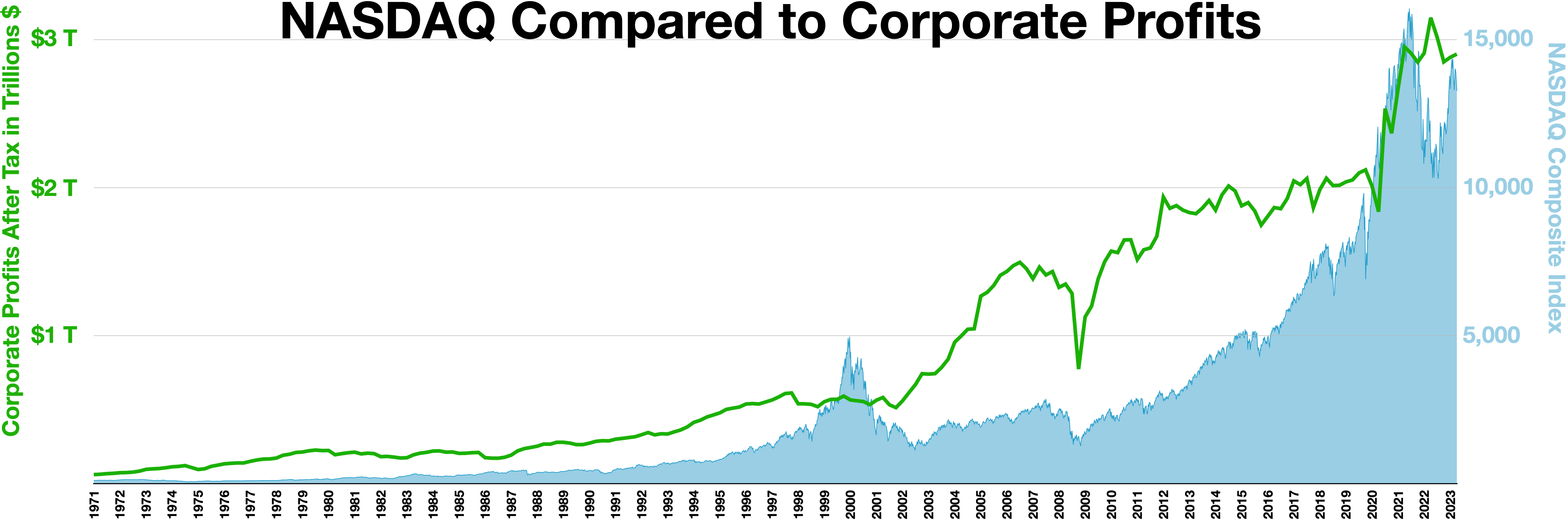
The Nasdaq Stock Market has become inextricably linked with the narrative of technological innovation and entrepreneurial success. Its listing of pioneering tech companies like Apple, Microsoft, and Amazon, cemented its reputation as the go-to venue for the next generation of industry leaders. This association has fostered a cultural perception of Nasdaq as a dynamic, forward-looking marketplace, often contrasted with the more traditional, established image of the NYSE. The 'Nasdaq boom' and subsequent 'Nasdaq crash' of the late 1990s and early 2000s, fueled by the dot-com bubble, became a defining moment in financial history, illustrating both the immense potential and the inherent risks associated with rapid technological growth. The exchange's influence is also felt in popular culture, frequently appearing in films and television shows as a symbol of financial power and ambition.
⚡ Current State & Latest Developments
In the current financial climate of 2024-2025, Nasdaq continues to adapt and expand its offerings beyond traditional stock trading. The company has been aggressively investing in its market technology and data services divisions, aiming to provide comprehensive solutions for financial crime detection and regulatory compliance to its clients. Nasdaq, Inc. is reportedly exploring the acquisition of Verisk Analytics's financial services data and analytics business, a move signaling a deeper commitment to data-driven insights. Furthermore, the exchange is actively exploring opportunities in areas like digital assets and blockchain technology, seeking to position itself at the forefront of financial innovation. The ongoing global economic shifts and geopolitical uncertainties present both challenges and opportunities for Nasdaq as it navigates international markets and regulatory landscapes.
🤔 Controversies & Debates
One of the most persistent controversies surrounding Nasdaq revolves around market volatility and the potential for speculative bubbles, particularly within the technology sector it so heavily represents. Critics argue that the exchange's electronic nature and the rapid pace of trading can exacerbate price swings, leading to boom-and-bust cycles like the infamous dot-com bubble of the late 1990s. Another area of debate concerns the listing standards; while Nasdaq aims to attract innovative companies, some argue that its requirements might be too lenient for certain early-stage firms, potentially exposing investors to higher risks. The influence of algorithmic trading and high-frequency trading (HFT) on market fairness and stability is also a recurring point of contention, with concerns that HFT strategies might disadvantage retail investors. The exchange's role in facilitating access for foreign companies, particularly from China, has also drawn scrutiny regarding transparency and regulatory oversight, as highlighted by past delistings and investigations.
🔮 Future Outlook & Predictions
Looking ahead, Nasdaq is poised to further solidify its position as a leader in financial technology and data analytics. The company's strategic initiatives, such as its focus on data services, indicate a strong push towards becoming a comprehensive solutions provider for the financial industry, moving beyond its traditional role as a mere trading venue. Experts predict continued growth in Nasdaq's market technology segment, as more exchanges and financial institutions globally adopt its infrastructure and software. The exploration of digital assets and distributed ledger technology by Nasdaq, Inc. suggests a potential future where it plays a significant role in the evolving landscape of digital finance, possibly integrating traditional and new asset classes. The ongoing trend of direct listings and special purpose acquisition companies (SPACs) may also continue to shape how companies access public markets via Nasdaq, presenting new avenues for capital formation and investment.
💡 Practical Applications
The Nasdaq Stock Market serves as a critical engine for capital formation, enabling companies to raise funds f
Key Facts
- Category
- platforms
- Type
- topic