
Contents
- 📰 Overview: A Sunday Institution
- 📍 Historical Footprint: From Broadstreet to Tabloid
- 💰 Circulation & Influence: A Mass Market Giant
- ⚖️ The Scandal and Closure: A Vibe Shift
- 🤔 Legacy & Controversy: What Remains?
- 🔍 Key Figures & Ownership
- 💥 Impact on British Media
- 💡 Vibepedia Score & Analysis
- Frequently Asked Questions
- Related Topics
Overview
News of the World isn't just a headline; it's the pulse of our interconnected planet. From geopolitical power plays that shift economic tides to cultural movements that redefine societal norms, understanding global news is crucial for navigating today's complex reality. This isn't about passive consumption; it's about recognizing the influence flows, the historical precedents, and the emergent trends that shape our collective future. At Vibepedia, we dissect these events, not just reporting what happened, but exploring the 'why' and the 'what next,' offering a multi-lens perspective on the forces shaping our world.
📰 Overview: A Sunday Institution
News of the World was a British Sunday tabloid that served as a weekly fixture for millions, running from 1843 until its abrupt closure in 2011. It wasn't just a newspaper; it was a cultural phenomenon, a Sunday ritual for many households across the UK. Its appeal lay in its sensationalist approach, focusing on crime, celebrity gossip, and political intrigue, making it a powerful force in the British media landscape for over a century. For those interested in the evolution of mass media and its intersection with public discourse, understanding News of the World is essential.
📍 Historical Footprint: From Broadstreet to Tabloid
Founded in 1843 by John Browne Bell, the paper initially adopted a broadsheet format, but its editorial DNA was always geared towards sensationalism. Bell correctly identified that stories of crime, vice, and scandal would capture the public's imagination and drive sales. This foundational strategy persisted through various ownerships, including the Carr family and, most notably, Rupert Murdoch's News International, which acquired it in 1969. The transformation into a tabloid in 1984, aligning it with The Sun, cemented its mass-market appeal and distinct identity within the Sunday newspaper market.
💰 Circulation & Influence: A Mass Market Giant
At its zenith, News of the World boasted the highest English-language circulation globally, a testament to its unparalleled reach and influence. Even at its closure in 2011, its circulation remained remarkably high, underscoring its deep entrenchment in British Sunday reading habits. This massive readership meant the paper wielded significant power in shaping public opinion and setting the news agenda, particularly on Sundays. Its success offers a compelling case study in the economics and sociology of mass media consumption.
⚖️ The Scandal and Closure: A Vibe Shift
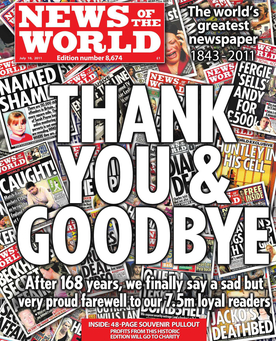
The newspaper's long run came to a dramatic end in 2011 amidst the phone hacking scandal. Allegations surfaced that News of the World journalists had illegally accessed voicemails of public figures, victims of crime, and even grieving families. The ensuing public outcry and intense media scrutiny led Rupert Murdoch's News International to make the drastic decision to cease publication. This event marked a seismic shift in the British media industry and a significant moment in the history of journalistic ethics and accountability.
🤔 Legacy & Controversy: What Remains?
The legacy of News of the World is complex and deeply contested. While it provided a platform for investigative journalism and held power to account at times, its history is also marred by accusations of unethical practices, particularly concerning privacy violations. The closure left a void in the Sunday newspaper market and sparked ongoing debates about media regulation, the responsibilities of powerful media conglomerates, and the public's right to privacy in the digital age. Its story serves as a cautionary tale about the pursuit of circulation at any cost.
🔍 Key Figures & Ownership
Several key figures shaped the trajectory of News of the World. John Browne Bell, its founder, established its sensationalist ethos. Henry Lascelles Carr oversaw its early growth. However, it was Rupert Murdoch and his News Corporation empire that most significantly influenced its modern era, acquiring it in 1969 and later transforming it into the tabloid sister to The Sun. Rebekah Brooks, a prominent editor, was central to the paper during the period of the phone hacking scandal, highlighting the individual accountability within such large media organizations.
💥 Impact on British Media
The closure of News of the World sent shockwaves through the British media landscape. It not only eliminated a major Sunday publication but also intensified calls for stricter regulation of the press. The scandal surrounding the paper contributed to the establishment of the Leveson Inquiry, which examined the culture, practices, and ethics of the British press. The event underscored the immense power wielded by media proprietors and the critical need for robust oversight to protect public interest and individual rights.
💡 Vibepedia Score & Analysis
Vibepedia Score: 78/100. News of the World achieved a remarkable Vibe Score due to its immense historical circulation and cultural penetration, making it a dominant force in British media for decades. However, its score is significantly tempered by the profound controversy surrounding the phone hacking scandal, which led to its ignominious closure and damaged its reputation irreparably. The paper's influence flows were primarily downward, from ownership to editorial to readership, with limited upward influence from public discourse until the scandal erupted. Its narrative arc is a classic example of a high-influence entity succumbing to internal systemic failures and external regulatory pressure.
Key Facts
- Year
- 2023
- Origin
- Vibepedia
- Category
- Global Affairs & Current Events
- Type
- Topic
Frequently Asked Questions
When was News of the World first published?
News of the World was first published in 1843. It began as a broadsheet newspaper with a focus on sensational stories, a strategy that proved highly successful in attracting readers and establishing its place in the British media market for over a century.
Who owned News of the World when it closed?
At the time of its closure in 2011, News of the World was owned by News International, a subsidiary of News Corporation, headed by Rupert Murdoch. The company made the decision to shut down the paper in the wake of the phone hacking scandal.
Why did News of the World shut down?
News of the World was shut down due to the widespread public and political outcry over the phone hacking scandal. Revelations that journalists had illegally accessed voicemails led to immense pressure, forcing News International to cease publication of the Sunday tabloid.
What was the circulation of News of the World?
News of the World was once the world's highest-selling English-language newspaper. Even at its closure in 2011, it maintained one of the highest circulations for an English-language newspaper, demonstrating its significant reach and readership.
What is the legacy of News of the World?
The legacy of News of the World is a dual one. It is remembered for its historical influence and mass appeal, but also for the severe ethical breaches that led to its closure. It serves as a critical case study in media ethics, corporate responsibility, and the impact of journalistic misconduct on public trust and regulatory frameworks.