
Contents
Overview
The concept of tokenizing digital assets has roots stretching back to early blockchain experiments, but the explosion of NFTs in the art world truly ignited in 2017 with the launch of CryptoKitties, a game built on the Ethereum blockchain that allowed users to collect and breed unique digital cats. This early success demonstrated the potential for unique digital items to gain value and scarcity. However, it was the 2021 surge, spearheaded by high-profile sales like Beeple's 'Everydays: The First 5000 Days' which sold for $69 million at Christie's, that catapulted NFTs into mainstream consciousness. This event, alongside the rise of platforms like OpenSea and Rarible, solidified NFTs as a significant, albeit controversial, force in the digital art market, drawing parallels to historical art market booms and busts.
⚙️ How It Works
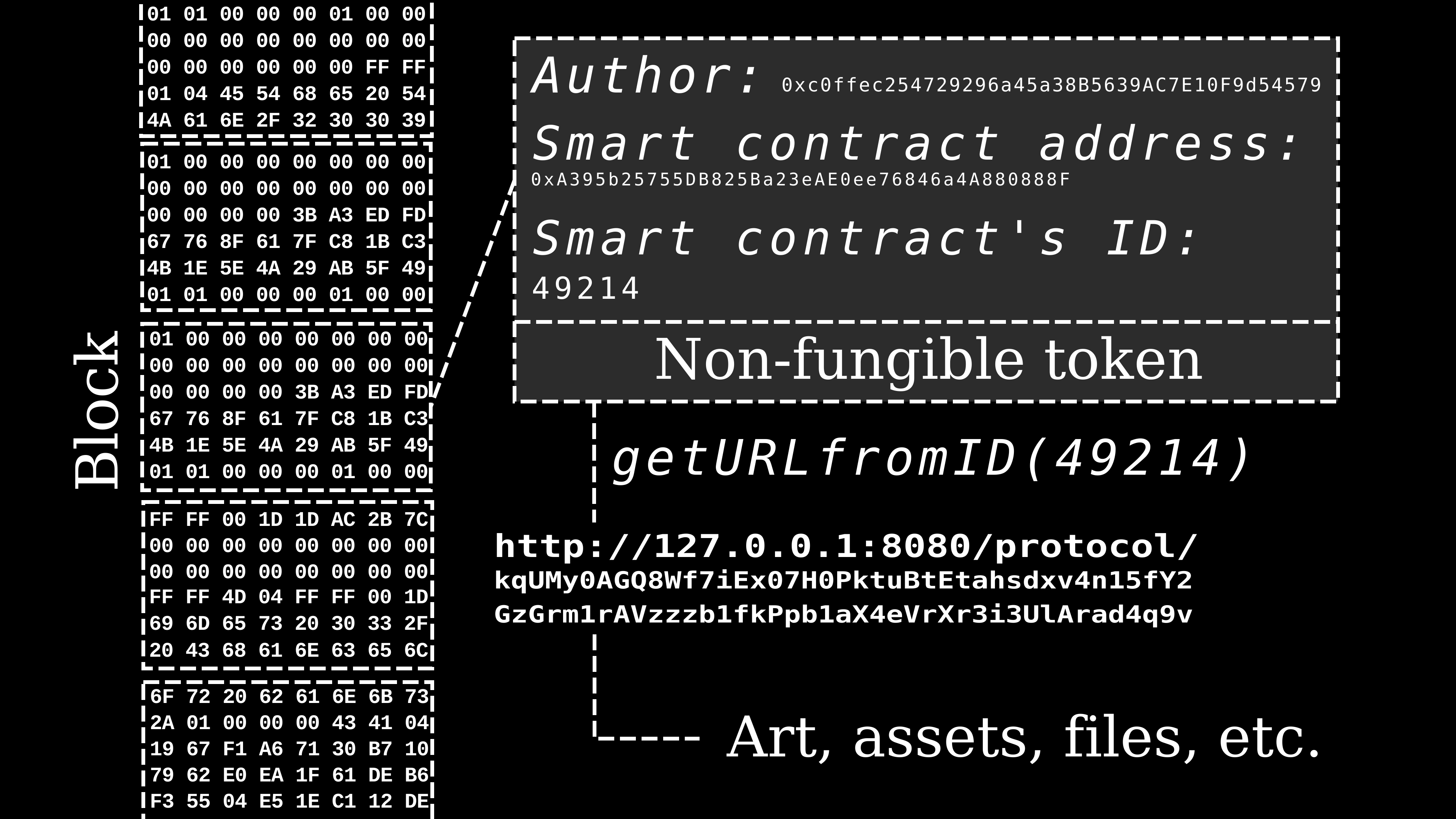
At their core, NFTs function by leveraging blockchain technology, most commonly Ethereum, to create a unique, immutable record of ownership for a digital file. When an artist mints an NFT, a smart contract is deployed on the blockchain, containing metadata that points to the digital artwork itself (often stored off-chain on decentralized storage like IPFS). This token acts as a digital certificate of authenticity and ownership, verifiable by anyone on the blockchain. Unlike fungible tokens (like Bitcoin or Ether), each NFT is distinct and cannot be replicated or exchanged on a one-to-one basis, ensuring the scarcity of the associated digital artwork. Ownership is transferred through blockchain transactions, which are publicly recorded and auditable.
📊 Key Facts & Numbers
The NFT art market saw an astronomical rise, with total sales volume reaching an estimated $17 billion in 2021, a staggering increase from just $82 million in 2020, according to Chainalysis data. By September 2023, however, reports indicated that over 95% of NFT collections had become worthless, a stark contrast to the peak frenzy. The average price of an NFT art piece, which briefly soared into the tens of thousands of dollars, has seen a dramatic decline. For instance, the number of daily NFT transactions on Ethereum plummeted from hundreds of thousands during the peak to a few thousand by late 2023, illustrating the dramatic market correction.
👥 Key People & Organizations
Several key figures and organizations have shaped the NFT art landscape. Vincent van Gogh's 'Starry Night' might be a physical masterpiece, but digital artists like Beeple (Mike Winkelmann) achieved unprecedented fame and fortune through NFTs, with his 'Everydays' sale at Christie's setting a new benchmark. Platforms such as OpenSea, founded by Devin Finzer and Alex Atallah, became the dominant marketplaces, facilitating billions in transactions. Yuga Labs, the creators of the Bored Ape Yacht Club collection, also emerged as a major player, demonstrating the power of NFTs in building digital communities and intellectual property. Art Blocks has been instrumental in popularizing generative art NFTs.
🌍 Cultural Impact & Influence
NFTs have profoundly impacted the digital art ecosystem, offering artists new avenues for monetization and direct engagement with collectors, bypassing traditional gallery systems. They introduced the concept of verifiable digital scarcity, a notion previously elusive for easily reproducible digital files. This has fostered vibrant online communities centered around specific NFT projects, creating a new form of digital patronage and social status. The ability to program royalties into smart contracts has also provided artists with potential for ongoing income from secondary sales, a significant departure from traditional art sales models. The cultural resonance is visible in how digital art is now discussed and valued, with terms like 'minting' and 'floor price' entering common parlance.
⚡ Current State & Latest Developments
As of early 2024, the NFT art market is in a state of recalibration following the 2021-2022 boom and bust. While speculative trading has cooled considerably, there's a renewed focus on utility and long-term artistic value. Projects are increasingly emphasizing community governance, access to exclusive content, and integration with decentralized applications (dApps). Major auction houses like Sotheby's continue to experiment with NFT sales, albeit with more cautious strategies. The development of more energy-efficient blockchains and layer-2 scaling solutions on Ethereum is also addressing earlier environmental concerns, paving the way for more sustainable NFT creation and trading.
🤔 Controversies & Debates
The controversies surrounding NFTs and digital art are multifaceted. A primary concern has been the environmental impact of proof-of-work blockchains like Ethereum (prior to its Merge), with critics arguing that the energy consumption for minting and trading NFTs was unsustainable. The market has also been plagued by accusations of market manipulation, wash trading, and outright scams, leading to significant financial losses for many investors. Furthermore, debates persist regarding the true ownership of digital art – whether owning an NFT truly equates to owning the copyright or the artwork itself, or merely a token pointing to it. The speculative nature of the market has also drawn comparisons to economic bubbles and Ponzi schemes.
🔮 Future Outlook & Predictions
The future of NFTs in digital art likely lies in a shift from pure speculation towards utility and artistic merit. We may see increased integration with the metaverse, where NFTs serve as digital wearables, virtual land deeds, or unique in-world assets. The development of decentralized autonomous organizations (DAOs) for art curation and collection management could empower communities further. Artists may increasingly leverage NFTs for novel forms of storytelling and interactive experiences, moving beyond static images. While the speculative frenzy has subsided, the underlying technology's potential for verifiable digital ownership and artist empowerment suggests a continued, albeit more mature, role in the art world.
💡 Practical Applications
NFTs offer practical applications for digital artists seeking to monetize their work and establish provenance. Artists can 'mint' their digital creations on platforms like OpenSea or Foundation, creating unique tokens that can be sold directly to collectors. This bypasses traditional gatekeepers like galleries and allows artists to retain a larger share of the revenue, especially with programmed royalties on secondary sales. Beyond individual art pieces, NFTs are being used to represent ownership of digital collectibles, virtual real estate in Decentraland, and even tickets to exclusive online or physical events. They also facilitate new models for funding artistic projects through token sales.
Key Facts
- Category
- culture
- Type
- phenomenon