
Contents
Overview
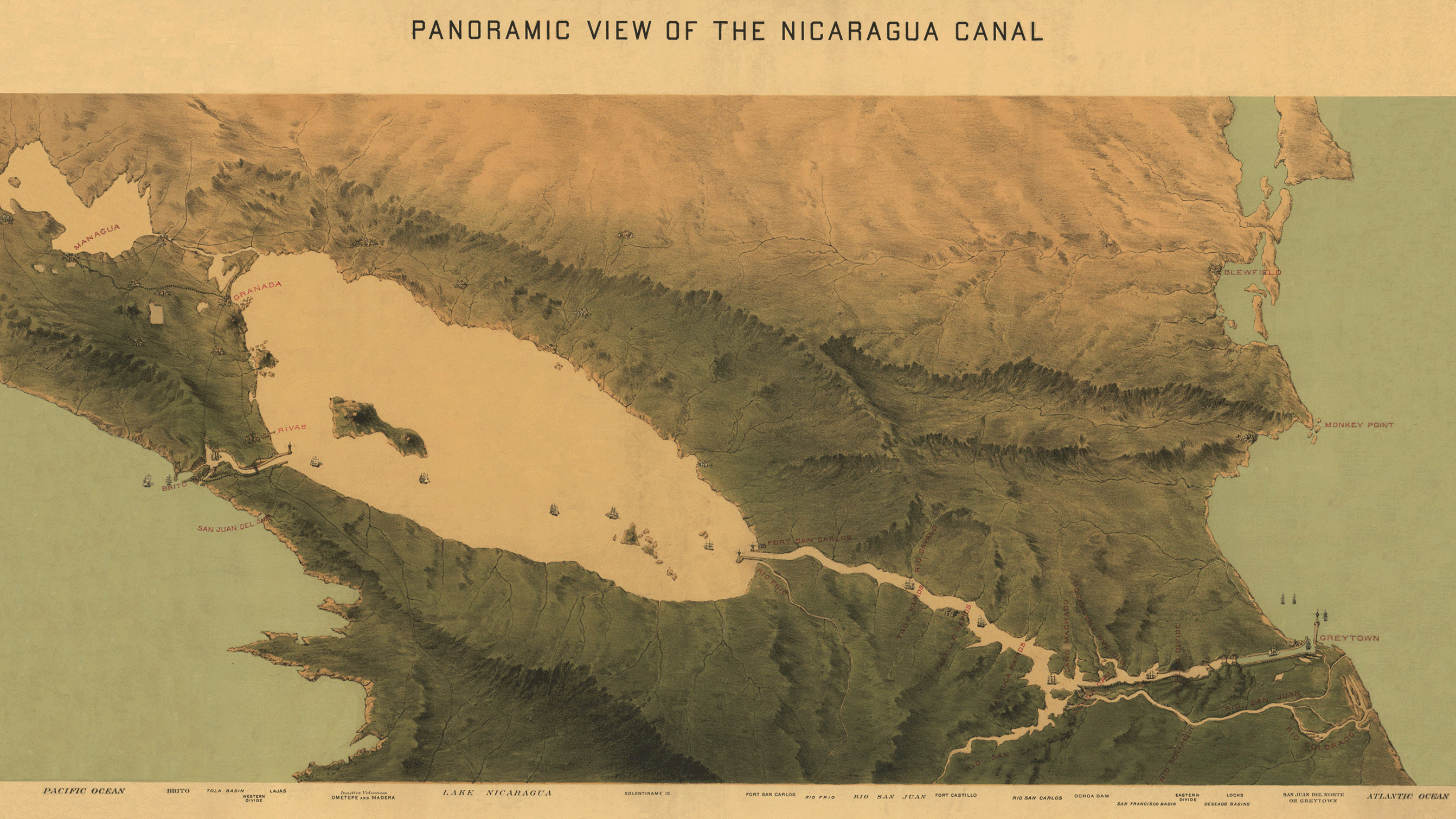
The Nicaragua Canal is a proposed shipping route designed to connect the Atlantic and Pacific Oceans across Nicaragua, a concept that has captivated imaginations and engineers for centuries. Early plans envisioned utilizing the San Juan River and Lake Nicaragua to create a vital maritime passage. While the United States ultimately opted for the Panama Canal in the early 20th century, the persistent growth in global trade has reignited interest in Nicaragua's potential as a strategic shipping corridor. The most recent significant push came in 2013 with the approval of a concession to HK Nicaragua Canal Development Investment (HKND), though substantial development has yet to materialize, leaving the canal's future shrouded in uncertainty and debate.
🎵 Origins & History
Early plans for a transcontinental canal through Nicaragua envisioned utilizing the San Juan River and Lake Nicaragua as key components of the route. The idea gained significant traction in the mid-19th century. The United States seriously considered the route. However, the U.S. ultimately pivoted to the Panamanian route due to engineering challenges and political considerations, focusing its efforts on the Panama Canal construction which opened in 1914.
⚙️ How It Works
The proposed Nicaragua Canal route involves navigating the San Juan River from the Caribbean coast, passing through Lake Nicaragua, and then excavating a channel across the narrow isthmus to the Pacific coast. This would necessitate the construction of extensive lock systems to manage the significant elevation changes, particularly around the lake and river. The engineering challenges are considerable, including managing water levels in Lake Nicaragua, which is the primary freshwater source for a large portion of the country, and mitigating the environmental impact on the diverse ecosystems along the proposed path.
📊 Key Facts & Numbers
The potential scale of the Nicaragua Canal is staggering. A larger canal could accommodate 'New Panamax' and even 'Post-Panamax' vessels, ships too large for the current Panama Canal locks. Proponents argue that the economic impact is projected to be immense, with proponents forecasting significant job creation and revenue generation for Nicaragua.
👥 Key People & Organizations
The history of the Nicaragua Canal is intertwined with numerous influential figures and organizations. The Nicaraguan National Assembly played a crucial role in approving the concession. Environmental groups and local communities have been vocal in their opposition and concerns.
🌍 Cultural Impact & Influence
The enduring allure of the Nicaragua Canal speaks volumes about its perceived strategic and economic importance. For centuries, it has represented a shortcut that could reshape global trade routes, reduce shipping times, and offer an alternative to the Panama Canal. The idea has permeated popular culture and geopolitical discussions, symbolizing both immense opportunity and significant risk. Its potential construction has been framed as a modern-day marvel, akin to the Suez Canal or the Panama Canal, capable of altering the economic fortunes of nations and the flow of international commerce. The very persistence of the idea, despite numerous setbacks, underscores its deep resonance as a symbol of human ambition and engineering prowess.
⚡ Current State & Latest Developments
Despite the fanfare surrounding the 2013 concession to HKND, the Nicaragua Canal project has seen minimal tangible progress. The Nicaraguan government, under President Daniel Ortega, has continued to express interest, but the lack of substantial investment and the immense logistical and environmental hurdles have prevented any significant forward movement. The future of the project remains highly uncertain, with many observers questioning its viability in the current economic and political climate.
🤔 Controversies & Debates
The Nicaragua Canal project is fraught with controversy. Environmental concerns are paramount, with critics pointing to the potential for devastating impacts on Lake Nicaragua and the San Juan River's delicate ecosystem and surrounding biodiversity. Indigenous communities and farmers have voiced strong opposition due to fears of displacement and land expropriation. Economically, the feasibility of such a massive undertaking, especially given the substantial costs and competition from an expanded Panama Canal, is heavily debated. Furthermore, the concession granted to HKND raised geopolitical questions about Chinese influence in Central America and the potential for environmental and social safeguards to be overlooked.
🔮 Future Outlook & Predictions
The future of the Nicaragua Canal hinges on a confluence of factors: renewed and substantial international investment, a resolution of the significant environmental and social challenges, and a clear economic imperative that outweighs the costs and risks. Some analysts believe that as global shipping volumes continue to grow, and as larger vessels become more common, the need for alternative or expanded routes like the Nicaragua Canal might eventually resurface. However, the sheer scale of the undertaking and the historical precedent of failed attempts suggest that any future iteration would require unprecedented levels of political will, financial backing, and technological innovation. The possibility of a revived project remains, but the path forward is exceptionally steep.
💡 Practical Applications
The primary practical application of the Nicaragua Canal, if ever realized, would be to serve as a major global shipping artery, facilitating the transit of goods between the Atlantic and Pacific Oceans. This would offer an alternative to the Panama Canal, potentially reducing transit times and costs for certain trade routes. Its construction could also spur significant infrastructure development within Nicaragua, including ports, roads, and related logistical services. Beyond commercial shipping, the canal could theoretically be used for naval transit, though this is a secondary consideration compared to its economic potential. The project's scale also implies potential for hydroelectric power generation, though this is often overshadowed by the primary transit function.
Key Facts
- Category
- technology
- Type
- concept