
Contents
Overview
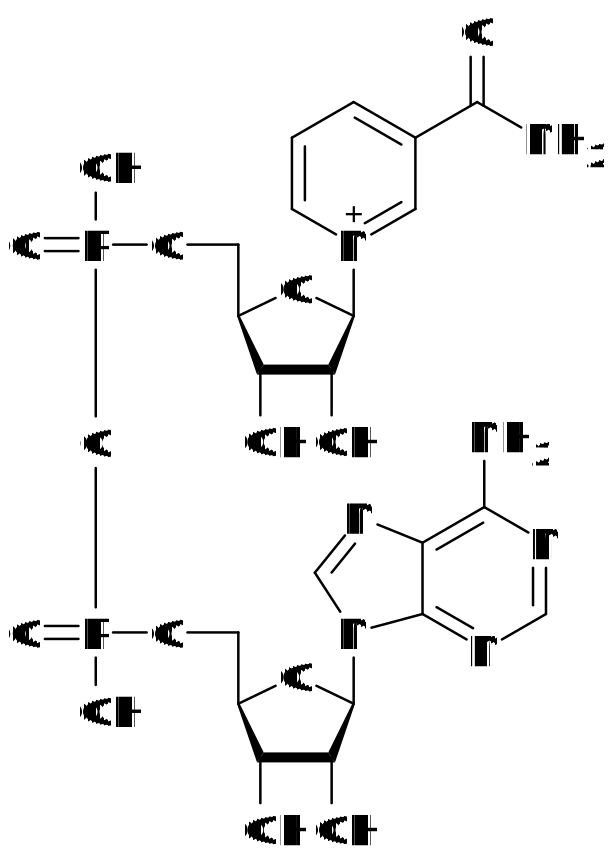
Nicotinamide adenine dinucleotide, universally known as NAD, is a coenzyme indispensable for all living cells. Composed of two nucleotides linked by their phosphate groups—one adenine and one nicotinamide—NAD exists in two crucial forms: the oxidized NAD+ and the reduced NADH. These forms are central to cellular metabolism, acting as electron carriers in redox reactions that underpin energy production. Beyond energy, NAD+ is a critical substrate for enzymes involved in DNA repair, gene expression, and cellular signaling through post-translational modifications like poly(ADP-ribose) polymerase (PARP) and sirtuin activity. Its levels naturally decline with age, a phenomenon fueling intense research into NAD+ supplementation as a potential avenue for promoting longevity and treating age-related diseases. The molecule's fundamental role in life processes makes it a cornerstone of biochemistry and a burgeoning target in therapeutic development.
🎵 Origins & History
The discovery of nicotinamide adenine dinucleotide traces back to the early 20th century, a period of intense investigation into the biochemical mechanisms of cellular respiration. Arthur Harden and William Young first identified a heat-stable, dialyzable factor in yeast juice that was essential for alcoholic fermentation in 1906, which they termed "cozymase." Later, in the 1930s, Arthur Kornberg and colleagues elucidated the complete structure of NAD, revealing its composition of adenine and nicotinamide nucleotides. This groundbreaking work, building on decades of research into fermentation and cellular energy, established NAD's central role in biological redox reactions. The subsequent identification of NADP+ (nicotinamide adenine dinucleotide phosphate) as a related coenzyme further refined our understanding of cellular energy transfer and biosynthesis.
⚙️ How It Works
At its core, NAD functions as a mobile electron carrier, shuttling high-energy electrons between metabolic pathways. In its oxidized form, NAD+, it acts as an electron acceptor, becoming reduced to NADH. This NADH then donates electrons to the electron transport chain in mitochondria, driving the synthesis of ATP, the cell's primary energy currency. Beyond this primary role in cellular respiration, NAD+ is also a crucial substrate for enzymes that modify proteins. Sirtuins, a class of deacetylases, require NAD+ to function, playing vital roles in DNA repair, stress resistance, and metabolic regulation. Similarly, poly(ADP-ribose) polymerases utilize NAD+ to signal DNA damage and initiate repair pathways. These diverse functions highlight NAD+'s multifaceted importance in maintaining cellular homeostasis.
📊 Key Facts & Numbers
NAD+ is found in all living cells, with concentrations varying significantly by tissue type and metabolic state. For instance, liver cells can contain millimolar concentrations of NAD+, while other tissues may have lower levels. The total amount of NAD+ in the human body is estimated to be around 5 grams, a surprisingly large quantity for a single molecule. Cellular NAD+ levels can fluctuate dramatically, decreasing by as much as 50% with age in some tissues. This age-related decline has spurred interest in therapeutic interventions, with research suggesting that boosting NAD+ levels could potentially mitigate some effects of aging. The global market for NAD+ precursors and supplements is projected to reach billions of dollars within the next decade, indicating significant commercial and scientific interest.
👥 Key People & Organizations
Key figures in the discovery and understanding of NAD include Arthur Harden and William Young, who first identified its role in fermentation, and Arthur Kornberg, who elucidated its structure and function. More recently, researchers like David Sinclair at Harvard Medical School have championed the role of NAD+ and sirtuins in aging and longevity, bringing NAD+ into mainstream scientific and public discourse. Organizations such as the National Institutes of Health (NIH) and various academic institutions worldwide continue to fund extensive research into NAD+ metabolism, its therapeutic potential, and the molecular mechanisms underlying its decline. Companies like ChromaDex and Elysium Health are prominent players in the commercial development of NAD+ boosting supplements.
🌍 Cultural Impact & Influence
The cultural resonance of NAD+ has grown significantly, particularly within the longevity and biohacking communities. Discussions around NAD+ supplementation are prevalent on platforms like Reddit and in popular science media, often framed as a potential 'fountain of youth' molecule. While scientific understanding is still evolving, the narrative of NAD+ as a key to healthier aging has captured public imagination, influencing consumer choices and driving demand for related products. This popularization, however, also brings challenges in distinguishing scientifically validated benefits from speculative claims, creating a vibrant, albeit sometimes noisy, cultural space around the molecule.
⚡ Current State & Latest Developments
Current research is intensely focused on understanding the precise mechanisms by which NAD+ levels decline with age and how interventions can effectively restore them. Clinical trials are investigating the efficacy of various NAD+ precursors, such as nicotinamide riboside (NR) and nicotinamide mononucleotide (NMN), in improving metabolic health, cardiovascular function, and cognitive performance in humans. Furthermore, scientists are exploring the role of NAD+ in a wide range of diseases, including neurodegenerative disorders like Alzheimer's disease and Parkinson's disease, as well as metabolic conditions like type 2 diabetes. The development of more precise methods for measuring NAD+ levels in vivo and in vitro is also a significant area of ongoing work.
🤔 Controversies & Debates
The primary controversy surrounding NAD+ centers on the efficacy and long-term safety of NAD+ boosting supplements. While preclinical studies in animal models have shown promising results for longevity and various health markers, robust, large-scale human clinical trials are still needed to definitively prove these benefits and establish optimal dosing. Critics argue that the current market is rife with unsubstantiated claims and that more rigorous scientific validation is required before widespread adoption. Furthermore, questions remain about the precise molecular pathways involved in NAD+ decline and whether simply increasing NAD+ levels is sufficient to reverse complex age-related pathologies, or if targeting specific NAD+-dependent enzymes like sirtuins offers a more direct therapeutic route.
🔮 Future Outlook & Predictions
The future outlook for NAD+ research and application is exceptionally bright, with predictions pointing towards significant therapeutic breakthroughs. Experts anticipate that within the next decade, NAD+ precursors could become established as adjunct therapies for a range of age-related diseases. Personalized medicine approaches may emerge, tailoring NAD+ boosting strategies based on an individual's genetic profile and metabolic status. Further research is also expected to uncover novel roles for NAD+ in cellular processes, potentially opening up entirely new avenues for intervention. The development of more potent and bioavailable NAD+ analogs, along with a deeper understanding of NAD+ salvage pathways, will likely drive innovation in this field.
💡 Practical Applications
NAD+ plays a critical role in numerous practical applications, primarily within the pharmaceutical and nutraceutical industries. Its precursors, such as nicotinamide riboside (NR) and nicotinamide mononucleotide (NMN), are widely marketed as dietary supplements aimed at enhancing energy levels, promoting cellular repair, and supporting healthy aging. In research settings, NAD+ is an essential reagent for studying cellular metabolism, DNA repair mechanisms, and enzyme kinetics. Its involvement in epigenetic regulation also makes it a target for understanding and potentially treating conditions related to gene expression and cellular differentiation. Furthermore, NAD+ is utilized in diagnostic assays for various metabolic disorders.
Key Facts
- Category
- science
- Type
- topic