
Contents
Overview
Off-road driving techniques are the specialized skills and methodologies employed to navigate vehicles over unpaved surfaces, ranging from loose sand and deep mud to treacherous rock gardens and steep inclines. These techniques are crucial for maximizing vehicle capability, ensuring safety, and minimizing environmental impact. They encompass a deep understanding of vehicle dynamics, terrain assessment, and the strategic use of vehicle controls like throttle, brakes, steering, and four-wheel-drive systems. Mastering these techniques allows drivers to traverse challenging landscapes that would be impassable for standard vehicles, opening up exploration and adventure in remote areas. The practice has evolved significantly from early automotive pioneers to sophisticated modern applications in recreation, exploration, and professional fields.
🎵 Origins & History
The genesis of off-road driving techniques is as old as the automobile itself, with early pioneers like Henry Ford and Karl Benz experimenting with vehicles capable of traversing rough terrain. However, the formalization of techniques accelerated with military applications during World War I and II, particularly with vehicles like the Willys MB (Jeep), which demanded specific driver inputs to overcome obstacles. Post-war, recreational off-roading surged, leading to the development of dedicated clubs and publications. Early off-road racing series further pushed the boundaries of vehicle and driver capability, solidifying many fundamental techniques still used today.
⚙️ How It Works
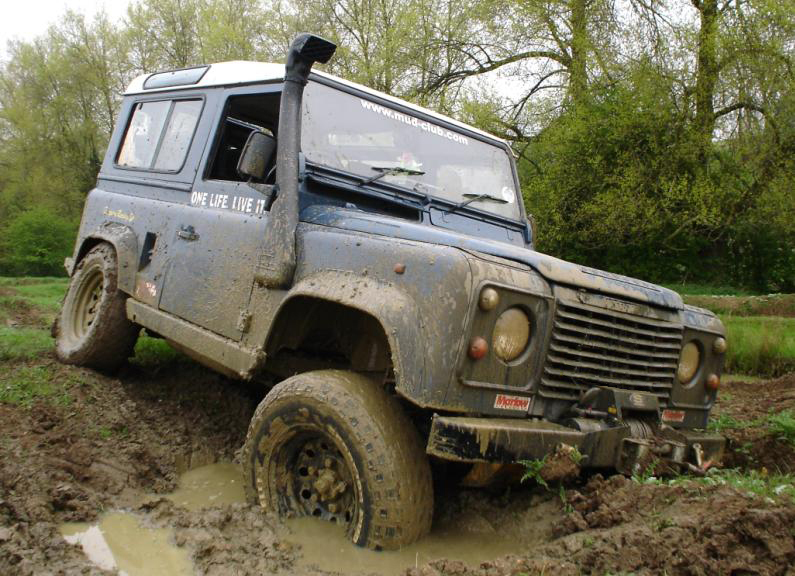
At its core, off-road driving relies on understanding how a vehicle interacts with varied surfaces and obstacles. Key techniques involve proper throttle control to maintain momentum without spinning wheels (especially in mud or sand), using engine braking on descents to control speed, and employing steering inputs to navigate around or over obstacles. For four-wheel-drive vehicles, selecting the correct drive mode (2WD, 4H, 4L) is paramount, with low-range gearing (4L) providing increased torque for crawling over rocks or pulling out of deep ruts. Advanced techniques include 'rock crawling,' which involves precise, slow movements to place tires on specific points, and 'mud driving,' which often requires maintaining a consistent speed and avoiding sudden braking or steering. Tire pressure adjustment is also critical, with lower pressures increasing the tire's contact patch for better traction on soft surfaces like sand or snow.
📊 Key Facts & Numbers
The practice of off-roading has a significant global following. The Willys-Overland engineers developed the original Jeep for military use, establishing early principles of ruggedness and capability. Manufacturers like Jeep, Land Rover, and Toyota continuously innovate vehicle technologies that enable more advanced off-road capabilities, often incorporating driver-assist systems based on these techniques.
👥 Key People & Organizations
Pioneers in off-road technique include figures like Willys-Overland engineers who developed the original Jeep for military use, establishing early principles of ruggedness and capability. Manufacturers like Jeep, Land Rover, and Toyota continuously innovate vehicle technologies that enable more advanced off-road capabilities, often incorporating driver-assist systems based on these techniques.
🌍 Cultural Impact & Influence
Off-road driving techniques have profoundly shaped automotive culture, fostering a sense of adventure and exploration. The rugged aesthetic and capability associated with off-road vehicles have influenced mainstream automotive design, with many SUVs and trucks now featuring 'off-road packages' that mimic the functionality of dedicated off-roaders. The community surrounding off-roading, often organized through forums and dedicated clubs, emphasizes camaraderie and shared knowledge. Furthermore, the skills learned off-road have practical applications in emergency response, scientific expeditions, and resource management in remote areas, demonstrating a cultural value beyond pure recreation.
⚡ Current State & Latest Developments
The current state of off-road driving is marked by increasing technological integration and a growing emphasis on environmental stewardship. Electric off-road vehicles, such as the Rivian R1T and GMC Hummer EV SUV, present new challenges and opportunities for technique development, particularly concerning battery management and torque delivery on varied surfaces. The debate over trail access continues, with ongoing legislative efforts by groups like the BlueRibbon Coalition to preserve and expand public land access for motorized recreation.
🤔 Controversies & Debates
A significant controversy surrounds the environmental impact of off-roading. Critics, often represented by environmental advocacy groups like the Sierra Club, argue that off-road vehicles cause soil erosion, damage vegetation, and disturb wildlife habitats, particularly in sensitive ecosystems. Proponents, such as the BlueRibbon Coalition, counter that responsible off-roading, when conducted on designated trails and with proper techniques, has minimal impact and that closures often stem from misinformation or overreach. Another debate centers on the increasing complexity and automation of off-road systems; some purists argue that these technologies diminish the skill and challenge of true off-roading, while others see them as democratizing the activity and enhancing safety.
🔮 Future Outlook & Predictions
The future of off-road driving techniques will likely be shaped by the continued evolution of electric vehicle technology and sophisticated driver-assistance systems. Expect to see more advanced AI-powered systems that can analyze terrain in real-time and automatically adjust vehicle settings for optimal performance and safety, potentially reducing the need for manual technique mastery in some scenarios. However, for enthusiasts and professionals, the demand for deep understanding and skill in manual off-road techniques will persist, especially in extreme environments where technology may falter. The development of more sustainable off-road practices, including quieter electric vehicles and improved trail maintenance, will also be a key focus, potentially leading to new regulations and user guidelines.
💡 Practical Applications
Off-road driving techniques are vital in numerous practical applications beyond recreation. They are essential for search and rescue operations in remote or disaster-stricken areas, enabling first responders to reach stranded individuals. Military and defense forces rely on these skills for troop and equipment deployment in challenging terrains. Scientific research, such as geological surveys or wildlife monitoring in inaccessible regions, often requires vehicles capable of navigating off-road. Furthermore, industries like mining, forestry, and agriculture utilize off-road vehicles and techniques for access and operations in rugged environments. Even utility companies employ these skills for maintaining power lines and pipelines in remote locations.
Key Facts
- Category
- technology
- Type
- topic