
Contents
Overview
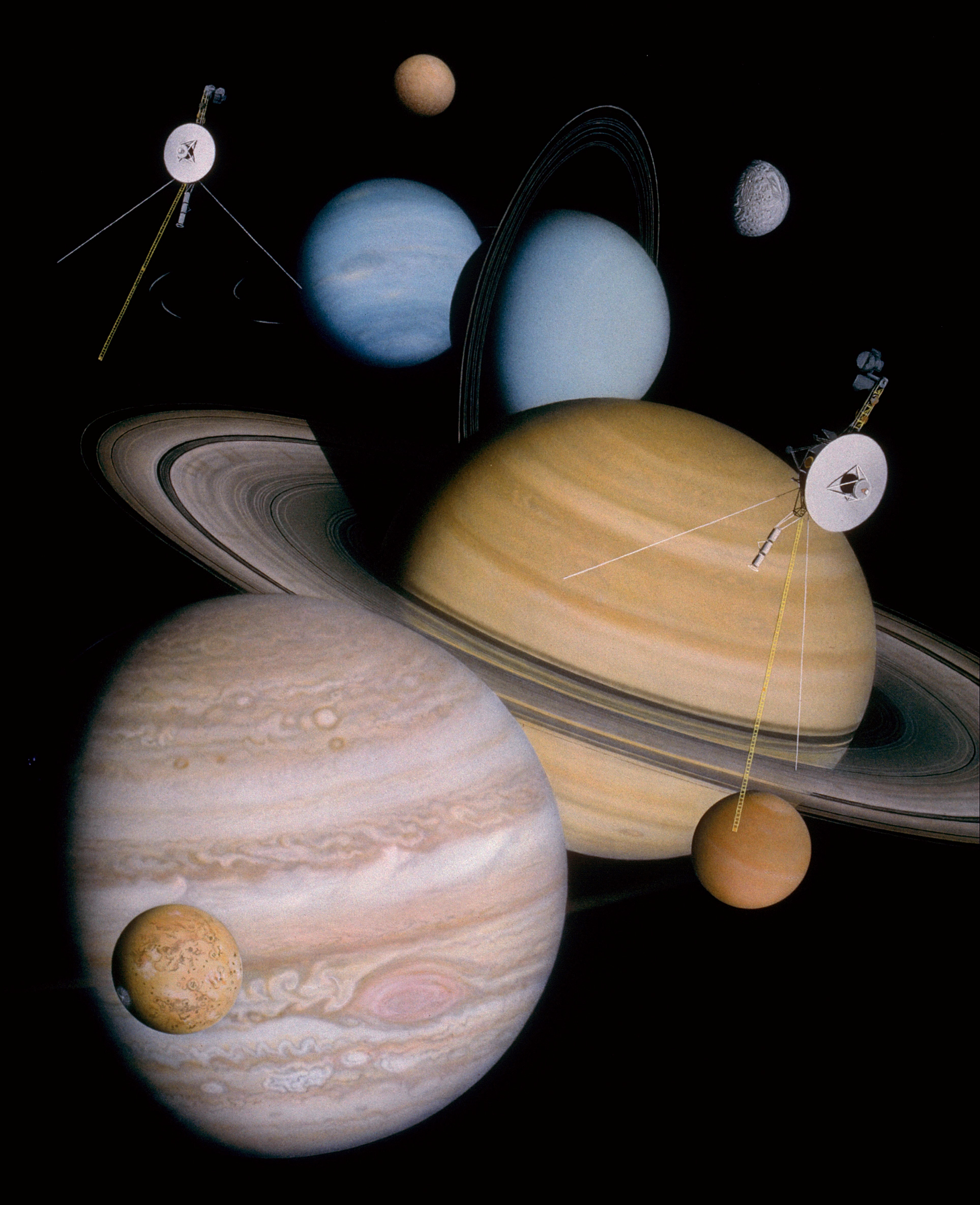
Outer planets exploration represents humanity's most ambitious forays into the solar system's distant, icy giants: Jupiter, Saturn, Uranus, and Neptune. These missions, often spanning decades and billions of miles, have fundamentally reshaped our understanding of planetary formation, atmospheric dynamics, and the potential for life beyond Earth. From the iconic Voyager flybys that revealed the intricate systems of rings and moons to the dedicated orbiters like Galileo and Juno at Jupiter, and Cassini at Saturn, each endeavor pushes the boundaries of engineering and scientific inquiry. The sheer scale of these journeys, requiring immense propulsion, long-duration operation, and sophisticated data transmission, underscores the technological prowess developed by space agencies like NASA and the ESA. As we continue to probe these enigmatic worlds, the quest for knowledge about our solar system's outer reaches remains a vibrant frontier.
🎵 Origins & History
The dawn of outer planets exploration began not with a dedicated mission, but as an ambitious extension of earlier interplanetary probes. Early pioneers like Pioneer 10 and Pioneer 11 paved the way in the 1970s, performing the first close-up observations of Jupiter and Saturn, respectively. However, it was the Voyager missions, launched in 1977, that truly revolutionized our understanding. Utilizing a rare planetary alignment, Voyager 2 embarked on an unprecedented 'Grand Tour,' visiting Jupiter, Saturn, Uranus, and Neptune in a single, decades-long odyssey. This feat, conceived by visionary scientists and engineers, opened a new chapter in planetary science, revealing the complex geological histories and diverse environments of these distant worlds. The success of the Voyagers spurred further dedicated missions, setting a high bar for subsequent exploration.
⚙️ How It Works
Exploring the outer planets demands overcoming immense distances and harsh environments. Missions typically employ powerful rockets, such as the Saturn V or SLS, to escape Earth's gravity and achieve interplanetary trajectories. Gravity assists, a technique famously utilized by the Voyager missions, are crucial for gaining speed and altering course without expending excessive fuel, allowing spacecraft to reach these distant targets within reasonable timeframes. For orbiters like Galileo and Juno at Jupiter, or Cassini at Saturn, complex braking maneuvers are required to enter orbit. Powering these spacecraft relies on radioisotope thermoelectric generators (RTGs), which convert heat from the decay of radioactive isotopes like plutonium-238 into electricity, as solar power is insufficient at such distances. Data transmission back to Earth, often across billions of miles, necessitates large Deep Space Network antennas and sophisticated communication systems.
📊 Key Facts & Numbers
A total of nine spacecraft have been launched with primary or significant secondary objectives involving the outer planets. Of these, all nine have encountered Jupiter, with four also visiting Saturn. Only one mission, Voyager 2, has successfully visited both Uranus and Neptune. The Voyager missions alone have traveled over 12 billion miles (19 billion kilometers) and continue to transmit data from interstellar space. Cassini spent 13 years orbiting Saturn, transmitting over 450,000 images and 635 gigabytes of scientific data. Galileo orbited Jupiter for eight years, performing 34 orbits and deploying a probe into its atmosphere. Juno, currently orbiting Jupiter, has completed over 50 orbits since its 2016 arrival, studying its deep interior, magnetic field, and auroras. The total cost of these major outer planet missions often runs into the billions of dollars, with Cassini costing approximately $3.26 billion over its lifetime.
👥 Key People & Organizations
Key figures in outer planets exploration include visionary scientists and engineers who conceived and executed these ambitious missions. Carl Sagan, a prominent astronomer and science communicator, was a strong advocate for planetary exploration and played a role in the Voyager's 'Golden Record' project. Edward C. Stone served as the Voyager project scientist for over 30 years, overseeing its scientific discoveries. Wernher von Braun, though primarily associated with Apollo, laid foundational work in large rocket technology essential for such deep-space endeavors. Major organizations driving this exploration are NASA, with its Jet Propulsion Laboratory (JPL) managing most outer planet missions, and the ESA, which collaborated on missions like Cassini. The Planetary Society has also been instrumental in advocating for and funding planetary science.
🌍 Cultural Impact & Influence
The exploration of outer planets has profoundly influenced popular culture and scientific understanding. The iconic images returned by the Voyager missions, such as the 'Pale Blue Dot' photograph of Earth taken from beyond Neptune, have fostered a sense of cosmic perspective and inspired countless individuals. The discovery of potential subsurface oceans on moons like Europa (Jupiter) and Enceladus (Saturn) has fueled speculation and scientific interest in the possibility of extraterrestrial life, a theme frequently explored in science fiction films like 2001: A Space Odyssey and Interstellar. The sheer audacity of sending probes across billions of miles has become a symbol of human ingenuity and our innate drive to explore the unknown, shaping narratives around scientific progress and the future of humanity.
⚡ Current State & Latest Developments
Current outer planets exploration is primarily focused on Jupiter and its moons, with Juno continuing its orbital science mission, aiming to understand Jupiter's origins and internal structure. The Europa Clipper mission, scheduled for launch in October 2024, will conduct detailed reconnaissance of Europa to assess its habitability. Looking further ahead, the Dragonfly mission, slated for a 2027 launch, will explore Saturn's moon Titan with a rotorcraft. Discussions are also ongoing for potential future missions to Neptune and Uranus, building on the limited data gathered by Voyager 2. The development of advanced propulsion systems, such as nuclear thermal propulsion, is seen as critical for enabling more rapid and ambitious future missions to these distant worlds.
🤔 Controversies & Debates
A significant debate surrounding outer planets exploration centers on the allocation of resources. Critics argue that the immense costs, often running into billions of dollars, could be better spent addressing pressing issues on Earth, such as climate change or poverty. Proponents, however, emphasize the invaluable scientific return, technological advancements, and inspirational value derived from these missions. Another point of contention is the prioritization of targets; while Jupiter and Saturn have been extensively studied, Uranus and Neptune remain relatively unexplored, leading to calls for more dedicated missions to these 'ice giants.' The ethical implications of potential future human missions to these distant worlds, including the challenges of long-term survival and planetary protection, also represent ongoing areas of discussion.
🔮 Future Outlook & Predictions
The future of outer planets exploration is poised for significant advancements, driven by new technologies and a renewed scientific curiosity. Missions to the ice giants, Uranus and Neptune, are increasingly being discussed, with concepts for orbiters and atmospheric probes being developed. The potential for discovering subsurface oceans on moons like Europa and Enceladus continues to drive interest in astrobiology and the search for life beyond Earth. Advanced propulsion systems, such as nuclear electric propulsion and fusion propulsion, could drastically reduce travel times, making these distant destinations more accessible. Furthermore, the development of autonomous systems and artificial intelligence will enable more sophisticated data collection and decision-making in situ, reducing reliance on constant communication with Earth. The next few decades could see humanity establishing a more comprehensive presence in the outer solar system.
💡 Practical Applications
While direct human habitation of the outer planets is currently science fiction, the exploration of these distant worlds yields practical applications t
Key Facts
- Category
- science
- Type
- topic