
Contents
Overview
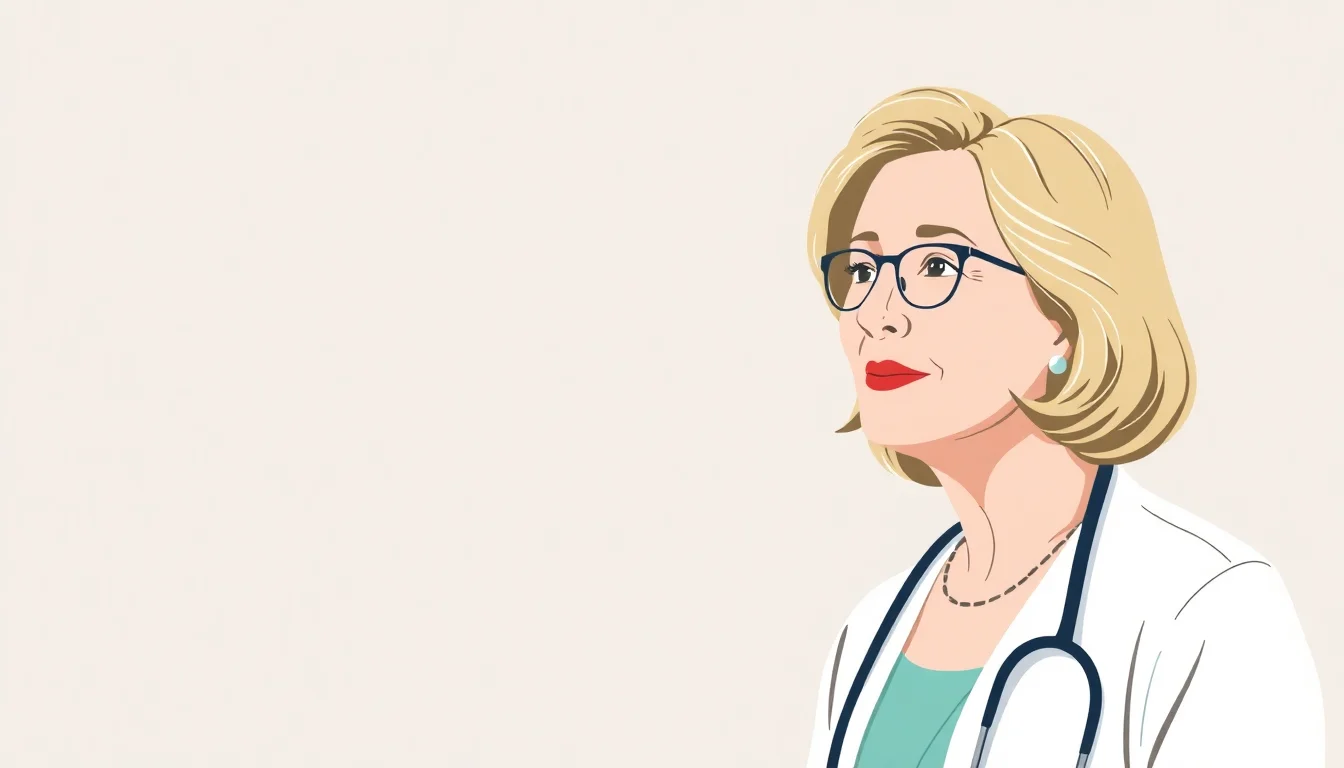
Patricia Benner is a towering figure in nursing theory. Her framework, which details how clinicians progress through distinct stages—novice, advanced beginner, competent, proficient, and expert—based on experience and intuition rather than just rule-following, fundamentally shifted the understanding of clinical judgment, emphasizing the importance of embodied knowledge and practical wisdom gained through hands-on experience. As a professor emerita at the UCSF School of Nursing, her influence extends globally, shaping nursing education, practice, and research for decades, earning her the prestigious Living Legend designation.
🎵 Origins & History
Patricia Benner's journey into nursing theory was deeply rooted in her own clinical experiences and observations of her peers. She pursued advanced studies, eventually earning a Ph.D. from the University of California, Berkeley, where she honed her theoretical and research skills. Her early career was marked by a commitment to understanding the lived experience of nurses, moving beyond purely technical skills to explore the art and science of nursing practice. This foundational work culminated in the publication of her most influential book, 'From Novice to Expert,' in 1984, a text that would redefine nursing pedagogy and practice.
⚙️ How It Works
Benner's core contribution lies in her application of the Dreyfus model to nursing. This model posits that individuals move through five stages of skill development: Novice, Advanced Beginner, Competent, Proficient, and Expert. In the Novice stage, nurses rely strictly on rules and procedures, with little contextual understanding. As they advance, they begin to recognize patterns and develop intuition based on experience. The Competent nurse can troubleshoot and plan, while the Proficient nurse grasps the situation holistically and can prioritize. At the Expert level, nurses possess an intuitive, fluid understanding of complex situations, often acting without conscious deliberation, drawing on a vast repertoire of embodied knowledge. This framework emphasizes that expertise is not merely about accumulating more knowledge, but about transforming that knowledge into practical, context-dependent judgment through experience.
📊 Key Facts & Numbers
The Expert level represents a profound, intuitive grasp of clinical situations. Benner's emphasis is on the 'art' of nursing—intuition, empathy, and holistic care—has elevated the profession's standing and highlighted its critical role in patient outcomes. Her work has been translated into at least 15 languages, facilitating its global adoption. Benner herself is a Living Legend, a title bestowed upon fewer than 200 nurses in history, signifying her profound and lasting impact. She holds an emeritus professorship at UCSF School of Nursing, one of the top-ranked nursing schools globally, where she contributed significantly to research and education for decades.
👥 Key People & Organizations
Key figures and institutions are central to Benner's legacy. Her doctoral advisor at University of California, Berkeley, Anselm Strauss, a prominent sociologist, significantly influenced her methodological approach, particularly in qualitative research and grounded theory. The Dreyfus brothers, Hubert and Stuart, developed the original model of skill acquisition that Benner so effectively adapted. Her long-standing affiliation with the UCSF School of Nursing as a professor emerita highlights her deep connection to a leading academic institution. The American Academy of Nursing recognized her contributions by naming her a Living Legend, a testament to her status within the profession. Her collaborators, such as Judith Wrubel and Colleen Antle, co-authored key works that expanded upon her theories.
🌍 Cultural Impact & Influence
Patricia Benner's work has profoundly reshaped nursing education and practice globally. Her 'From Novice to Expert' model is a cornerstone in curricula worldwide, guiding the development of clinical reasoning and skill acquisition. It has influenced how nurses are trained, evaluated, and recognized for their expertise, moving beyond simple credentialing to acknowledge the depth of practical wisdom. Benner's emphasis on the 'art' of nursing—intuition, empathy, and holistic care—has elevated the profession's standing and highlighted its critical role in patient outcomes. Her theories have also spurred significant research into clinical judgment, decision-making, and the nature of expertise across various healthcare disciplines, extending her influence beyond nursing into fields like medicine and allied health.
⚡ Current State & Latest Developments
Benner's theoretical framework continues to be a vital tool in contemporary nursing. Many healthcare institutions utilize her stages of skill acquisition for staff development, performance appraisals, and mentorship programs. The ongoing debate about the future of nursing, particularly concerning the integration of artificial intelligence and advanced technologies, often references Benner's emphasis on humanistic care and intuitive judgment. Her work remains a touchstone for discussions on evidence-based practice versus experience-based wisdom, ensuring its continued relevance in an evolving healthcare landscape. Recent discussions in nursing literature often revisit her concepts in the context of patient safety and the complexities of modern healthcare systems.
🤔 Controversies & Debates
While Benner's model is widely celebrated, it has not been without its critics. Some argue that the strict adherence to the five stages can be overly rigid, failing to account for individual learning styles or the rapid pace of technological change in healthcare. Skeptics question whether the model adequately addresses the systemic factors that can impede a nurse's progression, such as understaffing or inadequate resources, suggesting it places too much emphasis on individual development. There's also debate about the empirical validation of the distinct stages, with some researchers calling for more robust quantitative data to support the qualitative observations Benner and her collaborators have made. Furthermore, the increasing reliance on algorithms and AI in diagnostics and treatment planning raises questions about the future role of intuitive, experience-based expertise.
🔮 Future Outlook & Predictions
The future outlook for Benner's theories remains strong, though subject to adaptation. As healthcare systems become more complex and data-driven, there's a growing need to integrate technological proficiency with the humanistic, intuitive skills Benner championed. Future research may focus on how the 'expert' nurse navigates hybrid environments where AI assists in decision-making, and how to cultivate expert intuition in an era of Big Data. There's also potential for her model to be further applied to emerging healthcare roles and interprofessional collaboration, exploring how expertise develops across different disciplines. The enduring value of her work suggests it will continue to inform nursing philosophy and practice for decades to come, perhaps evolving to encompass new dimensions of care.
💡 Practical Applications
Benner's 'From Novice to Expert' model has direct practical applications across healthcare. It's used in nursing education to structure curricula, guiding students from foundational knowledge to advanced clinical reasoning. Hospitals and healthcare systems employ it for staff development, creating tiered competency frameworks and mentorship programs that support nurses' growth. The model informs performance evaluations, helping to assess nurses not just on task completion but on their clinical judgment and problem-solving abilities. It also underpins the design of continuing education programs and professional certification processes, ensuring that nurses are recognized for their accumulated experience and expertise. For example, Johns Hopkins Hospital has historically used competency models influenced by Benner's work.
Key Facts
- Category
- philosophy
- Type
- topic