
Contents
Overview
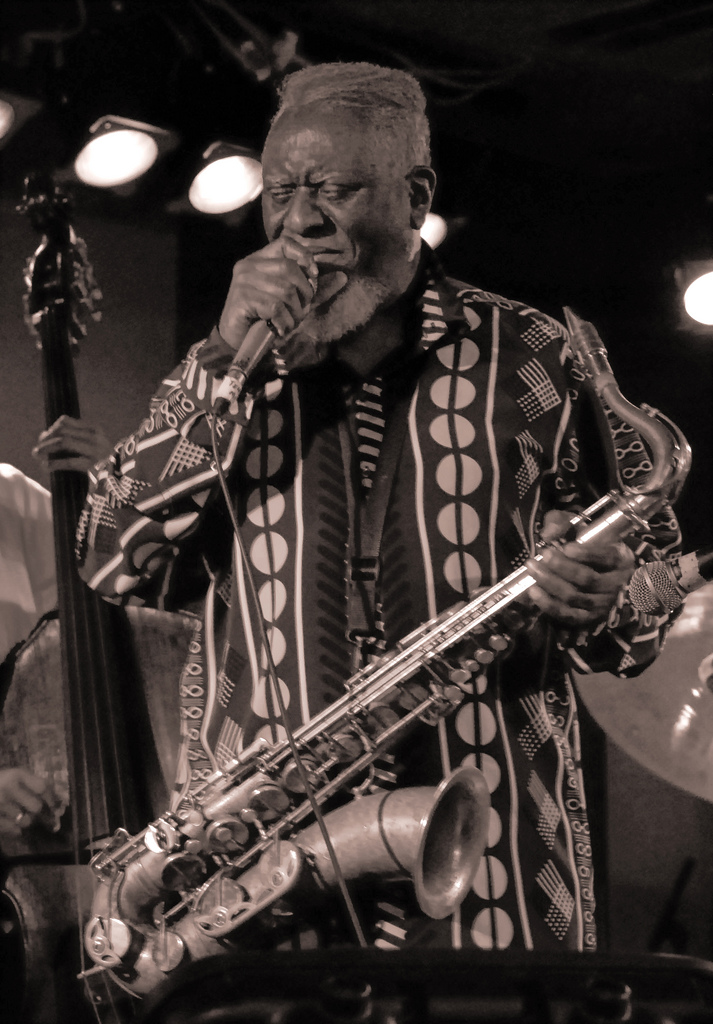
Pharoah Sanders was a renowned American jazz saxophonist known for his innovative and spiritual approach to music. With a career spanning over five decades, Sanders played a pivotal role in the development of free jazz and spiritual jazz, collaborating with iconic musicians such as John Coltrane. His unique sound, characterized by overblowing, harmonic, and multiphonic techniques, has inspired generations of musicians and fans alike. As a key figure in the jazz scene, Sanders released over thirty albums as a leader and received numerous accolades, including the NEA Jazz Masters award. His legacy continues to influence contemporary jazz, with his music remaining a testament to the power of creativity and spiritual expression. Pharoah Sanders' music has been featured in various films and documentaries, including Mo' Better Blues and The Last Days of Frankie the Bull.
🎵 Origins & History
Pharoah Sanders was born Ferrell Lee Sanders on October 13, 1940, in Little Rock, Arkansas. He developed an interest in music at an early age, particularly in jazz, and began playing the saxophone in his teenage years. Sanders' early career was marked by collaborations with notable jazz musicians, including John Coltrane. His unique sound and style, which blended elements of free jazz, spiritual jazz, and avant-garde music, quickly gained recognition within the jazz community. Sanders' work with Coltrane's group in the mid-1960s was instrumental in shaping his musical approach, which emphasized experimentation, improvisation, and spiritual exploration.
⚙️ How It Works
Sanders' music was characterized by his use of overblowing, harmonic, and multiphonic techniques on the saxophone, as well as his incorporation of 'sheets of sound'. This approach created a distinctive, meditative sound that was both haunting and beautiful. His performances often featured extended improvisations, which allowed him to explore the full range of his instrument and push the boundaries of jazz. Sanders' music was not only a reflection of his technical skill but also a manifestation of his spiritual beliefs and values. He drew inspiration from various religious traditions, including Buddhism and Islam, and sought to convey a sense of unity and transcendence through his music.
📊 Key Facts & Numbers
Throughout his career, Pharoah Sanders released over thirty albums as a leader, many of which have become classics of the jazz genre. His debut album, 'Pharoah', was released in 1965 and featured a mix of original compositions and jazz standards. Subsequent albums showcased his growing interest in spiritual jazz and his ability to blend different musical traditions. Sanders' collaborations with other musicians were also highly acclaimed, particularly his work with vocalist Leon Thomas and pianist Alice Coltrane. Sanders' music has been widely praised for its originality, depth, and emotional power, with many considering him one of the most important and influential jazz musicians of his generation.
👥 Key People & Organizations
Pharoah Sanders' impact on the jazz world has been profound and far-reaching. His innovative approach to the saxophone and his emphasis on spiritual exploration have inspired a wide range of musicians. His music has also been recognized for its cultural significance, and he was awarded the NEA Jazz Masters award in 2016. Sanders' legacy continues to be felt in the jazz community, with his music remaining a source of inspiration and guidance for musicians and fans alike. His music has also been featured in various films and documentaries, including Mo' Better Blues and The Last Days of Frankie the Bull.
🌍 Cultural Impact & Influence
In addition to his work as a musician, Pharoah Sanders was also a devoted spiritual practitioner. He drew inspiration from various religious traditions, including Buddhism and Islam, and sought to convey a sense of unity and transcendence through his music. His performances often featured elements of meditation and prayer, and he believed that music had the power to heal and transform individuals and society. Sanders' spiritual approach to music was reflected in his album titles, which referenced concepts from Islamic and Buddhist philosophy.
⚡ Current State & Latest Developments
Pharoah Sanders passed away on September 24, 2022, at the age of 81, leaving behind a legacy of innovative and spiritual music that continues to inspire and influence musicians and fans around the world. His music remains a testament to the power of creativity and spiritual expression, and his impact on the jazz genre will be felt for generations to come.
🤔 Controversies & Debates
The controversy surrounding Pharoah Sanders' music is largely centered around the avant-garde and experimental nature of his work. Some critics have argued that his music is too challenging or inaccessible, while others have praised its innovative and groundbreaking approach. Despite these criticisms, Sanders' music has been widely acclaimed for its originality, depth, and emotional power.
🔮 Future Outlook & Predictions
Looking to the future, Pharoah Sanders' legacy will continue to inspire and influence musicians and fans around the world. His music remains a testament to the power of creativity and spiritual expression, and his impact on the jazz genre will be felt for generations to come.
💡 Practical Applications
Pharoah Sanders' music has a wide range of practical applications, from meditation and relaxation to inspiration and creativity. His albums are highly regarded for their spiritual and emotional depth, and are often used in therapeutic and educational settings. Sanders' music has also been used in various films and documentaries, including Mo' Better Blues and The Last Days of Frankie the Bull.
Key Facts
- Category
- culture
- Type
- topic