
Contents
Overview
The story of phosphate pollution is intrinsically linked to the agricultural revolution and the dawn of modern sanitation. While phosphates are naturally occurring essential nutrients, their excessive release into waterways gained significant traction in the mid-20th century. The widespread adoption of synthetic nitrogen and phosphate fertilizers, pioneered by chemists like Fritz Haber and Carl Bosch for nitrogen and later expanded for phosphorus, dramatically boosted crop yields but also led to unprecedented runoff. Simultaneously, the increasing use of phosphate-based detergents, particularly after World War II, introduced another massive source of phosphorus into municipal wastewater. Early recognition of the problem emerged in the 1960s, with landmark studies on Lake Erie highlighting the devastating effects of eutrophication. The Clean Water Act in the United States was enacted to control nutrient pollution.
⚙️ How It Works
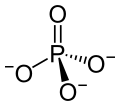
Phosphate pollution operates through a well-understood biogeochemical process known as eutrophication. Phosphates, primarily in the form of orthophosphates ([PO₄]³⁻), are often the limiting nutrient in freshwater ecosystems, meaning their scarcity controls the growth of primary producers like algae and cyanobacteria. When excess phosphates enter a water body, typically from agricultural runoff carrying fertilizers or from inadequately treated sewage, they act as a potent fertilizer. This triggers rapid and dense algal blooms, often referred to as 'blooms'. As these blooms die, their decomposition by aerobic bacteria consumes vast quantities of dissolved oxygen in the water. This depletion of oxygen, known as hypoxia or anoxia, creates 'dead zones' where fish, invertebrates, and other oxygen-dependent organisms cannot survive, leading to widespread mortality and ecosystem collapse. The process can be exacerbated by other nutrients like nitrogen, but phosphorus is frequently the key driver in freshwater systems.
📊 Key Facts & Numbers
The scale of phosphate pollution is staggering. Globally, it's estimated that over 10 million metric tons of phosphorus enter aquatic ecosystems annually, with agricultural sources contributing roughly 75% of this load. In the United States alone, agricultural runoff is the primary source of nutrient pollution in over half of the nation's rivers and streams, according to the EPA. The Chesapeake Bay, for instance, receives an estimated 30 million pounds of nitrogen and 3 million pounds of phosphorus annually, largely from agricultural and wastewater sources. Dead zones, such as the one in the Gulf of Mexico, which can span over 6,000 square miles, devastate commercial and recreational fishing industries, costing billions of dollars each year. The cost of treating drinking water contaminated with algal toxins produced by some blooms can also be significant, impacting municipal budgets.
👥 Key People & Organizations
Numerous individuals and organizations have been pivotal in understanding and combating phosphate pollution. Early research by limnologists like David Schindler in Canada, particularly his experimental lake studies, provided crucial evidence linking phosphorus to eutrophication. Organizations such as the Environmental Working Group (EWG) and the Natural Resources Defense Council (NRDC) have been instrumental in advocating for policy changes and raising public awareness. Government agencies like the EPA and its international counterparts play a critical role in setting water quality standards and enforcing regulations. In agriculture, organizations like the American Farm Bureau Federation are involved in promoting best management practices, though debates persist over the effectiveness and scope of these initiatives. The World Wildlife Fund (WWF) also works globally to address nutrient pollution in critical aquatic habitats.
🌍 Cultural Impact & Influence
Phosphate pollution has profoundly reshaped our relationship with water bodies, transforming them from recreational havens to ecological liabilities. The visual blight of thick, green algal scum on lakes and rivers, coupled with the stench of decaying organic matter, has diminished public enjoyment and trust in aquatic environments. This has led to significant economic impacts, particularly on coastal communities reliant on healthy fisheries and tourism, as seen with the recurring dead zones in the Gulf of Mexico. Harmful algal blooms (HABs) also poses direct risks to human and animal health, with some cyanobacteria producing potent toxins that can contaminate drinking water supplies and harm livestock and pets. The aesthetic and recreational degradation has spurred public outcry and driven demand for cleaner water, influencing local politics and environmental activism for decades.
⚡ Current State & Latest Developments
The fight against phosphate pollution is an ongoing, dynamic struggle. In 2023, the European Union continued to refine its Urban Wastewater Treatment Directive, pushing for more advanced nutrient removal technologies in sewage treatment plants. In the United States, the Chesapeake Bay Program is recalibrating its total maximum daily load (TMDL) plans, acknowledging that progress has been slower than anticipated, particularly in reducing agricultural loads. Innovations in precision agriculture, utilizing GPS technology and soil sensors to apply fertilizers only where and when needed, are gaining traction, though widespread adoption remains a challenge. Furthermore, research into alternative, less phosphate-intensive fertilizers and bio-based solutions for wastewater treatment is accelerating, driven by both environmental concerns and the rising cost of synthetic fertilizers. The increasing frequency of extreme weather events, such as heavy rainfall, also exacerbates runoff, making mitigation efforts more critical than ever.
🤔 Controversies & Debates
The debate surrounding phosphate pollution often centers on the balance between agricultural productivity and environmental protection. Farmers, represented by groups like the National Farmers Union, frequently argue that stringent regulations on fertilizer use can impose significant economic burdens and reduce yields, potentially impacting food security. Conversely, environmental organizations and scientists emphasize the irreversible ecological damage and long-term economic costs associated with unchecked nutrient loading. Another point of contention is the responsibility for cleanup: should it fall primarily on agricultural producers, municipal wastewater treatment facilities, or both? The role of industrial discharge and the efficacy of current regulatory frameworks, such as the Clean Water Act's Section 303(d) list of impaired waters, are also subjects of ongoing legal and scientific scrutiny. The debate over the best technological solutions, from advanced wastewater treatment to innovative farming techniques, also involves significant investment and differing opinions on cost-effectiveness.
🔮 Future Outlook & Predictions
The future of phosphate pollution management hinges on a confluence of technological advancement, policy innovation, and global cooperation. We can anticipate a continued push towards more sophisticated precision agriculture, potentially incorporating AI for real-time nutrient management. Expect to see increased investment in advanced wastewater treatment technologies, including membrane bioreactors and constructed wetlands, capable of higher nutrient removal efficiencies. Policy-wise, a shift towards outcome-based regulations, rewarding farmers for demonstrated reductions in nutrient runoff rather than prescribing specific practices, could gain momentum. Furthermore, the development and deployment of phosphate-free or reduced-phosphate alternatives in detergents and industrial applications will likely accelerate. The challenge will be ensuring these solutions are accessible and affordable globally, particularly in developing nations where infrastructure and resources
Key Facts
- Category
- nature
- Type
- topic