
Contents
Overview
The genesis of policy documents addressing climate action for World Heritage can be traced back to growing awareness within the UNESCO framework and among heritage professionals about the tangible threats posed by a changing climate. The World Heritage Convention (1972) provided the foundational legal instrument, but it predated widespread recognition of climate change as a primary threat to heritage. By the early 2000s, specific research began highlighting vulnerabilities, such as the melting glaciers in Swiss Alps (a World Heritage site) and coastal erosion affecting sites like Venice. The ICOMOS and the IUCN, advisory bodies to the World Heritage Committee, played crucial roles in advocating for dedicated policy responses. The formalization of these concerns led to resolutions and recommendations from the World Heritage Committee itself, culminating in the development of more comprehensive policy guidance documents starting around the 2010s, such as the 'World Heritage and Climate Change Policy' adopted by the Committee.
⚙️ How It Works
These policy documents function as strategic frameworks for managing World Heritage properties under climate stress. They typically outline a multi-pronged approach: first, by mandating robust risk assessment and monitoring to understand site-specific vulnerabilities to phenomena like sea-level rise, extreme temperatures, and altered precipitation patterns. Second, they promote the integration of climate adaptation strategies into existing heritage management plans, which might involve reinforcing structures, managing water resources, or developing emergency response protocols. Third, they encourage mitigation efforts, such as reducing the carbon footprint of site operations and promoting sustainable tourism. Crucially, these policies emphasize the need for collaboration between site managers, local communities, national governments, and international scientific bodies, recognizing that effective climate action requires a coordinated, multi-stakeholder effort. The overarching goal is to safeguard the Outstanding Universal Value (OUV) of World Heritage sites against the irreversible impacts of climate change.
📊 Key Facts & Numbers
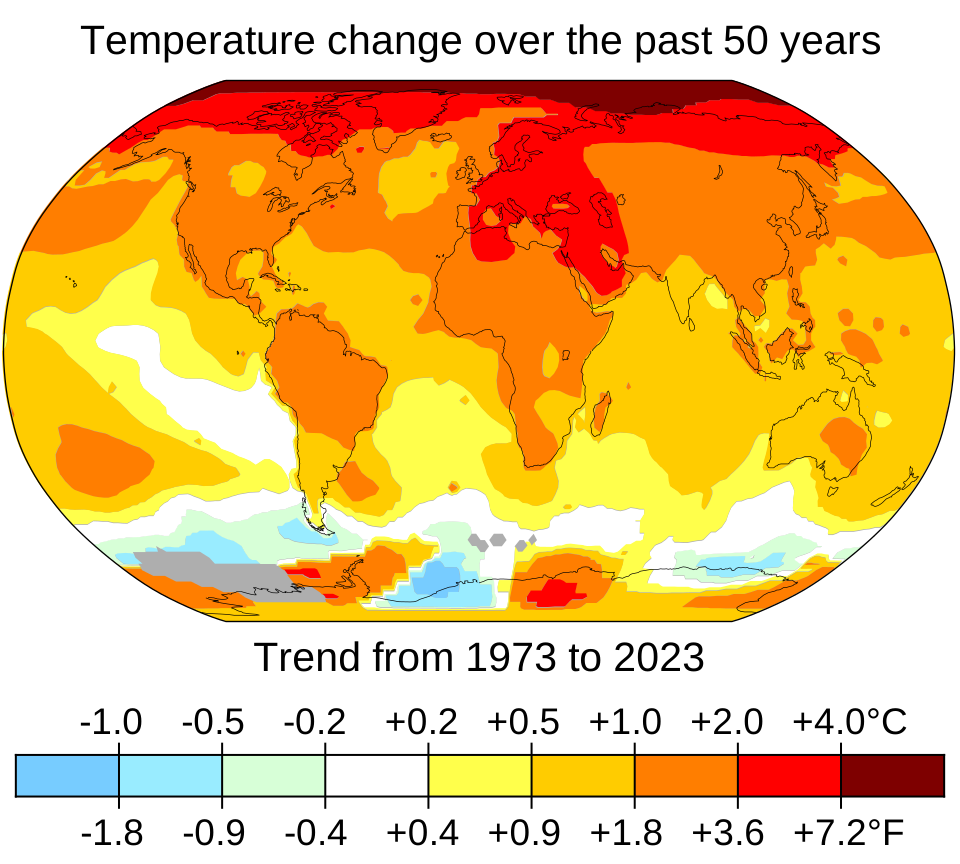
The Statue of Liberty and surrounding areas in New York City are highly vulnerable to increased flooding, with projections suggesting inundation during storm surges could occur with greater frequency. Similarly, the iconic Machu Picchu in Peru faces threats from landslides and altered rainfall patterns, with some estimates suggesting a significant increase in erosion risk. The Arctic region, warming at nearly four times the global average rate, endangers sites like Yukon's Kluane National Park and Reserve, where permafrost thaw destabilizes landscapes.
👥 Key People & Organizations
Key players in developing and implementing these policies include UNESCO itself, particularly its World Heritage Centre, which coordinates global efforts. The advisory bodies, ICOMOS (for cultural heritage) and IUCN (for natural heritage), provide crucial scientific and technical expertise. National governments are responsible for developing and enacting national heritage policies that align with international recommendations and for managing individual sites. Organizations like the Global Heritage Fund and the Climate Heritage Network actively advocate for and support climate action at heritage sites. Prominent researchers and conservationists, such as Professor Jukka Pekka Mikkola and Dr. Ursula Kelly, have been instrumental in advancing the discourse and practical application of climate resilience strategies for heritage. The World Heritage Committee serves as the ultimate decision-making body, adopting resolutions and guidelines that shape global policy.
🌍 Cultural Impact & Influence
The development of policy documents on climate action for World Heritage has profoundly influenced how we perceive and manage irreplaceable cultural and natural assets. Historically, heritage conservation focused on direct physical threats like decay or conflict. These new policies embed a forward-looking, risk-informed approach, acknowledging the pervasive and systemic nature of climate change. This has spurred innovation in conservation techniques, such as using climate-resilient materials and developing adaptive management plans. Furthermore, it has elevated the dialogue around heritage protection, linking it directly to global environmental agendas and the Sustainable Development Goals (SDGs), particularly SDG 13 (Climate Action). The emphasis on community engagement within these policies also empowers local populations to become active stewards of their heritage, fostering a deeper connection and shared responsibility for its preservation in the face of global environmental challenges. The very definition of 'authenticity' and 'integrity' for heritage sites is being re-evaluated through the lens of climate resilience.
⚡ Current State & Latest Developments
As of 2024-2025, the implementation of climate action policies for World Heritage is a critical, ongoing process. The World Heritage Committee continues to prioritize climate change, with recent sessions (e.g., Riyadh, 2023) featuring extensive discussions and new recommendations for integrating climate resilience into State Party reports and management plans. The Climate Heritage Network is expanding its membership and developing practical tools for site managers. There's a growing focus on 'loss and damage' related to climate impacts on heritage, with discussions around potential funding mechanisms and compensation. Pilot projects are underway at numerous sites, testing innovative adaptation measures, from restoring coastal mangroves to protect Venice to developing early warning systems for glacial lake outburst floods threatening Himalayan heritage. The UNESCO World Heritage List itself is increasingly being scrutinized for its vulnerability to climate impacts, prompting calls for more rigorous assessment of climate risks during the nomination process.
🤔 Controversies & Debates
Significant controversies surround the implementation of climate action policies for World Heritage. A primary debate centers on resource allocation: critics argue that the substantial funds required for climate adaptation at heritage sites could be diverted from other pressing conservation needs or development priorities, particularly in developing nations. There's also tension between preserving 'authenticity' and implementing adaptive measures that might alter a site's historical fabric. For instance, building sea walls around coastal heritage sites might protect them physically but change their historical context and aesthetic integrity. Another point of contention is the equitable distribution of responsibility and resources, with many arguing that nations historically responsible for the bulk of greenhouse gas emissions should bear a greater financial burden for adaptation efforts at World Heritage sites globally, rather
Key Facts
- Category
- policy
- Type
- topic