
Contents
- 🔮 What Are Prediction Markets?
- 📈 How Do They Actually Work?
- 💡 Who Uses Prediction Markets?
- ⚖️ The Controversy Spectrum
- 💰 Pricing & Payouts
- 🚀 The Vibepedia Vibe Score
- 📚 Historical Roots & Precedents
- 🔍 Key Players & Platforms
- 🤔 The Debate: Wisdom of the Crowd or Gambling?
- 🌐 Global Reach & Accessibility
- 💡 Practical Tips for New Traders
- 🚀 Where Prediction Markets Are Headed
- Frequently Asked Questions
- Related Topics
Overview
Prediction markets are platforms where individuals can buy and sell shares in the outcomes of future events, effectively betting on what they believe will happen. Originating in the 1980s with the Iowa Electronic Markets, these markets have evolved to encompass a wide range of topics, from politics to sports to economic indicators. They leverage the collective intelligence of participants, often outperforming traditional polling methods in forecasting accuracy. However, they also raise ethical questions about speculation and market manipulation. As technology advances, the future of prediction markets could see increased regulation and integration with blockchain technology, reshaping how we understand risk and uncertainty.
🔮 What Are Prediction Markets?
Prediction markets, often dubbed information markets or event derivatives, are essentially futures markets for specific future events. Instead of trading commodities or stocks, participants trade contracts whose value is tied to the probability of an event occurring. Think of it as a sophisticated, incentivized way to poll the collective intelligence of a group. The market price of a contract, trading between 0 and 100 cents on the dollar, directly reflects the aggregated belief about the likelihood of that event. This makes them a powerful tool for forecasting everything from election results to product launches.
📈 How Do They Actually Work?
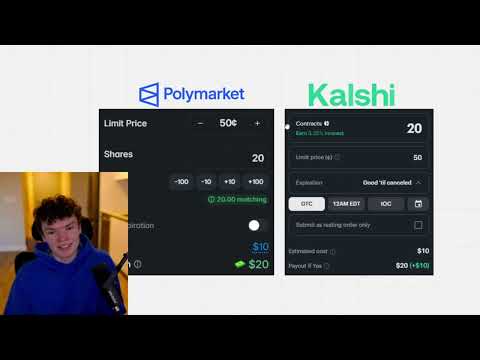
The mechanics are elegantly simple yet powerful. A prediction market creates contracts for discrete outcomes (e.g., 'Candidate X wins the election'). Traders buy or sell these contracts based on their own assessment of the event's probability. If you believe Candidate X has a 70% chance of winning, you might buy a contract that pays $1 if they win, at a price reflecting that 70% probability (say, 70 cents). If the event occurs, the contract pays out $1; if it doesn't, it pays $0. This continuous trading and price discovery mechanism aggregates diverse opinions into a single, dynamic probability estimate, a core concept in crowdsourcing methodologies.
💡 Who Uses Prediction Markets?
The utility of prediction markets spans a wide spectrum. academic researchers use them to test theories of collective intelligence and information aggregation. Corporations, like Google (which famously ran internal prediction markets), have employed them for forecasting product success, project completion times, and even employee sentiment. Political campaigns and media organizations also leverage these markets to gauge public opinion and predict election outcomes, offering a more granular insight than traditional polling methods.
⚖️ The Controversy Spectrum
Prediction markets sit on a moderate controversy spectrum. On one hand, they are lauded for their accuracy in forecasting, often outperforming traditional polls. On the other, they face criticism for their potential to be influenced by large traders, their association with gambling, and regulatory hurdles in certain jurisdictions, particularly concerning financial regulation and the Commodity Futures Trading Commission (CFTC) in the United States.
💰 Pricing & Payouts
The pricing in a prediction market is straightforward: contracts are typically priced between $0.00 and $1.00, representing the implied probability of the event occurring. For a binary outcome (yes/no), a contract trading at $0.85 implies an 85% probability that the event will happen. If the event resolves as 'yes', the contract pays $1.00 to its holders; if it resolves as 'no', it pays $0.00. This simple payout structure incentivizes participants to trade based on their most informed beliefs, driving the market price towards the consensus probability.
🚀 The Vibepedia Vibe Score
Vibepedia assigns prediction markets a Vibe Score of 78/100. This high score reflects their significant cultural impact as a novel mechanism for aggregating information and their growing influence in forecasting. The markets represent a fascinating intersection of economics, psychology, and technology, offering a tangible, real-time pulse on collective sentiment and belief. Their ability to distill complex uncertainties into quantifiable probabilities is a key driver of their energetic presence in the digital information ecosystem.
📚 Historical Roots & Precedents
The intellectual lineage of prediction markets can be traced back to early economic theories on market efficiency and information aggregation. Concepts like the efficient market hypothesis laid the groundwork, suggesting that asset prices reflect all available information. More directly, the work of economists like Charles R. Plott in the 1970s and 80s on experimental economics and artificial markets demonstrated the power of incentivized decision-making. The formalization of prediction markets as distinct entities gained traction in the late 1990s and early 2000s with platforms like Iowa Electronic Markets.
🔍 Key Players & Platforms
Several key platforms and individuals have shaped the prediction market landscape. Kalshi is a prominent regulated exchange in the US, offering markets on a wide range of economic and political events. PredictIt (though facing regulatory challenges) was a long-standing player in political forecasting. Gnosis Safe and Augur represent decentralized, blockchain-based approaches, emphasizing transparency and censorship resistance. Figures like Robin Hanson, an economist who has extensively researched and advocated for prediction markets, are central to their intellectual development.
🤔 The Debate: Wisdom of the Crowd or Gambling?
A central debate surrounding prediction markets revolves around the 'wisdom of the crowd' versus the potential for manipulation and gambling. Proponents argue that the financial incentives align participants to seek and reveal accurate information, leading to superior forecasts. Skeptics, however, question whether these markets are truly aggregating genuine beliefs or simply reflecting speculative bets, potentially influenced by large capital injections or even information asymmetry. The regulatory status also fuels this debate, with some viewing them as essential tools for information discovery and others as unregulated gambling platforms.
🌐 Global Reach & Accessibility
Prediction markets are increasingly global and accessible, though regulatory frameworks vary significantly. Platforms like Kalshi operate under US regulations, while decentralized markets on blockchain technology aim for global reach, subject to the laws of individual user jurisdictions. Access typically requires an account, identity verification, and adherence to the specific platform's terms of service. The ease of entry for some platforms, especially those with lower minimum deposits, has democratized participation in forecasting.
💡 Practical Tips for New Traders
For newcomers to prediction markets, start small and focus on understanding the mechanics. Begin with platforms that offer lower stakes or even play-money options to get a feel for price movements and contract dynamics. Don't just bet on what you want to happen; research the event thoroughly and consider what the market is pricing in. Pay attention to the liquidity of a market – higher liquidity generally means more accurate pricing. Finally, remember that these are tools for forecasting, not guaranteed profits; treat them as an investment in information, not just a gamble.
🚀 Where Prediction Markets Are Headed
The future of prediction markets appears to be one of increasing integration and sophistication. We're likely to see more specialized markets emerge, catering to specific industries like climate forecasting or technological adoption. The ongoing development of DeFi protocols could further enhance transparency and accessibility, potentially bypassing traditional regulatory hurdles. As AI and machine learning advance, we might also see hybrid models where algorithmic analysis complements human crowd intelligence within these markets, pushing the boundaries of predictive accuracy.
Key Facts
- Year
- 1988
- Origin
- Iowa Electronic Markets
- Category
- Economics & Finance
- Type
- Concept
Frequently Asked Questions
Are prediction markets legal?
The legality of prediction markets varies by jurisdiction and platform. In the United States, regulated exchanges like Kalshi operate under CFTC oversight. Other platforms may face different regulatory scrutiny. Decentralized markets aim for global accessibility but users must still comply with their local laws. It's crucial to understand the regulatory status of any platform you intend to use.
How accurate are prediction markets?
Prediction markets are often remarkably accurate, frequently outperforming traditional polls and expert forecasts. Their accuracy stems from the aggregation of diverse information and incentives for participants to reveal their true beliefs. However, accuracy can be influenced by market liquidity, the number of participants, and potential manipulation by large traders.
Can I make money on prediction markets?
Yes, it is possible to make money on prediction markets by correctly forecasting outcomes and trading contracts profitably. However, like any financial market, there is significant risk involved. Prices fluctuate based on new information and collective sentiment, and it's entirely possible to lose money. Success requires research, strategic trading, and a good understanding of the underlying events.
What's the difference between a prediction market and a sportsbook?
While both involve betting on future events, prediction markets are designed to aggregate information and forecast probabilities, with contract prices reflecting collective belief. Sportsbooks are primarily for entertainment and profit for the bookmaker, with odds set to balance their own risk rather than necessarily reflecting the precise probability of an outcome. Prediction markets often cover a broader range of events beyond sports.
How do I start trading on a prediction market?
To start, you'll need to choose a platform (e.g., Kalshi, PredictIt, or a decentralized option). You'll typically create an account, verify your identity, and deposit funds. Then, you can browse available markets, research the events, and place buy or sell orders on the contracts that interest you, based on your assessment of the probabilities.